Are you dreaming of a bountiful harvest of crisp, fresh lettuce right from your garden? While lettuce might seem straightforward to grow, it can sometimes fall prey to pests or struggle to thrive. What if we told you there’s a simple, natural secret to growing healthier, more vibrant lettuce? Enter companion planting!
Companion planting is an age-old gardening technique that involves placing different plants together for mutual benefit. When done right, it can deter pests, attract beneficial insects, improve soil health, and even enhance plant growth and flavor. For lettuce, this means fewer headaches and more delicious salads!
Why Lettuce Loves Companions
Lettuce plants are relatively shallow-rooted and can benefit greatly from neighboring plants that offer shade, pest protection, or even loosen the soil. Here are some key advantages:
- Pest Deterrence: Certain aromatic plants can mask the scent of lettuce, confusing pests like aphids and slugs.
- Beneficial Insect Attraction: Some companions attract pollinators and predatory insects that feed on common lettuce pests.
- Weed Suppression: Groundcover companions can help keep weeds at bay, reducing competition for nutrients and water.
- Shade and Temperature Regulation: Taller plants can provide much-needed shade for lettuce, preventing it from bolting (going to seed) prematurely in warmer weather.
- Soil Improvement: Deep-rooted companions can break up compacted soil, making it easier for lettuce roots to spread.
Top Companion Plants for Your Lettuce Garden
Let’s explore some fantastic companions that can help your lettuce thrive:
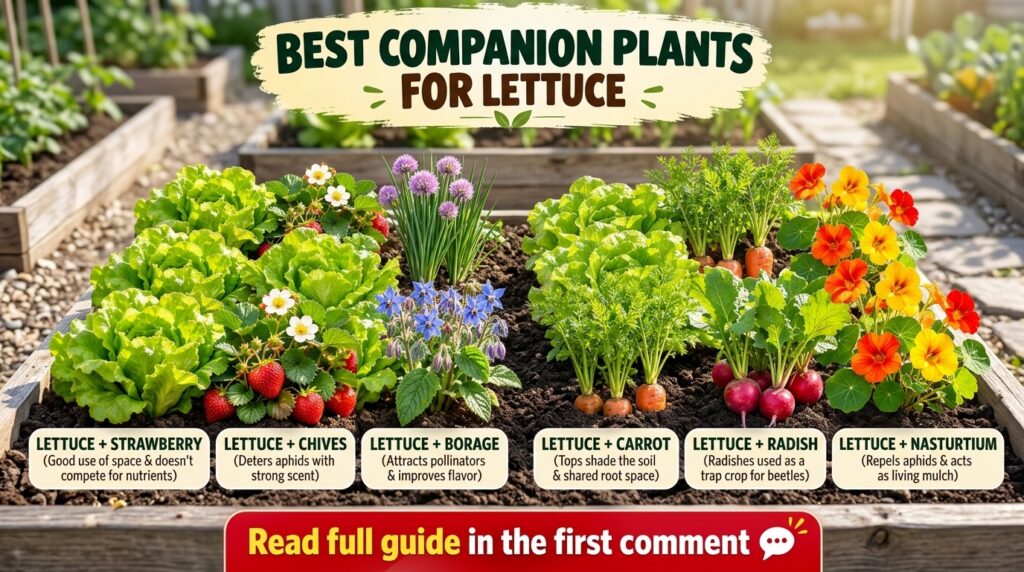
1. Strawberries
Strawberries make an excellent groundcover around lettuce. They help suppress weeds and keep the soil moist, providing a cooler environment for lettuce roots. Plus, you get two delicious harvests from the same space!
2. Carrots
Planting carrots near lettuce is a win-win. Carrots help loosen the soil as their roots grow downwards, which benefits the shallow-rooted lettuce. Their foliage also provides some ground cover. Just be mindful of spacing to allow both to grow without competition.
3. Chives
Chives are superstars in the garden for their pest-repelling qualities. Their strong scent is known to deter aphids and other common lettuce pests. As an added bonus, chives are a delightful culinary herb that you can use fresh from the garden.
4. Radishes
Radishes are quick growers that mature before lettuce needs significant space. They help break up the soil, making it easier for lettuce roots to establish. Once harvested, they leave behind small pockets in the soil, improving aeration.
5. Borage
Borage is a fantastic pollinator magnet, attracting bees and other beneficial insects to your garden. It’s also believed to deter tomato hornworms and cabbage worms, which can sometimes bother lettuce. Its beautiful blue flowers are a lovely addition to any garden.
6. Nasturtiums
Nasturtiums are often used as a ‘trap crop’ for aphids. Aphids are highly attracted to nasturtiums, leaving your lettuce relatively untouched. You can then simply remove the nasturtium plants (and their aphid passengers) or let beneficial insects enjoy the feast. Their vibrant, edible flowers and leaves also add beauty and flavor to your salads.
Tips for Successful Companion Planting
- Observe and Learn: Every garden is unique. Pay attention to how your plants interact and adjust your pairings as needed.
- Space Appropriately: Ensure there’s enough room for both plants to grow without shading out or crowding each other too much.
- Soil Needs: While many plants have similar soil requirements, always ensure the companions you choose are compatible in terms of water and nutrient needs.
- Rotate Crops: Even with companion planting, rotating your crops each season helps maintain soil health and prevent pest buildup.
Embracing companion planting in your lettuce patch is a simple, organic way to cultivate a healthier, more productive garden. Not only will you enjoy crisp, fresh lettuce, but you’ll also create a more harmonious and resilient ecosystem in your backyard. Happy gardening!