Onions are the unsung heroes of countless dishes, forming the flavorful base of everything from gourmet meals to comforting home cooking. Yet, mastering the art of the onion cut can elevate your culinary creations from good to extraordinary. Beyond simply chopping, understanding the different ways to slice, dice, and mince can transform texture, flavor release, and the visual appeal of your food.
This comprehensive guide dives into 10 essential onion cuts, detailing how to achieve each one and, more importantly, when to use them. Whether you’re aiming for delicate garnishes, robust roasted vegetables, or a perfectly smooth sauce, unlocking the secrets to perfect onion preparation starts here. Get ready to master your onion cuts and infuse every dish with precision and passion.
Mastering Your Onion Cuts for Culinary Excellence
Each onion cut serves a unique purpose, influencing how the onion cooks, its texture in the final dish, and how its pungent flavor integrates. Let’s explore the fundamental techniques that every home cook can benefit from.
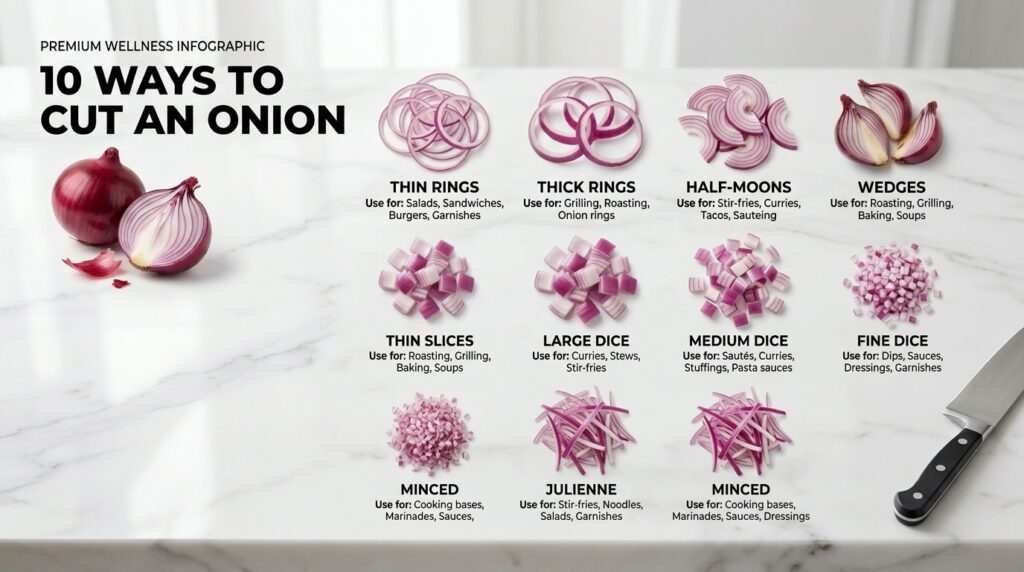
1. Thin Rings
Thin rings are elegant and allow for a delicate release of onion flavor. To create them, peel the onion and slice it crosswise from stem to root, as thinly as possible. Gently separate the rings.
- Best For: Salads, sandwiches, garnishes, quick pickling. Their subtle crunch and mild flavor are perfect for fresh applications.
2. Thick Slices
Thick slices offer a more substantial bite and hold their shape well under heat. Cut the peeled onion crosswise into thicker rounds, about 1/2 inch to 3/4 inch thick.
- Best For: Grilling, roasting, sautéing, and adding to burgers or kebabs where you want a caramelized, sweet, and firm onion texture.
3. Fine Dice (Brunoise)
The smallest and most refined dice, the brunoise aims for pieces no larger than 1/8 inch. This cut is perfect when you want the onion flavor without a noticeable texture.
- Best For: Delicate sauces, vinaigrettes, marinades, or as an aromatic base for dishes where the onion should ‘melt away’ into the liquid.
4. Small Dice
Slightly larger than a fine dice, small dice are typically around 1/4 inch. They provide a noticeable but not overwhelming onion presence.
- Best For: Sofritos, omelets, salsas, and dressings. They cook down relatively quickly and integrate well into various textures.
5. Medium Dice
A versatile cut, medium dice are usually 1/2 inch cubes. This size offers a good balance of texture and flavor, making it a workhorse in many kitchens.
- Best For: Soups, stews, sautés, casseroles, and stir-fries where you want the onion to retain some structure and provide a burst of flavor with each bite.
6. Julienne (Thin Strips)
Julienne cuts result in thin, matchstick-like strips. This technique is ideal for dishes where you want long, tender strands of onion that cook quickly and evenly.
- Best For: Stir-fries, fajitas, caramelized onions, French onion soup, or as a vibrant topping for pizzas and flatbreads.
7. Minced
Mincing is taking the onion to its smallest form, even finer than a fine dice. The goal is to create tiny, almost paste-like pieces that release maximum flavor without any distinct texture.
- Best For: Flavor bases for sauces, dressings, dips, marinades, or anything that requires a smooth consistency where the onion flavor needs to be fully incorporated and nearly invisible.
8. Wedges (Petals)
Wedges are rustic and robust, perfect for hearty preparations. Cut the peeled onion in half through the root, then slice each half lengthwise into 6-8 wedges, ensuring the root end holds them together.
- Best For: Roasting with other vegetables, braising, stewing, or grilling. They become wonderfully sweet and tender, adding a substantial presence to the dish.
9. Rough Chop
The quickest and least precise cut, a rough chop means cutting the onion into uneven, larger pieces. Precision isn’t the goal here; speed and convenience are.
- Best For: Stocks, broths, long-cooking stews, or dishes where the onion will be pureed later. It’s also great for a mirepoix where the vegetables cook down completely.
10. Bias Slices
Bias slicing involves cutting the onion at an angle across its width. This technique creates elongated, thinner pieces that cook quickly and have a visually appealing shape.
- Best For: Quick stir-fries, sautéed vegetables, or as an attractive addition to omelets and frittatas where you want a softer, slightly curved onion piece.
Which Onion Cut Is Your Kitchen Staple?
Understanding these 10 distinct onion cuts empowers you to make intentional choices in your cooking, directly impacting the final taste, texture, and appearance of your meals. No longer just an ingredient, the onion becomes a versatile tool in your culinary arsenal.
Experiment with these techniques and discover how a simple change in cut can unlock new dimensions of flavor and enjoyment in your everyday cooking. Happy chopping!