Your Ultimate Guide to Perfect Boiled Eggs
Boiled eggs are a kitchen staple, a versatile and protein-packed food perfect for breakfast, snacks, salads, or quick meals. But have you ever wondered how to get that ideal texture, whether you crave a runny yolk, a jammy center, or a firm, perfectly cooked egg? Achieving your perfect boiled egg is truly an art, and it all comes down to precise timing and a few simple steps. In this guide, we’ll demystify the science of boiling eggs, provide a visual breakdown of how different cooking times affect the yolk, and share practical tips to help you consistently create your ideal boiled egg, every single time.
The Secret to Perfectly Boiled Eggs
Many people find boiling an egg a simple task, but getting the exact desired consistency can be tricky. The key lies in understanding how heat affects the proteins in an egg. As an egg cooks, the proteins in both the white and the yolk coagulate, changing from liquid to solid. The longer the cooking time, the firmer the egg becomes. Factors like egg size, starting water temperature, and even altitude can subtly influence cooking times, but a reliable method with consistent timing is your best friend.
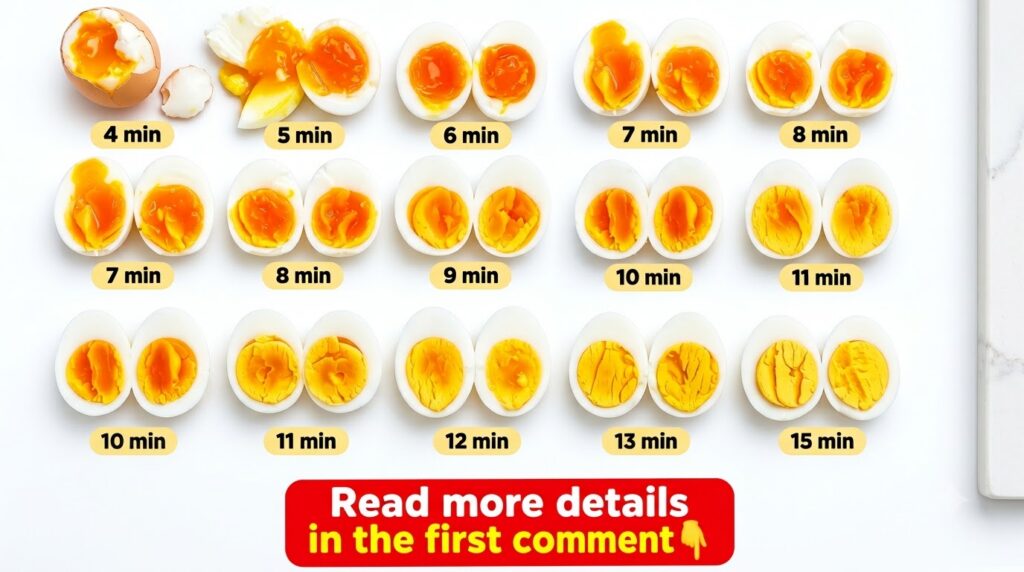
Timing is Everything: Your Visual Guide
Here’s a breakdown of how different cooking times typically result in various egg textures when starting with cold water and bringing it to a boil, then simmering.
| Cooking Time (after boiling) | Yolk Texture | White Texture | Best For |
|---|---|---|---|
| 4-5 minutes | Very runny, liquid | Soft, barely set | Dipping toast, topping ramen |
| 6 minutes | Runny center, slightly jammy edge | Set, tender | Salads, toast |
| 7 minutes | Jammy, custardy, bright orange | Firm, tender | Toast, bowls, salads |
| 8-9 minutes | Soft, creamy, light yellow | Firm, set | Egg salad, deviled eggs, general use |
| 10-12 minutes | Firm, fully cooked, pale yellow | Firm, solid | Meal prep, hard-boiled snacks, transportable |
Step-by-Step Guide to Boiling Eggs
Ingredients & Equipment:
- Eggs (as many as you like)
- Saucepan with a lid
- Slotted spoon
- Ice bath (bowl of ice water)
Instructions:
- Place Eggs in Pot: Gently place your eggs in a single layer at the bottom of a saucepan. Avoid overcrowding.
- Cover with Water: Add enough cold water to cover the eggs by about an inch.
- Bring to a Boil: Place the pot on high heat and bring the water to a rolling boil.
- Turn Off Heat & Cover: As soon as the water reaches a full boil, turn off the heat immediately. Cover the pot with a lid.
- Set Timer: Set your timer for your desired doneness (refer to the table above).
- Ice Bath: While the eggs are cooking, prepare an ice bath. This is crucial for stopping the cooking process and making the eggs easier to peel.
- Transfer to Ice Bath: Once the timer goes off, use a slotted spoon to carefully transfer the eggs from the hot water directly into the ice bath. Let them cool there for at least 5-10 minutes.
- Peel & Enjoy: Once cooled, gently tap and roll the eggs to crack the shell, then peel under cool running water. Enjoy your perfectly boiled eggs!
Beyond Boiling: Creative Ways to Enjoy Eggs
Boiled eggs are incredibly versatile! Here are some ideas to incorporate them into your healthy eating:
- Quick Snack: A perfectly boiled egg is a protein-rich snack on its own.
- Salad Topping: Halve or quarter them for a boost of protein in any green salad.
- Egg Salad: Mash firm boiled eggs with a healthy mayonnaise (or Greek yogurt), mustard, and herbs for a delicious sandwich filling or dip.
- Deviled Eggs: A classic appetizer, perfect for gatherings.
- Ramen or Noodle Bowls: A jammy egg adds richness and protein to your favorite Asian-inspired bowls.
- Avocado Toast: Top your avocado toast with sliced or crumbled soft-boiled eggs for an extra layer of flavor and nutrition.
- Curries or Stews: Hard-boiled eggs can be added to many curries and stews for added substance.
Practical Tips for Perfect Boiled Eggs
- Use Older Eggs: Fresher eggs are notoriously harder to peel. Eggs that are about a week old tend to peel much more easily.
- Don’t Skip the Ice Bath: This step stops the cooking process, prevents a green ring around the yolk, and makes peeling a breeze.
- Crack & Roll: To peel, gently tap the wide end of the egg on a hard surface, then roll it to create tiny cracks all over the shell. This helps water seep under the membrane, making it easier to peel away.
- Store Properly: Unpeeled boiled eggs can be stored in the refrigerator for up to one week. Peeled boiled eggs should be stored in a bowl of cold water (changing the water daily) or a sealed container for about 3-4 days.
- Consider Egg Size: The times listed are for large eggs. For medium eggs, reduce cooking time by about 30 seconds; for extra-large, add 30 seconds.
FAQs About Boiled Eggs
Q: Why do my eggs sometimes have a green ring around the yolk?
A: A green or grayish-green ring around the yolk indicates that the egg has been overcooked. The sulfur in the egg white reacts with the iron in the yolk, creating iron sulfide, which has a greenish color. The ice bath helps prevent this by rapidly stopping the cooking process.
Q: How can I tell if an egg is hard-boiled without cracking it?
A: Place the egg on a flat surface and spin it. A hard-boiled egg will spin smoothly and quickly, while a raw or soft-boiled egg will wobble due to its liquid interior.
Q: Is it better to start eggs in cold or boiling water?
A: Starting eggs in cold water, as outlined in our method, generally leads to more consistent results and helps prevent cracking, especially for large batches. Some chefs prefer boiling water for more precise timing for very soft yolks.
Q: How long can I store boiled eggs?
A: Unpeeled boiled eggs can be stored in the refrigerator for up to 7 days. Peeled boiled eggs are best consumed within 3-4 days and should be kept in an airtight container or submerged in cold water in the fridge.
Q: What if my eggs crack during boiling?
A: Adding a pinch of salt to the water can sometimes help prevent cracks, as it helps the egg white coagulate faster if a crack does occur. Also, avoid dropping eggs directly into the pot and ensure they are at room temperature to reduce temperature shock.
Conclusion
Mastering the perfect boiled egg is a culinary skill that adds a versatile and nutritious ingredient to your kitchen repertoire. With precise timing and a few simple tricks, you can consistently achieve your desired yolk texture, from runny and dippable to firm and satisfying. Experiment with different cooking times to find your personal favorite, and don’t hesitate to incorporate these healthy protein powerhouses into your meals. Happy cooking!
This content is for educational purposes only and should not be considered medical advice. Consult a qualified healthcare professional for personalized dietary recommendations.
Explore More Healthy Food Content:
- High Protein Breakfast Ideas
- Healthy Smoothie Recipes
- Best Foods for Gut Health
- Easy Meal Prep Strategies