Carbohydrates often get a bad rap, but they are essential for energy, performance, and achieving your fitness goals. Whether you’re aiming to build muscle or shed a few pounds, choosing the right types of carbs at the right time can make a significant difference. It’s not about eliminating carbs; it’s about making smart swaps!
In this article, we’ll dive into the world of smart carb choices. You’ll learn how different carbs impact your body, discover practical swaps to align with your muscle gain or fat loss objectives, and get actionable tips to optimize your diet. Get ready to fuel your body intelligently and achieve your fitness aspirations!
Understanding Carbs: Fueling Your Body
Carbohydrates are your body’s primary source of energy. They are broken down into glucose, which is used immediately for fuel or stored as glycogen in your muscles and liver for later use. This stored energy is crucial for workouts, recovery, and everyday functions.
Carbs come in various forms, broadly categorized as simple and complex. Simple carbs provide quick energy, while complex carbs offer sustained energy release, often accompanied by fiber and other nutrients.
Smart Carb Swaps for Your Fitness Goals
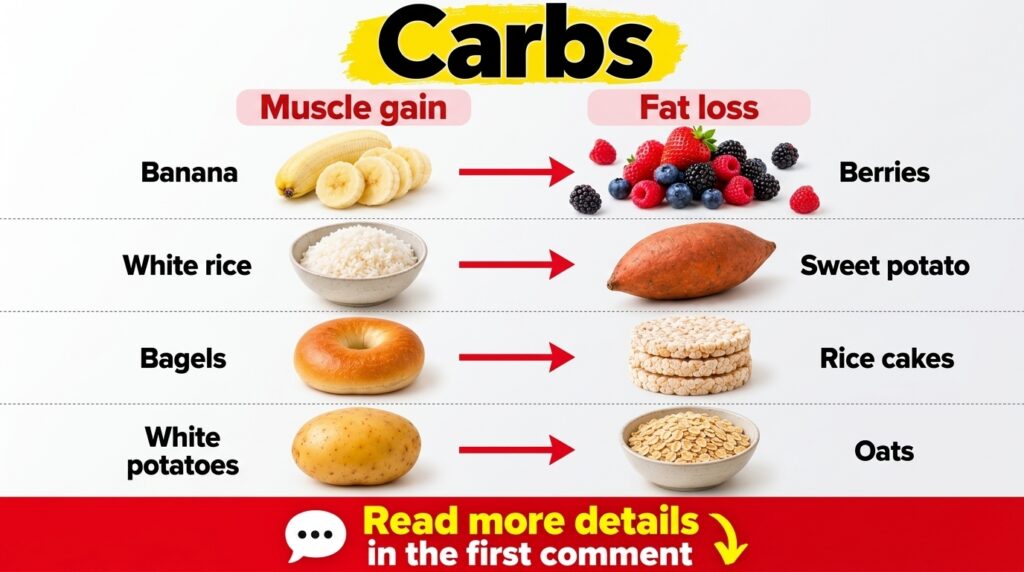
Making intentional carb choices can profoundly impact your progress. Here’s a look at smart swaps that can support either muscle gain or fat loss, based on their nutritional profiles and how your body processes them.
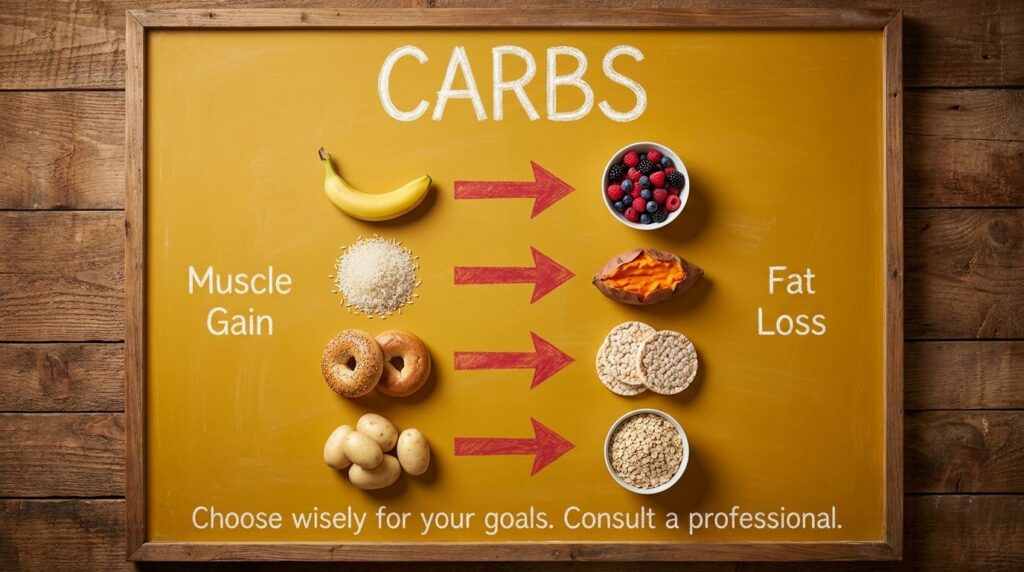
Banana vs. Berries: Energy for Gain vs. Fiber for Loss
- For Muscle Gain (Banana): Bananas are a fantastic source of easily digestible carbohydrates, making them ideal for quick energy before a workout or for replenishing glycogen stores afterward. They provide natural sugars and potassium, supporting muscle function and recovery.
- For Fat Loss (Berries): Berries, like blueberries, raspberries, and strawberries, are lower in calories and sugar but packed with fiber and antioxidants. The high fiber content helps you feel full longer, reducing overall calorie intake, while antioxidants support overall health and recovery.
White Rice vs. Sweet Potato: Quick Fuel vs. Sustained Nutrients
- For Muscle Gain (White Rice): White rice is a simple carbohydrate that digests quickly, making it excellent for rapid glycogen replenishment post-workout. Its low fiber content means less digestive effort when your body needs to prioritize nutrient absorption for muscle repair.
- For Fat Loss (Sweet Potato): Sweet potatoes are complex carbohydrates rich in fiber, vitamins (especially Vitamin A), and minerals. Their slower digestion rate provides sustained energy, helps regulate blood sugar, and promotes satiety, which is beneficial for managing hunger and calorie intake.
Bagels vs. Rice Cakes: Calorie Density vs. Light Snack
- For Muscle Gain (Bagels): Bagels are calorie-dense and provide a substantial amount of carbohydrates, making them a good option for individuals looking to increase their caloric intake for muscle growth, especially when paired with protein and healthy fats.
- For Fat Loss (Rice Cakes): Rice cakes are very light and low in calories, offering a quick source of carbohydrates without much bulk. They can be a convenient, portion-controlled snack when you need a little energy boost or a vehicle for healthier toppings like avocado or lean protein spreads.
White Potatoes vs. Oats: Versatile Fuel vs. Satiating Fiber
- For Muscle Gain (White Potatoes): White potatoes are a versatile and nutrient-dense carbohydrate source. They provide readily available energy and a good amount of potassium. They are easily customizable and can be a staple in a muscle-building diet, especially when not loaded with unhealthy toppings.
- For Fat Loss (Oats): Oats are a powerhouse of soluble fiber, which forms a gel-like substance in your gut, slowing digestion and increasing feelings of fullness. This makes them excellent for sustained energy, blood sugar regulation, and reducing cravings, all crucial for fat loss.
The Nutritional Advantage: Why These Swaps Work
The effectiveness of these swaps lies in key nutritional factors:
- Fiber Content: Foods high in fiber (like berries, sweet potatoes, and oats) slow down digestion, promoting satiety and helping to stabilize blood sugar levels. This is crucial for fat loss as it prevents energy crashes and reduces the likelihood of overeating.
- Glycemic Index (GI): Foods with a lower glycemic index (many complex carbs and high-fiber options) cause a slower, more gradual rise in blood sugar, which is generally preferred for sustained energy and fat loss. Higher GI foods (like white rice, bananas, white potatoes) provide quicker energy, which can be beneficial around intense workouts for muscle gain.
- Nutrient Density: Opting for whole, unprocessed carbohydrates ensures you’re getting a wealth of vitamins, minerals, and antioxidants along with your energy, supporting overall health and optimal body function.
Practical Tips for Incorporating Smart Carb Swaps
- Timing Matters: Consume faster-digesting carbs (like white rice or bananas) closer to your workouts for immediate energy or recovery. Slower-digesting, high-fiber carbs are better for meals throughout the day to maintain energy and satiety.
- Read Labels: Always check nutrition labels for fiber content, added sugars, and whole grain indicators to make informed choices.
- Portion Control: Even healthy carbs can contribute to weight gain if consumed in excess. Be mindful of serving sizes, especially if your goal is fat loss.
- Pair with Protein and Fat: Combining carbs with protein and healthy fats helps to slow digestion, stabilize blood sugar, and increase satiety, making your meals more balanced and satisfying.
- Listen to Your Body: Pay attention to how different carb sources make you feel. Some individuals may thrive on higher carb intake, while others might do better with moderate amounts.
FAQs
Q1: Can I still eat white bread if I’m trying to lose weight?
While occasional white bread won’t derail your progress, opting for whole-grain bread is generally better for fat loss due to its higher fiber content, which promotes satiety and stable blood sugar.
Q2: Are all fruits good for fat loss?
Most fruits are great for fat loss due to their fiber and nutrient content. However, some fruits are higher in natural sugars (like ripe bananas or mangoes). Berries are often highlighted for fat loss due to their lower sugar and calorie count relative to their fiber content.
Q3: What’s the best time to eat carbs for muscle gain?
For muscle gain, consuming carbohydrates before and after your workouts is often recommended. Pre-workout carbs provide energy for performance, while post-workout carbs help replenish glycogen stores for recovery and growth.
Q4: How much fiber should I aim for daily?
Adults should generally aim for 25-30 grams of fiber per day. Incorporating a variety of fruits, vegetables, whole grains, and legumes can help you reach this target.
Q5: Can I eat too many complex carbohydrates?
Yes, even complex carbohydrates contain calories. If you consume more calories than your body burns, you can still gain weight, regardless of the source. Portion control is key for any fitness goal.
Q6: Are rice cakes healthy for fat loss?
Rice cakes are low in calories and can be a good quick carb snack, especially for fat loss, if portioned correctly and topped with nutrient-dense ingredients. However, they are low in fiber, so they shouldn’t be your only carb source.
Q7: What role do vegetables play in carb intake?
Non-starchy vegetables (like leafy greens, broccoli, peppers) are excellent carbohydrate sources for both muscle gain and fat loss. They are generally very low in calories, high in fiber, and packed with vitamins and minerals, helping you feel full and get essential nutrients without excess calories.
Conclusion
Making smart carb swaps is a powerful strategy to optimize your nutrition for muscle gain or fat loss. By understanding the unique properties of different carbohydrates and timing their consumption effectively, you can fuel your body more efficiently and achieve your fitness goals with greater ease.
Remember, balance and consistency are key. Experiment with these swaps, listen to your body, and enjoy the journey to a healthier, stronger you! For more delicious and healthy food ideas, explore our other articles on High Protein Breakfast Ideas and Healthy Smoothie Recipes.
This content is for educational purposes only and should not be considered medical advice. Consult a qualified healthcare professional for personalized dietary recommendations.