In recent years, plant-based milks have moved from niche health food stores to mainstream grocery aisles. With a growing interest in plant-forward diets, dairy allergies, and ethical considerations, many people are exploring alternatives to traditional cow’s milk. But with so many options available—soy, almond, oat, cashew, coconut, and rice, to name a few—how do you choose the best one for your lifestyle and nutritional needs?
This ultimate guide will help you navigate the world of plant-based milks. We’ll compare the nutritional profiles of popular choices, highlight their unique benefits, and offer practical tips for making informed decisions. By the end, you’ll feel confident choosing the plant-based milk that best fits your dietary goals.
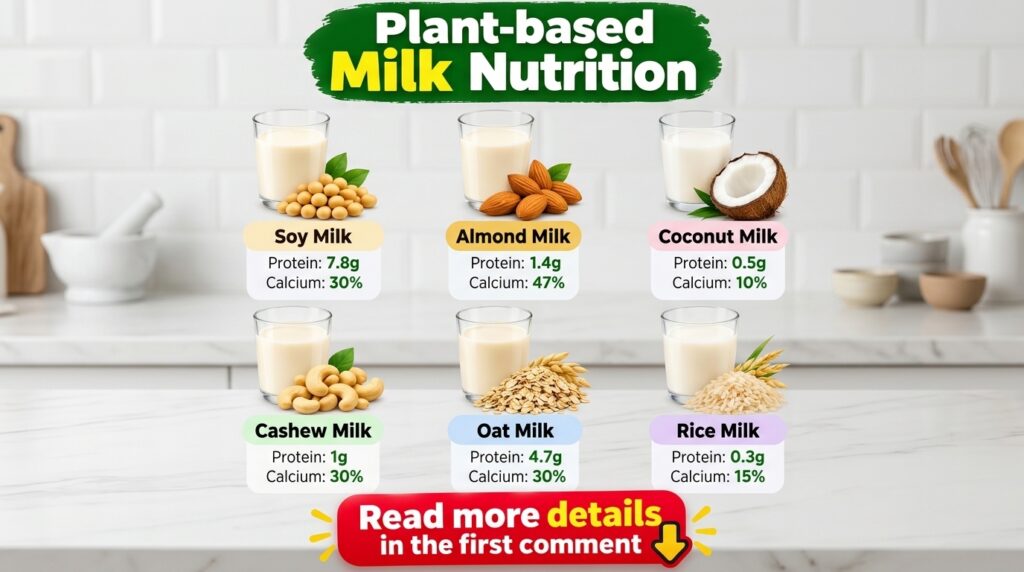
Plant-Based Milk Nutrition Comparison Chart
To help you compare, here’s a detailed look at the approximate nutritional values for a 1-cup (240ml) serving of unsweetened versions of popular plant-based milks. Keep in mind that values can vary by brand and whether the milk is fortified.
| Milk Type | Calories | Protein (g) | Carbs (g) | Fat (g) | Fiber (g) | Main Nutrients (often fortified) | Best Benefit |
|---|---|---|---|---|---|---|---|
| Soy Milk | 80 | 7 | 4 | 4 | 1 | Protein, Calcium, Vitamin D, B Vitamins | High protein, good for muscle support |
| Almond Milk | 30-40 | 1 | 1-2 | 2.5 | 0.5 | Vitamin E, Calcium, Vitamin D | Low calorie, good source of Vitamin E |
| Oat Milk | 120-130 | 3 | 16-18 | 5 | 2 | Calcium, Vitamin D, B Vitamins, Iron | Creamy texture, some soluble fiber |
| Cashew Milk | 25-35 | <1 | 1-2 | 2.5 | 0 | Calcium, Vitamin D, Vitamin A | Very low calorie, smooth texture |
| Coconut Milk | 45-50 | 0 | 1-2 | 4-5 | 0 | Manganese, Copper, Calcium, Vitamin D | Rich, creamy taste, suitable for cooking |
| Rice Milk | 120 | <1 | 22-24 | 2 | 0 | Calcium, Vitamin D, B Vitamins | Allergy-friendly, naturally sweet |
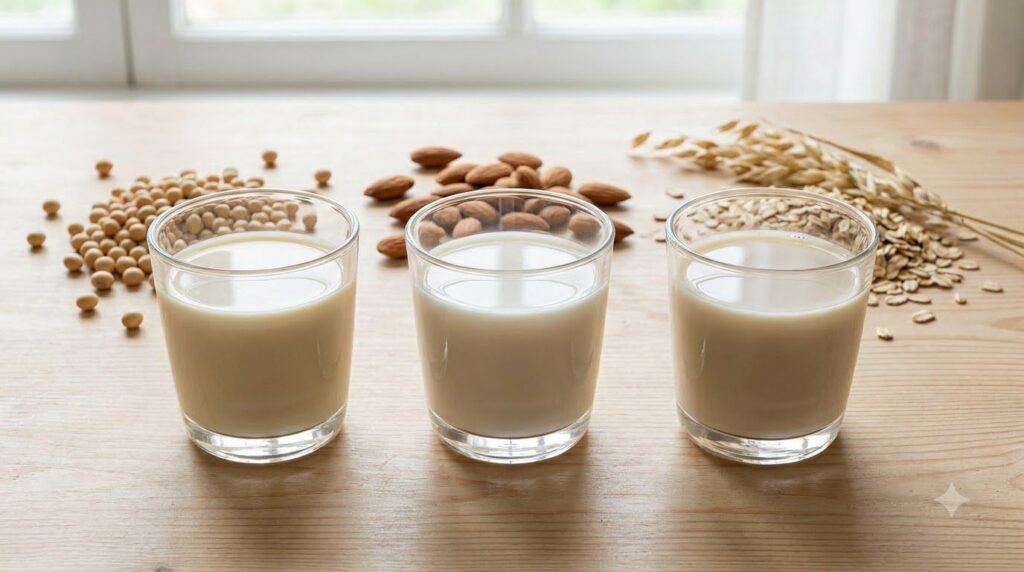
Exploring Popular Plant-Based Milks
Soy Milk
Soy milk is often considered the most nutritionally similar to cow’s milk in terms of protein content. Made from soybeans, it’s a complete protein, meaning it contains all nine essential amino acids. It’s also often fortified with calcium and Vitamin D, making it a strong choice for bone health. Soy milk has a mild, slightly nutty flavor that works well in coffee, smoothies, and baking.
Almond Milk
One of the most popular choices, almond milk is made by blending almonds with water and then straining the mixture. It’s naturally low in calories and carbohydrates, especially the unsweetened varieties. While not high in protein, it’s a good source of Vitamin E, an antioxidant, and is typically fortified with calcium and Vitamin D. Its light, slightly sweet flavor makes it versatile for cereals, coffee, and standalone drinking.
Oat Milk
Oat milk has rapidly gained popularity for its creamy texture and mild, slightly sweet taste. Made from oats and water, it’s naturally higher in carbohydrates than other plant milks but also contains soluble fiber, which can contribute to digestive health and satiety. It’s also often fortified with vitamins and minerals, including calcium and Vitamin D. Oat milk froths exceptionally well, making it a favorite for lattes and coffee drinks.
Cashew Milk
Cashew milk offers a rich, creamy consistency similar to oat milk but is typically lower in calories and carbs. Like almond milk, it’s not a significant source of protein unless fortified, but it’s often enriched with calcium and Vitamin D. Its neutral, slightly sweet flavor makes it excellent for savory dishes, creamy soups, and smoothies where you want a smooth texture without an overpowering taste.
Coconut Milk
Often confused with the thick, canned coconut milk used in curries, beverage-style coconut milk is a much thinner, watered-down version. It’s known for its distinctive tropical flavor and creamy texture. While low in protein and carbs, it’s higher in saturated fat compared to other plant milks. It’s frequently fortified with essential vitamins and minerals, offering a unique taste profile for smoothies and some dessert recipes.
Rice Milk
Rice milk, made from brown rice and water, is a good option for those with multiple food allergies, as it’s typically free from nuts, soy, and dairy. It has a naturally sweet flavor and a thinner consistency. Nutritionally, it’s higher in carbohydrates and lower in protein and fat than most other plant milks. Like others, it’s usually fortified with calcium and Vitamin D.

Tips for Choosing Your Plant-Based Milk
With so many options, here are some practical tips to help you pick the best plant-based milk for your needs:
- Check the Ingredients List: Always look for unsweetened varieties to avoid added sugars. Also, check for fortifiers like calcium, Vitamin D, and Vitamin B12, especially if you’re avoiding dairy for nutritional reasons.
- Consider Your Dietary Goals: If protein is a priority, soy milk is often the best choice. For lower calories, almond or cashew milk might be ideal. If you need a creamy texture for coffee, oat or soy milk often perform best.
- Allergy Awareness: If you have allergies, rice milk is often the most hypoallergenic option. Always check labels carefully for cross-contamination warnings.
- Taste Test: Don’t be afraid to try different brands and types! Tastes can vary significantly. Buy smaller cartons to experiment before committing to a larger size.
- Uses in the Kitchen: Think about how you’ll use the milk. Oat and soy milks tend to be great for frothing and baking. Coconut milk adds a distinct flavor to tropical smoothies.

Frequently Asked Questions About Plant-Based Milks
Q1: Are plant-based milks healthier than cow’s milk?
It depends on individual nutritional needs and the specific type of milk. Cow’s milk is naturally rich in protein and calcium. Many plant-based milks offer different nutrient profiles, often lower in saturated fat, but may be lower in protein unless fortified. Always compare nutritional labels to see what best fits your diet.
Q2: Do all plant-based milks contain calcium?
No, not all plant-based milks naturally contain high levels of calcium. However, most commercial plant-based milks are fortified with calcium, often to levels comparable to dairy milk. Always check the nutrition label to ensure adequate calcium content if this is a concern.
Q3: Which plant milk is best for coffee?
Oat milk and soy milk are often considered the best for coffee due to their creamy texture and ability to froth well without curdling. Some baristas also prefer specific brands of almond or cashew milk formulated for coffee.
Q4: Can I use plant-based milk for baking?
Absolutely! Most plant-based milks can be used as a 1:1 substitute for cow’s milk in baking. However, the fat content and flavor can subtly affect the final product. For richness, opt for oat or soy milk. For a lighter touch, almond or rice milk may work.
Q5: Are unsweetened plant milks truly sugar-free?
Unsweetened plant milks mean no added sugars. They may still contain naturally occurring sugars from their base ingredient (e.g., oats contain natural sugars). Always check the

