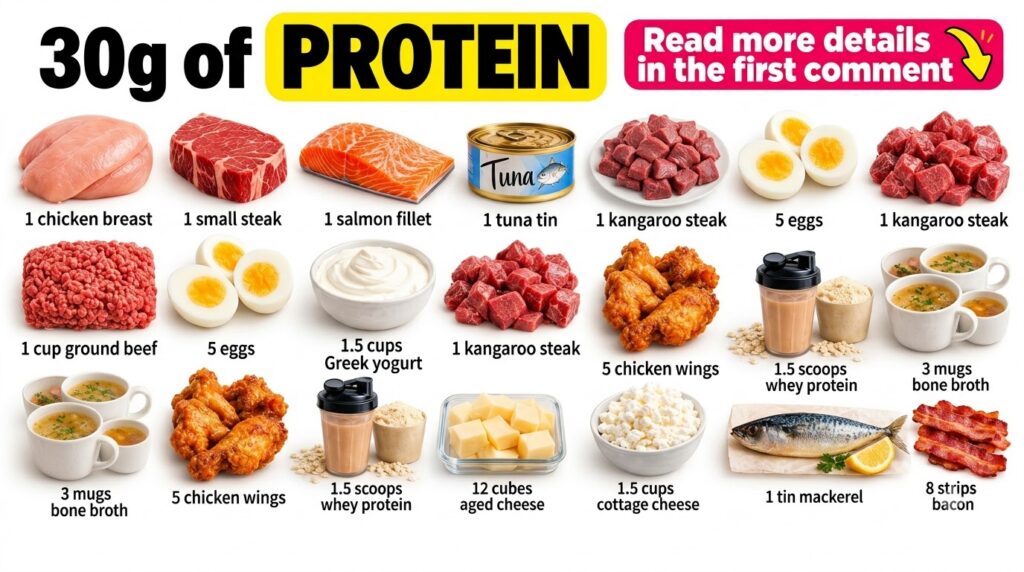
Are you curious about how much protein you’re actually getting from your meals? Understanding protein intake can feel like a guessing game sometimes. But knowing what 30 grams of protein looks like in various foods can be a game-changer for fueling your body and supporting your health goals.
In this guide, we’ll break down common protein sources, showing you approximate serving sizes that deliver a solid 30 grams of this essential macronutrient. You’ll learn why protein is so important, discover practical ways to incorporate these foods into your diet, and get answers to frequently asked questions about protein.
Let’s dive in and simplify your protein journey!
Why 30 Grams of Protein Matters
Protein is a vital macronutrient, meaning your body needs a significant amount of it to function correctly. It’s the building block for muscles, bones, skin, and hormones. Consuming enough protein is crucial for various bodily functions:
- Muscle Repair and Growth: Essential for athletes and anyone looking to maintain or build muscle mass.
- Satiety and Weight Management: Protein helps you feel full longer, which can reduce overall calorie intake and support weight loss or maintenance.
- Energy Production: While carbs are the primary energy source, protein can also provide energy when needed.
- Hormone and Enzyme Production: Many hormones and enzymes, which regulate numerous bodily processes, are made of protein.
- Immune Function: Antibodies, which fight off infections, are proteins.
Aiming for around 20-30 grams of protein per meal is a common recommendation to maximize muscle protein synthesis and promote satiety, especially for active individuals or those managing their weight.
What 30g of Protein Looks Like: Your Visual Guide
To help you better understand your protein intake, here’s a chart illustrating approximately how much of various common foods you need to consume to get 30 grams of protein. Please note that these are approximate values and can vary slightly based on specific product brands and preparation methods.
| Food (Approximate Serving for 30g Protein) | Calories (Approx.) | Protein (g) | Carbs (g) | Fat (g) | Fiber (g) | Main Nutrients | Best Benefit |
|---|---|---|---|---|---|---|---|
| Chicken Breast (4 oz / 120g) | 165 | 30 | 0 | 3.6 | 0 | Niacin, B6, Selenium | Lean muscle growth, satiety |
| Salmon (4.5 oz / 130g) | 230 | 30 | 0 | 12 | 0 | Omega-3s, B12, Vitamin D | Heart health, anti-inflammatory |
| Greek Yogurt, Plain (1.5 cups / 340g) | 190 | 30 | 12 | 0 | 0 | Calcium, Probiotics | Gut health, bone strength |
| Eggs (4-5 large) | 360 | 30 | 2 | 24 | 0 | Choline, B Vitamins, Vitamin D | Brain health, essential amino acids |
| Cottage Cheese, Low-Fat (1 cup / 226g) | 160 | 30 | 9 | 2 | 0 | Calcium, Selenium, B12 | Slow-digesting protein, bone support |
| Lean Beef Steak (3.5 oz / 100g) | 200 | 30 | 0 | 8 | 0 | Iron, Zinc, B12 | Energy, red blood cell formation |
| Whey Protein Powder (1 scoop / 30-35g) | 120 | 30 | 2 | 1.5 | 0 | Branched-Chain Amino Acids (BCAAs) | Fast muscle recovery, convenient |
| Tuna, Canned in Water (5 oz / 140g) | 160 | 30 | 0 | 2 | 0 | B12, Selenium, Niacin | Heart healthy, convenient protein |
Practical Tips for Boosting Your Protein Intake
Incorporating enough protein into your diet doesn’t have to be complicated. Here are some simple tips:
- Start Your Day Strong: Add protein to your breakfast with eggs, Greek yogurt, or a protein smoothie.
- Smart Snacking: Opt for protein-rich snacks like cottage cheese, a handful of almonds, or hard-boiled eggs to curb hunger between meals.
- Include Protein at Every Meal: Make sure each main meal (breakfast, lunch, and dinner) contains a good source of protein.
- Meal Prep for Success: Cook larger batches of protein sources like chicken breast or hard-boiled eggs at the beginning of the week for quick additions to meals.
- Vary Your Sources: Don’t stick to just one type of protein. Explore different meats, fish, dairy, legumes, and plant-based options to get a wider range of nutrients.
- Read Food Labels: Pay attention to the protein content on packaged foods to make informed choices.

Who Benefits Most from Adequate Protein?
While everyone needs protein, certain individuals may benefit from paying extra attention to their intake:
- Active Individuals and Athletes: To support muscle repair, recovery, and growth after exercise.
- Individuals Managing Weight: Protein’s satiating effect can help control appetite and reduce overall calorie intake.
- Older Adults: To help combat age-related muscle loss (sarcopenia) and maintain strength.
- Vegetarians and Vegans: It’s important to combine various plant-based protein sources to ensure all essential amino acids are consumed.
- Individuals Recovering from Injury or Surgery: Protein is crucial for tissue repair and healing.
FAQs About Protein Intake
Q1: Is it possible to eat too much protein?
For most healthy individuals, consuming a higher protein diet within reasonable limits is safe. However, extremely high protein intake over long periods, especially without adequate hydration, may pose risks for individuals with pre-existing kidney conditions. Always consult a healthcare professional for personalized advice.
Q2: Are plant-based proteins as good as animal proteins?
Both plant-based and animal-based proteins can contribute significantly to your protein intake. Animal proteins are considered