There’s nothing quite like the joy of harvesting fresh zucchini from your own garden. That crisp texture and mild flavor are a summer staple! But sometimes, our beloved zucchini plants don’t quite cooperate. Yellowing leaves, tiny fruits, or a sudden wilting spell can turn excitement into frustration. If you’ve ever wondered why your zucchini isn’t thriving, you’re not alone! Many gardeners face similar challenges.
The good news is that most zucchini struggles have simple, straightforward solutions. Learning to read the signs your plant is giving you is the first step towards a healthy, productive harvest. Let’s dive into the common indicators that your zucchini plant might be struggling and how to turn things around for a truly bountiful home harvest!
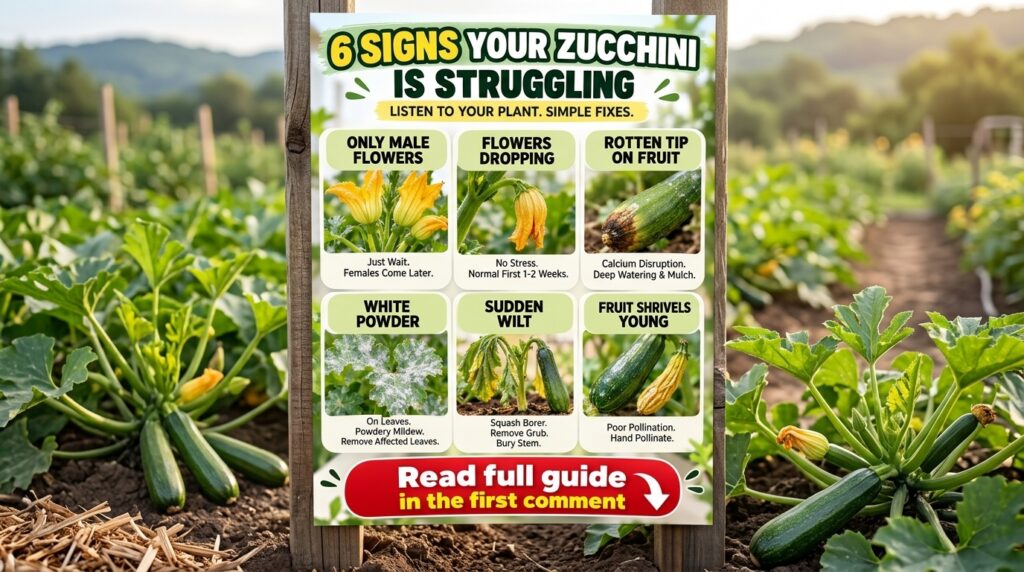
6 Signs Your Zucchini Plant is Struggling and How to Fix Them
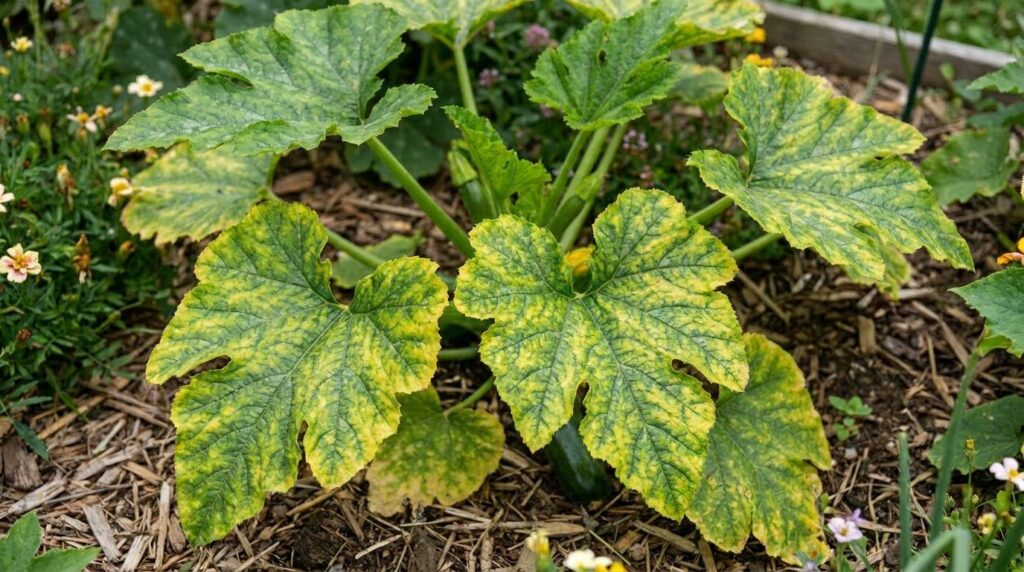
1. Yellowing Leaves (Chlorosis)
What it looks like: Your zucchini leaves might be turning pale green or bright yellow, sometimes with the veins remaining green.
Why it happens: This is a classic sign of nutrient deficiency, often nitrogen, or sometimes iron or magnesium. It can also indicate overwatering, which leads to poor nutrient absorption, or underwatering, causing general plant stress.
Simple Fixes:
- Check Watering: Ensure you’re watering deeply and consistently, especially during dry spells. Zucchini needs about 1-2 inches of water per week.
- Nutrient Boost: Apply a balanced, organic liquid fertilizer. Compost tea or a side dressing of compost can also slowly release nutrients into the soil.
- Soil Drainage: If overwatering is the issue, improve soil drainage by adding organic matter like compost.
2. Small or Misshapen Fruit
What it looks like: Your zucchini fruits are tiny, shriveled, or oddly shaped, sometimes rotting from the blossom end.
Why it happens: The most common culprit here is poor pollination. Zucchini plants have separate male and female flowers. If bees or other pollinators aren’t doing their job, female flowers won’t be adequately fertilized. It can also be due to insufficient water or nutrient deficiencies (especially calcium, leading to blossom end rot).
Simple Fixes:
- Hand Pollination: If pollinators are scarce, you can hand-pollinate! Gently pick a male flower (which has a straight, thin stem) and rub its pollen onto the stigma of a female flower (which has a tiny, immature fruit at its base).
- Attract Pollinators: Plant pollinator-friendly flowers nearby, like marigolds or borage, to encourage bees to visit your garden.
- Consistent Watering & Nutrients: Ensure consistent watering and consider a calcium supplement if blossom end rot is present.
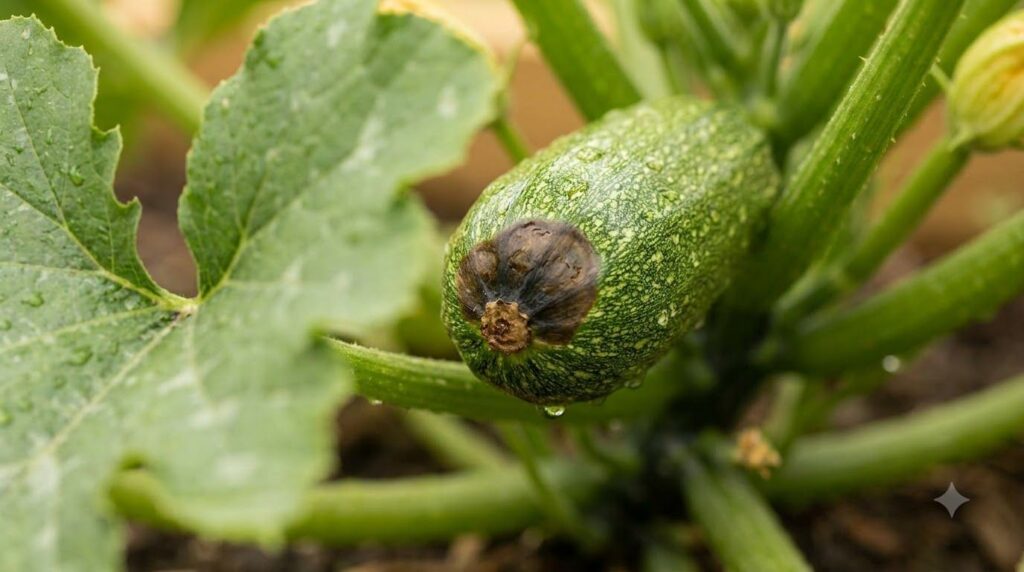
3. Blossom End Rot (BER)
What it looks like: A dark, sunken, leathery spot appears on the blossom end of the fruit, typically when the fruit is still small.
Why it happens: Despite its appearance, BER is not a disease but a physiological disorder caused by a lack of calcium in the developing fruit. This is often due to inconsistent watering, which prevents the plant from transporting calcium efficiently to the fruit, rather than a lack of calcium in the soil itself.
Simple Fixes:
- Consistent Watering: This is key! Water regularly and deeply, especially during fruit development. Mulching around the plants can help retain soil moisture.
- Soil Health: Ensure good soil health with plenty of organic matter, which improves water retention and nutrient availability.
- Avoid Root Damage: Be careful when cultivating around the plants to avoid damaging roots, which can hinder water and nutrient uptake.
4. Powdery Mildew
What it looks like: White, powdery spots appear on the leaves, stems, and sometimes even the fruits. It looks like someone sprinkled flour on your plants.
Why it happens: This is a common fungal disease that thrives in humid conditions, especially when air circulation is poor and leaves are wet for extended periods. Old, stressed leaves are also more susceptible.
Simple Fixes:
- Improve Air Circulation: Space your plants adequately and trim some lower, older leaves to improve airflow.
- Water Smart: Water at the base of the plant in the morning to allow leaves to dry quickly. Avoid overhead watering.
- Organic Fungicides: A simple solution of baking soda (1 teaspoon per quart of water with a few drops of dish soap) or a diluted milk spray can help. Neem oil is also effective.
- Resistant Varieties: Next season, consider planting zucchini varieties bred for powdery mildew resistance.
5. Pest Damage (Holes, Chewed Leaves)
What it looks like: Holes in leaves, chewed edges, stunted growth, or visible insects (like squash bugs or vine borers) on the plant.
Why it happens: Various pests love zucchini as much as we do! Squash bugs suck sap from leaves, causing them to yellow and wilt. Squash vine borers tunnel into stems, causing sudden wilting of entire vines. Aphids can also be a problem.
Simple Fixes:
- Regular Inspection: Check your plants daily for signs of pests or their eggs (often on the underside of leaves).
- Manual Removal: Handpick larger pests like squash bugs and drop them into soapy water.
- Organic Pest Control: Use neem oil, insecticidal soap, or diatomaceous earth (for crawling insects) as needed.
- Companion Planting: Plant nasturtiums or marigolds nearby to deter pests.
- Crop Rotation: Rotate your crops each year to disrupt pest life cycles.
6. Stunted Growth
What it looks like: Your zucchini plant simply isn’t growing as large or as vigorously as it should, or producing much fruit, despite appearing otherwise healthy.
Why it happens: Stunted growth is a general indicator of overall stress. This could be due to insufficient sunlight (zucchini needs full sun, at least 6-8 hours daily), poor soil quality, nutrient deficiencies, cold temperatures, or overcrowding.
Simple Fixes:
- Sunlight: Ensure your plants are in a spot that receives full sun.
- Soil Enrichment: Amend your soil with plenty of organic compost before planting to provide a rich, well-draining environment.
- Proper Spacing: Give zucchini plants ample room to grow – usually 3-4 feet apart – to prevent competition for nutrients and light.
- Fertilization: Provide a consistent feeding schedule with balanced organic fertilizer throughout the growing season.
- Warmth: Zucchini are warm-season crops; ensure they are planted after all danger of frost has passed and soil temperatures have warmed up.
General Tips for a Thriving Zucchini Patch
- Good Soil is Key: Start with well-draining, nutrient-rich soil, preferably amended with compost.
- Consistent Watering: Zucchini are thirsty! Aim for deep watering, especially during dry spells and fruit development.
- Full Sun: Give your plants at least 6-8 hours of direct sunlight per day.
- Mulch: Apply a layer of organic mulch around your plants to conserve moisture, regulate soil temperature, and suppress weeds.
- Harvest Regularly: Don’t wait too long to harvest! Picking zucchini frequently encourages the plant to produce more. Aim for smaller, tender fruits.
By keeping an eye out for these common signs and applying these simple fixes, you’ll be well on your way to a flourishing zucchini patch and a season filled with delicious, homegrown produce. Happy gardening!