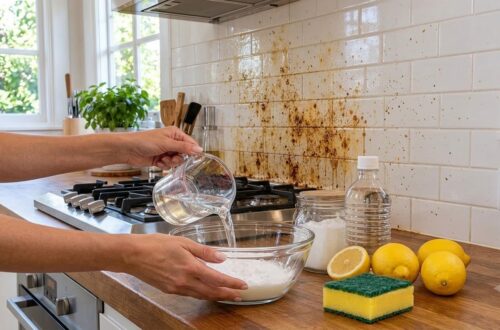
Is your kitchen backsplash a monument to last night’s culinary adventures? From stubborn grease splatters to everyday food residue, keeping this high-traffic area sparkling can feel like an endless battle. But what if we told you that you don’t need an arsenal of harsh chemicals to achieve a brilliantly clean kitchen?
Today, we’re diving into the magic of a homemade cleaning solution that tackles tough backsplash splatters and daily grime with eco-friendly power: the dynamic duo of baking soda and vinegar!
This simple, natural combination is a secret weapon for homeowners looking for practical, cheap, and effective ways to maintain a pristine kitchen. Let’s get scrubbing!
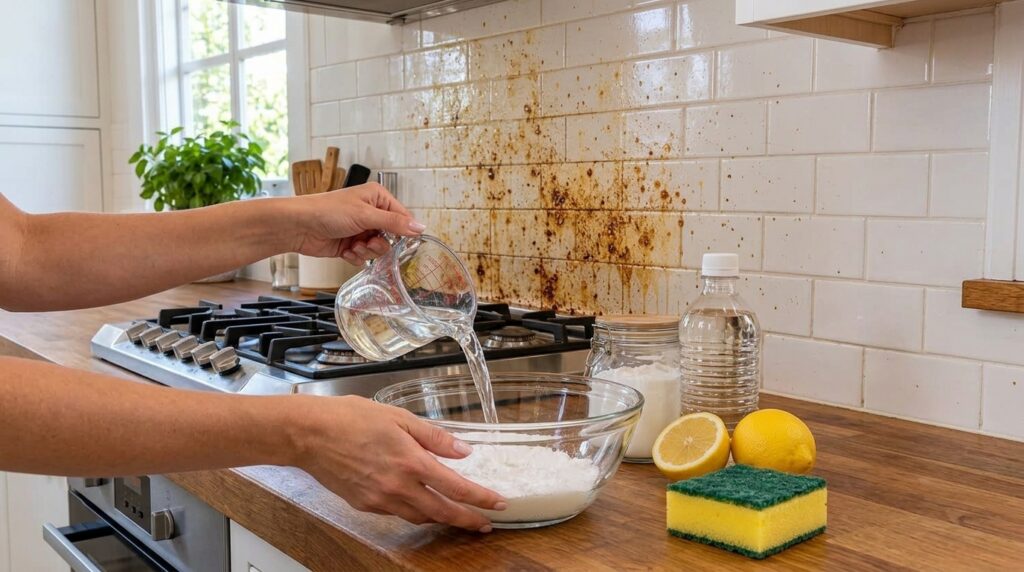
The Dynamic Duo: Why Vinegar and Baking Soda Work Wonders
You probably have these two humble ingredients in your pantry right now, but do you know why they’re so effective together?
- Baking Soda (Sodium Bicarbonate): This white powder is a mild abrasive that can gently scrub away stuck-on grime without scratching surfaces. It’s also a fantastic deodorizer, absorbing unpleasant odors from your cooking adventures. Its mildly alkaline nature helps to cut through greasy residues.
- White Vinegar (Acetic Acid): Vinegar is an acid that works wonders on grease, hard water stains, and built-up residue. It also possesses natural antibacterial properties, making it an excellent choice for sanitizing surfaces. The acid in vinegar reacts with the alkali in baking soda, creating a fizzing action that physically helps to lift dirt and stains.
Your Simple Solution for a Sparkling Kitchen Backsplash
Ready to reclaim your kitchen’s shine? Here’s how to create and use this powerful DIY cleaning solution.
What You’ll Need:
- ½ cup baking soda
- ¼ cup warm water (or more, to achieve desired paste consistency)
- ½ cup white vinegar
- A few drops of dish soap (optional, for extra grease-cutting power)
- Small bowl
- Spoon or stirring stick
- Spray bottle
- Scrub brush, non-abrasive sponge, or old toothbrush
- Microfiber cloths
- Gloves (optional, for sensitive skin)
Step-by-Step Instructions:
- Create the Baking Soda Paste: In your small bowl, combine the baking soda and warm water. Start with ¼ cup of water and add more gradually, mixing until you achieve a thick, spreadable paste. If you prefer a more liquid scrub, add a little more water.
- Prepare the Vinegar Spray: Pour the white vinegar into your spray bottle. If using, add a few drops of dish soap to the vinegar and gently swirl to combine.
- Apply the Paste: Using your spoon, sponge, or gloved hands, apply a generous layer of the baking soda paste directly onto your dirty backsplash, paying special attention to areas with heavy grease or stuck-on food. Let it sit for 5-10 minutes to allow the baking soda to start breaking down the grime.
- Activate the Fizz: Lightly spray the vinegar solution over the baking soda paste. You’ll immediately notice a satisfying fizzing action – this is the chemical reaction at work, actively lifting dirt and loosening stubborn residue.
- Scrub Away Grime: After the fizz subsides (or after a minute or two), use your scrub brush, sponge, or old toothbrush to gently scrub the backsplash. The abrasive nature of the baking soda combined with the cutting power of the vinegar will make quick work of even tough splatters.
- Wipe Clean: Dampen a clean microfiber cloth with warm water and thoroughly wipe down the backsplash, removing all traces of the cleaning solution and lifted grime.
- Buff to Shine: Use a dry, clean microfiber cloth to buff the backsplash until it gleams. Stand back and admire your handiwork!
Why This Combo is a Kitchen MVP
The beauty of the baking soda and vinegar combo lies in its synergistic action. The baking soda provides the scrubbing power and neutralizes odors, while the vinegar cuts through grease and disinfects. The fizzing reaction is not just for show; it actively helps to agitate and lift stubborn stains from surfaces, making your scrubbing job significantly easier. Plus, it’s remarkably cost-effective and safe for your family and pets compared to commercial cleaners.
Pro Tips for Best Results & Safety
- Ventilation is Key: While natural, vinegar can have a strong smell. Ensure your kitchen is well-ventilated during and after cleaning.
- Test First: Always test the solution on an inconspicuous area of your backsplash (especially if it’s painted or has a delicate finish) to ensure no discoloration or damage occurs.
- Avoid Natural Stone: Vinegar is acidic and can etch or dull natural stone surfaces like marble, granite, or travertine. If your backsplash is made of these materials, opt for a pH-neutral cleaner specifically designed for stone.
- Regular Maintenance: For best results, tackle backsplash splatters as they happen or incorporate this cleaning method into your weekly kitchen routine.
Beyond the Backsplash: Other Uses for Your DIY Solution
Don’t stop at the backsplash! This versatile cleaning solution can be used for:
- Stovetop Cleaning: Just like the backsplash, your stovetop often accumulates grease and food spills.
- Sink Scrub: Sprinkle baking soda, spray with vinegar, and scrub for a sparkling sink.
- Drain Deodorizer: Pour ½ cup baking soda down the drain, followed by ½ cup vinegar. Let it sit for 15-30 minutes, then flush with hot water to clear minor clogs and odors.
- Grout Cleaning: An old toothbrush dipped in the paste works wonders on dirty grout lines.
Embrace the power of simple, natural ingredients to keep your home clean and healthy. This baking soda and vinegar hack is a testament to how everyday items can become your most effective cleaning allies. Give it a try and enjoy a brilliantly clean kitchen without the harsh chemicals!