Most people reach for mint for its refreshing taste or scent, often overlooking its profound capabilities beyond a culinary herb or breath freshener. But what if one of nature’s most common plants held a surprising, ancient secret for soothing nagging joint aches? It’s not just a garnish; it’s a powerful ally you might be missing in your natural pain relief toolkit.
For centuries, long before modern pharmaceuticals, cultures worldwide turned to plants like mint for relief. While its cooling sensation is widely recognized, its deeper anti-inflammatory and analgesic properties for joint discomfort are often overlooked. We’ll dive into how this accessible herb can become a cornerstone of your natural wellness regimen.

What It Is: The Power Behind Mint’s Coolness
Mint refers to several species within the Mentha genus, with peppermint (Mentha piperita) and spearmint (Mentha spicata) being the most popular for their medicinal properties. The key compound responsible for mint’s signature cooling effect and many of its therapeutic benefits is menthol, particularly abundant in peppermint. Menthol acts as a topical analgesic, creating a sensation that can distract from pain and discomfort. Beyond menthol, mint contains rosmarinic acid and flavonoids, which contribute to its anti-inflammatory and antioxidant capabilities, making it a promising natural remedy for soothing irritated joints.
Ingredients for Your Mint Joint Remedy
Making your own mint-based joint remedies is straightforward and requires minimal ingredients. The primary focus will always be the mint itself, whether fresh or dried.
- Fresh Mint Leaves: Opt for peppermint or spearmint, harvested from a garden or bought from a reliable organic source to ensure they are free of pesticides.
- Filtered Water: Essential for teas and compresses, ensuring purity.
- Carrier Oil: For infused oils, choose a high-quality, cold-pressed oil like olive oil, sweet almond oil, or jojoba oil.
Approximate Measurements
The beauty of natural remedies often lies in their flexibility, but here are some guidelines to get you started:
- For Mint Tea: 1-2 teaspoons of dried mint leaves or 1 tablespoon of fresh, chopped mint per 8 oz (1 cup) of hot water.
- For Mint Compress/Poultice: A large handful (about 1/2 cup packed) of fresh mint leaves.
- For Mint Infused Oil: Approximately 1 cup of packed fresh mint leaves to 1.5 cups of your chosen carrier oil.
Formula & Recipe: Three Ways to Harness Mint for Joint Aches
Here are practical methods to incorporate mint into your routine for joint relief:
1. Soothing Mint Compress
This topical application provides immediate, localized relief to aching joints.
Step-by-Step Method:
- Gather Mint: Collect a large handful of fresh mint leaves. Rinse them thoroughly under cool water.
- Bruise the Leaves: Place the clean leaves on a cutting board. Gently bruise them with the back of a spoon or a rolling pin. This helps release the essential oils.
- Warm the Compress (Optional but Recommended): For a warm compress, you can briefly steam the bruised leaves or dip them in hot water for 10-15 seconds (don’t boil vigorously).
- Apply: Place the bruised, warm mint leaves directly onto the affected joint. If you prefer, you can wrap them in a thin, clean cloth (like gauze or a thin handkerchief) before applying.
- Secure: Cover the mint with plastic wrap or another cloth to keep it in place and retain moisture/heat.
2. Homemade Mint Infused Oil
A longer-lasting option for regular massage and deep penetration.
Step-by-Step Method:
- Prepare Mint: Thoroughly wash and completely dry 1 cup of fresh mint leaves. Moisture can cause spoilage. Chop them roughly to expose more surface area.
- Combine: Place the chopped mint in a clean, dry glass jar. Pour 1.5 cups of carrier oil over the mint, ensuring the leaves are fully submerged.
- Infuse (Solar Method): Seal the jar and place it in a sunny spot (like a windowsill) for 2-4 weeks. Shake the jar gently once a day.
- Infuse (Gentle Heat Method – Quicker): Alternatively, place the jar (unsealed or with a loose lid) in a slow cooker or double boiler on the lowest setting for 2-4 hours. Ensure the oil never gets too hot, just warm.
- Strain: After the infusion period, strain the oil through a fine-mesh sieve lined with cheesecloth into a clean, dark glass bottle. Squeeze the mint to extract all the oil.
- Store: Cap tightly and store in a cool, dark place.
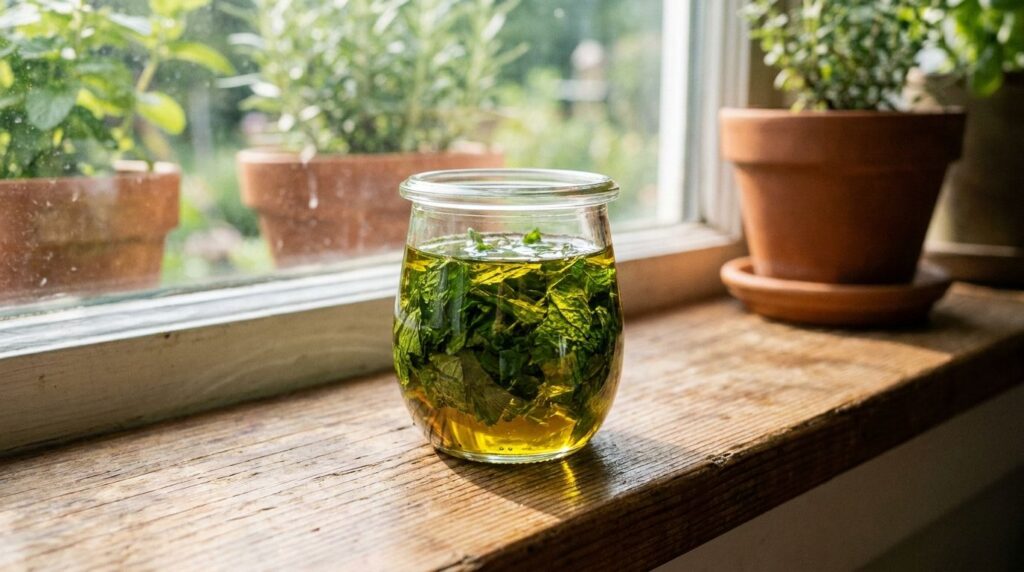
3. Anti-Inflammatory Mint Tea
While not a direct topical remedy, a warm cup of mint tea can contribute to overall comfort and reduce systemic inflammation.
Step-by-Step Method:
- Heat Water: Bring 8 oz (1 cup) of filtered water to a boil.
- Add Mint: Place 1-2 teaspoons of dried mint or 1 tablespoon of fresh, chopped mint into a tea infuser or directly into a mug.
- Steep: Pour the hot water over the mint. Cover the mug and steep for 5-10 minutes. Covering helps retain the volatile essential oils.
- Strain & Enjoy: Remove the infuser or strain the leaves. Sip warm.
How to Use
- Mint Compress: Apply directly to aching joints (knees, elbows, wrists, shoulders). Leave on for 15-30 minutes, or until the sensation fades.
- Mint Infused Oil: Gently massage a small amount of the oil into the affected joint area 2-3 times a day. The cooling sensation and massage can help improve circulation.
- Mint Tea: Drink 1-2 cups daily, especially after meals or before bed, to support general well-being and a healthy inflammatory response.
How Often to Use
For acute discomfort, the mint compress can be used several times a day as needed. The mint infused oil is suitable for daily, consistent application to manage chronic or recurring aches. Mint tea can be enjoyed daily for systemic benefits.
Best Time to Use It
Topical remedies like the compress and oil are excellent for immediate relief when pain flares up, or after physical activity. Mint tea can be relaxing before bedtime or a refreshing, digestive aid after meals.
How to Buy / How to Choose Ingredients
The quality of your ingredients directly impacts the potency of your remedies.
- Fresh Mint: Look for vibrant green leaves without wilting, yellowing, or dark spots. The aroma should be strong and characteristic. Ideally, source from organic growers or grow your own to ensure no pesticides.
- Dried Mint: Purchase from reputable herbal suppliers who prioritize organic and sustainable practices. Ensure it’s loose-leaf and still fragrant.
- Carrier Oils: Choose cold-pressed, unrefined oils in dark glass bottles to protect them from light degradation.
Storage
- Fresh Mint: Store in the refrigerator, either wrapped in a damp paper towel in a plastic bag or with stems placed in a glass of water like a bouquet, covered loosely with a plastic bag. Use within 5-7 days.
- Dried Mint: Keep in an airtight container in a cool, dark place, away from direct sunlight and humidity. It will retain potency for up to 1 year.
- Mint Infused Oil: Store in a dark glass bottle in a cool, dark place. Properly prepared oil should last 6-12 months, depending on the carrier oil used. Discard if it develops an off-odor or becomes cloudy.
- Mint Compress: Prepare fresh each time for best results. Leftover bruised leaves can be refrigerated in an airtight container for up to 24 hours, but potency will diminish.

Practical Tips for Enhanced Joint Relief
- Warmth vs. Cold: While mint offers a cooling sensation, a warm compress can also enhance absorption and provide comfort. Experiment to see what feels best for your particular ache.
- Combine with Heat: For the infused oil, apply it after a warm bath or shower when your pores are open, which can aid absorption.
- Consistency is Key: Natural remedies often work best with consistent use over time.
Fresh vs. Dried Mint: A Quick Reference
| Feature | Fresh Mint | Dried Mint |
|---|---|---|
| Potency (Volatile Oils) | Generally higher | Concentrated flavor, some oils lost during drying |
| Best For | Compresses, poultices, fresh teas, infused oils | Teas, infusions, longer storage, culinary uses |
| Availability | Seasonal or home garden | Year-round |
| Storage | Short-term, refrigerated | Long-term, cool, dark, airtight |
| Cost | Varies, often cheaper if home-grown | Generally affordable |
Common Mistakes to Avoid
One small preparation mistake can reduce the effectiveness of your remedy:
- Using Sprayed Mint: Never use mint from unknown sources or areas that may have been treated with pesticides or herbicides, especially for remedies applied to the skin or ingested.
- Boiling Mint Too Vigorously: For tea or infusions, boiling mint too hard can cause the volatile essential oils to evaporate, reducing its therapeutic potency. Gentle steeping is best.
- Skipping the Drying Step for Oil: When making infused oil, ensure fresh mint leaves are completely dry after washing. Any residual water can introduce bacteria and cause the oil to spoil quickly.
- Not Bruising Fresh Leaves: For compresses, the bruising step is crucial as it helps release the active compounds from the leaves.
- Expecting Instant Cures: While mint can offer significant relief, it’s a natural remedy, not a magic bullet. Manage expectations and understand that results may be gradual.
- Improper Storage: Exposing oils or dried herbs to heat, light, or air can degrade their compounds, making them less effective.
Cautions / Who Should Avoid It
While mint is generally safe for most, some individuals should exercise caution:
- Sensitive Skin: Menthol can sometimes cause irritation, especially in concentrated forms or on sensitive skin. Always perform a patch test on a small area before widespread application.
- Allergies: If you have known allergies to plants in the Lamiaceae (mint) family, avoid mint remedies.
- Gastroesophageal Reflux Disease (GERD): Peppermint, in particular, can relax the lower esophageal sphincter, potentially worsening heartburn symptoms in some individuals.
- Pregnancy & Nursing: Consult a healthcare provider before using mint remedies in large quantities, especially internally, during pregnancy or while breastfeeding.
- Children: Use caution when applying menthol-rich products to the faces of young children, as it can sometimes cause respiratory issues.
Quick Summary: Your Mint Joint Relief Guide
- Best Preparation: Topical compresses or infused oils offer direct relief for joint aches. Mint tea supports overall wellness.
- Best Use-Case: Soothing temporary joint discomfort, muscle soreness, and contributing to general anti-inflammatory support.
- Storage: Keep fresh mint refrigerated, dried mint in airtight containers, and infused oils in dark, cool places.
- When to Use: Apply topical remedies as needed for pain. Drink tea daily for maintenance.
- What to Avoid: Sprayed mint, vigorous boiling of leaves, and improper storage.
FAQ
1. Can I use fresh or dried mint for these remedies?
Yes, both fresh and dried mint can be used. Fresh mint is often preferred for compresses and infused oils due to its higher volatile oil content, but dried mint works well for teas and can be used for infusions if fresh is unavailable.
2. How long does mint infused oil last?
When stored correctly in a cool, dark place, mint infused oil can last from 6 to 12 months, depending on the carrier oil used. Always check for any signs of spoilage like an off-odor or cloudy appearance.
3. Can I refrigerate the mint compress?
The mint compress is best prepared fresh for each use. You can refrigerate leftover bruised leaves in an airtight container for up to 24 hours, but their potency will diminish quickly.
4. How often can I use these mint remedies?
Mint compresses can be applied several times a day as needed for acute pain. Mint infused oil can be massaged into joints 2-3 times daily for ongoing relief. Mint tea can be enjoyed 1-2 times daily.
5. What part of the mint plant is best to use?
The leaves are the primary part of the mint plant used for these remedies, as they contain the highest concentration of beneficial essential oils and compounds.
6. Are there any side effects of using mint topically?
While generally well-tolerated, some individuals with sensitive skin might experience mild irritation, redness, or a tingling sensation due to menthol. Always perform a patch test first.
7. Can children use mint remedies for joint pain?
It’s best to consult a pediatrician before using mint remedies, especially menthol-rich products, on young children. Topical application on their face or chest should generally be avoided.
Conclusion
Mint, far from being just a garnish, offers a profound yet often overlooked natural pathway to soothing joint aches. By understanding its simple preparations — from a quick compress to a longer-lasting infused oil or a comforting tea — you can unlock the ancient wisdom this common herb holds. Incorporate these practical remedies into your routine and discover how this refreshing plant can bring relief and a renewed sense of well-being to your modern life.
You may also like: Your Guide to Making Herbal Infused Oils
Read more: Understanding Turmeric for Inflammation
