Maintaining healthy cholesterol levels is a cornerstone of cardiovascular wellness. While medical guidance is paramount, the food choices we make every day play a significant role in supporting our heart health. Many natural ingredients can help manage cholesterol, and understanding their impact allows us to make informed dietary decisions.
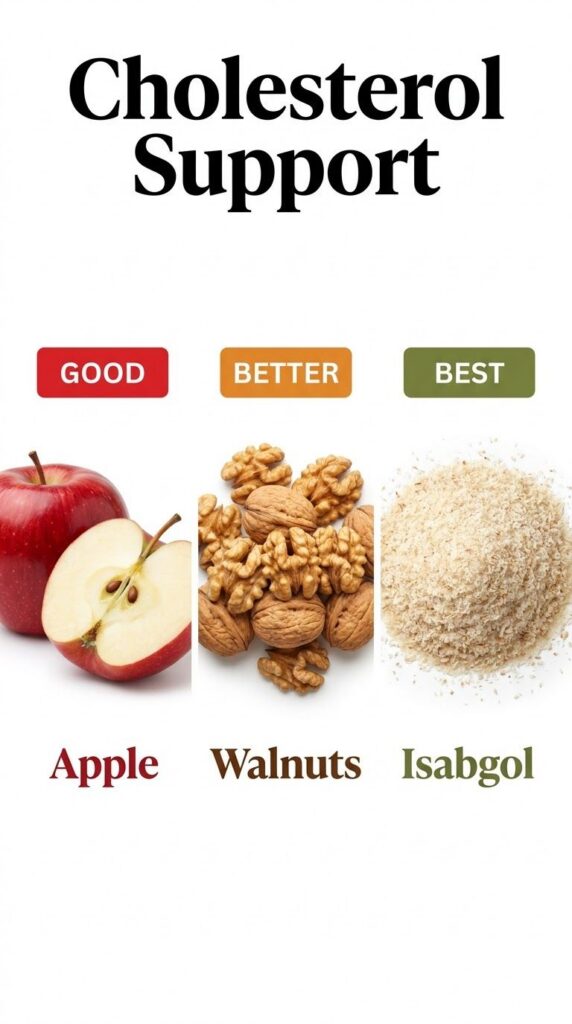
This guide explores three powerful foods—apples, walnuts, and Isabgol—categorized from good to best, to help you make simple yet effective additions to your diet for optimal cholesterol support. Discover how these everyday items can contribute to your well-being.
Apples: The Everyday Good for Your Heart
An apple a day may indeed keep the doctor away, especially when it comes to cholesterol support. Apples are a fantastic starting point for a heart-healthy diet, earning their ‘GOOD’ rating thanks to their rich fiber content and beneficial plant compounds.
Why Apples are Beneficial
- Soluble Fiber (Pectin): Apples are particularly rich in pectin, a type of soluble fiber. Soluble fiber can bind with cholesterol and bile acids in the digestive tract, preventing their absorption and promoting their excretion from the body. This process may help lower LDL (bad) cholesterol levels.
- Polyphenols: These antioxidants, concentrated in the apple skin, can help prevent the oxidation of LDL cholesterol, a key step in the development of atherosclerosis.
How to Incorporate Apples
Apples are incredibly versatile and easy to add to your daily routine:
- Enjoy them whole as a convenient snack.
- Slice them into oatmeal or yogurt for a fiber boost.
- Add them to salads for a touch of sweetness and crunch.
- Bake them with a sprinkle of cinnamon for a healthy dessert.
Walnuts: A Better Choice for Cardiovascular Wellness
Moving up to ‘BETTER’ for cholesterol support, walnuts stand out as a powerful addition to your diet. These nutrient-dense nuts offer a unique combination of healthy fats and other compounds that actively work to support cardiovascular health.
Why Walnuts are More Effective
- Omega-3 Fatty Acids (ALA): Walnuts are one of the best plant-based sources of alpha-linolenic acid (ALA), an essential omega-3 fatty acid. ALA is known to help reduce inflammation, improve blood vessel function, and may lower triglyceride levels, which are linked to heart disease risk.
- Plant Sterols: Walnuts naturally contain plant sterols, compounds that structurally resemble cholesterol. They compete with cholesterol for absorption in the gut, thereby helping to reduce cholesterol absorption into the bloodstream.
- Fiber and Antioxidants: Like apples, walnuts also provide dietary fiber and a wealth of antioxidants, further contributing to their heart-protective effects.
How to Enjoy Walnuts Daily
A small handful of walnuts (about 1 ounce or 14 halves) can make a big difference:
- Sprinkle them over salads, soups, or roasted vegetables.
- Add them to your morning cereal, yogurt, or smoothies.
- Use them in homemade trail mix with other nuts and dried fruit.
- Snack on them plain for a satisfying and nutritious boost.
Isabgol (Psyllium Husk): The Best Natural Support for Cholesterol
For the ‘BEST’ natural cholesterol support, Isabgol, also known as psyllium husk, takes the lead. This remarkable soluble fiber powerhouse is widely recognized for its profound effects on lowering cholesterol levels and promoting digestive health.
Why Isabgol is the Best Option
- High Soluble Fiber Concentration: Isabgol is almost entirely composed of soluble fiber, making it incredibly effective at binding to cholesterol and bile acids in the gut. This significantly enhances their excretion, preventing their reabsorption and prompting the liver to draw more cholesterol from the blood to make new bile acids.
- Proven Efficacy: Numerous studies have demonstrated that regular intake of psyllium husk can significantly reduce LDL (bad) cholesterol and total cholesterol levels, often comparable to some cholesterol-lowering medications in its mechanism of action.
- Support for Digestion: Beyond cholesterol, Isabgol also acts as a bulk-forming laxative, promoting regular bowel movements and aiding overall digestive wellness.
How to Use Isabgol Effectively
Incorporating Isabgol into your diet is simple, but requires adequate hydration:
- Mix with Water: For adults, start with 1-2 teaspoons of Isabgol mixed into a full glass (8 ounces or 240 ml) of water. Stir well and drink immediately before it thickens too much.
- Add to Smoothies or Juice: You can also blend Isabgol into your morning smoothie or mix it into fruit juice.
- Include in Baking: Psyllium husk can be used in some baking recipes as a binder or thickener, particularly in gluten-free recipes.
- Stay Hydrated: Always drink plenty of water throughout the day when consuming Isabgol to prevent constipation and ensure it works effectively.
It’s advisable to start with a smaller dose and gradually increase it to allow your digestive system to adjust. If you are taking any medications, particularly for cholesterol or diabetes, consult your healthcare provider before adding Isabgol to your regimen, as it may affect medication absorption.
Final Thoughts
Integrating these ‘Good,’ ‘Better,’ and ‘Best’ foods into your daily routine can be a proactive step towards supporting healthy cholesterol levels and overall heart health. From the humble apple to the mighty walnut and the powerful Isabgol, each offers unique benefits that contribute to a balanced and heart-smart diet.
Remember, a holistic approach to wellness includes a balanced diet, regular physical activity, and professional medical advice. By making informed choices about what you eat, you empower yourself on your journey to a healthier heart.
Medical Disclaimer
This article is intended for informational purposes only and does not constitute medical advice. Always consult with a qualified healthcare professional before making any changes to your diet, especially if you have existing health conditions, are taking medications, or have concerns about your cholesterol levels. Individual results may vary.