Nourish Your Plants Naturally: The Power of Homemade Fertilizer
Are your plants looking a little lackluster? Do you dream of a vibrant garden bursting with healthy growth, but worry about the chemicals in commercial fertilizers? You’re not alone! Many gardeners seek natural, sustainable ways to nourish their beloved plants. Good news! The secret to a thriving garden might already be in your kitchen: banana peels and eggshells.
At Garden – L. Quyên, we believe in simple, effective, and eco-friendly gardening solutions. This DIY organic plant booster is not only incredibly easy to make but also packed with essential nutrients that your plants will adore. Say goodbye to synthetic chemicals and hello to a happier, healthier garden!
Why Banana Peels and Eggshells? The Nutrient Powerhouses
Before we dive into the ‘how-to,’ let’s understand ‘why’ these common kitchen scraps are so beneficial for your plants.
Banana Peels: Potassium Power
- Potassium (K): Essential for overall plant health, potassium helps plants develop strong stems, resist diseases, and produce more abundant flowers and fruits. It’s especially crucial for fruiting plants like tomatoes and peppers.
- Trace Minerals: Banana peels also contain small amounts of calcium, magnesium, and phosphorus, all vital for robust growth.
Eggshells: Calcium Boost
- Calcium (Ca): A fundamental nutrient for cell wall development, calcium helps plants grow strong and prevents common issues like blossom end rot in tomatoes and peppers.
- Soil Amendment: Crushed eggshells can also improve soil aeration and drainage over time.
Your Easy DIY Organic Plant Booster Recipe
This recipe is incredibly versatile and can be adjusted based on the quantity of scraps you have.
What You’ll Need:
- 3-5 banana peels
- 5-10 eggshells (rinsed clean)
- 1 liter (about 4 cups) of water
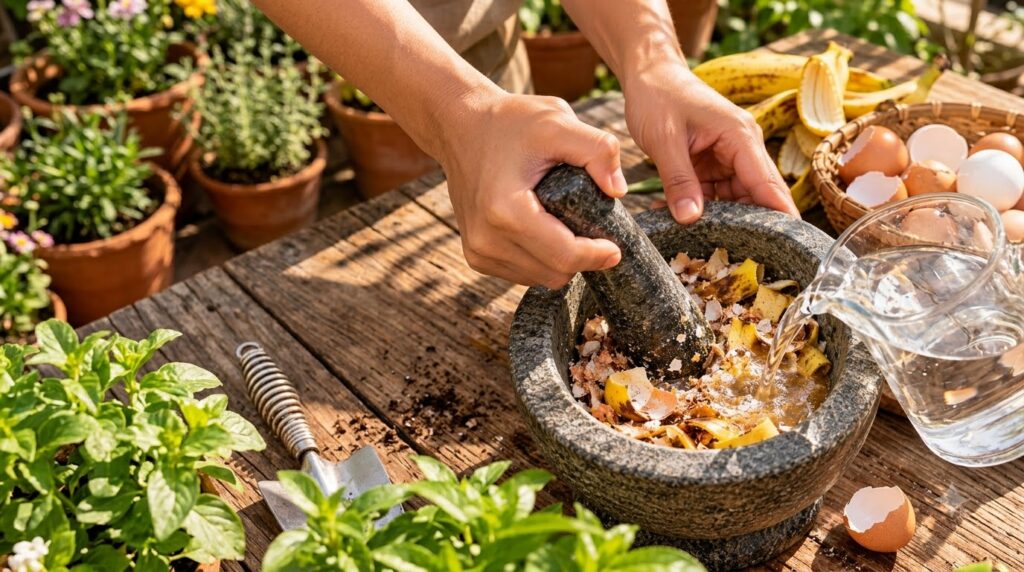
- Blender, food processor, or mortar and pestle
- Large jar or container
- Strainer (optional, for liquid fertilizer)
Step-by-Step Instructions:
- Prepare Your Scraps: Rinse your banana peels to remove any lingering fruit residue. For eggshells, make sure they are clean and dry. You can bake them for 10-15 minutes at a low temperature (around 200°F or 90°C) to make them more brittle and easier to crush, and to sterilize them.
- Chop and Crush: Roughly chop the banana peels into smaller pieces. Crush the eggshells into as fine a powder as possible. The finer the pieces, the quicker the nutrients will be released into the soil. A mortar and pestle works well for this, or you can use a blender or food processor.
- Combine with Water: Place the chopped banana peels and crushed eggshells into a large jar or container. Pour 1 liter of water over them.
- Steep: Cover the container and let the mixture steep for 1-2 weeks in a cool, dark place. This allows the nutrients to leach into the water. Stir it every couple of days. You’ll notice the water becoming darker.
- Strain (Optional for Liquid Fertilizer): After steeping, you can strain out the solid bits if you prefer a liquid fertilizer for easy application. The solids can be added directly to your compost pile or mixed into the soil around your plants.
How to Use Your Homemade Plant Booster
Liquid Feed for an Instant Boost:
Dilute your strained liquid fertilizer with an equal amount of water (1:1 ratio). Use this diluted solution to water your plants every 2-4 weeks. It’s excellent for container plants and those needing a quick nutrient boost.
Soil Amendment for Long-Term Nourishment:
For a slower release of nutrients, you can mix the unstrained solids directly into the top few inches of soil around your plants. This is especially beneficial for garden beds and larger plants, providing a steady supply of nutrients as the materials break down.
Tips for Best Results:
- Consistency is Key: Regular application (every 2-4 weeks) will yield the best results for your plants.
- Don’t Overdo It: While organic, it’s still possible to over-fertilize. Follow the recommended dilution and application frequency.
- Observe Your Plants: Pay attention to your plants’ reactions. They’ll tell you if they’re happy!
- Compost the Rest: Any leftover solids or unused liquid can be added to your compost pile to enrich it further.
Embrace Sustainable Gardening
Making your own plant booster from kitchen scraps is a fantastic way to practice sustainable gardening. You’re reducing waste, avoiding synthetic chemicals, and giving your plants the natural goodness they crave. It’s a win-win for your garden and the environment!
Give this DIY organic plant booster a try and watch your garden flourish. Share your experiences with us – we love seeing your successful gardening journeys!