Welcome, fellow garden lovers! Few flowers captivate the heart quite like the majestic red rose. Their vibrant color and enchanting fragrance can transform any garden into a romantic haven. But to truly unlock their potential and ensure they bloom profusely year after year, understanding the art of pruning is key. Don’t worry, it’s not as intimidating as it sounds! Let’s dive into simple yet effective techniques to keep your red roses healthy, vigorous, and bursting with blooms.
Why Pruning is Essential for Your Red Roses
Pruning isn’t just about making your rose bush look tidy; it’s a vital practice for its overall health and bloom production. Here’s why it’s so important:
- Promotes Vigorous Growth: Removing old, weak, or dead wood encourages the plant to put energy into producing new, strong shoots.
- Enhances Bloom Quality and Quantity: Proper pruning directs the plant’s energy towards fewer, but larger and more vibrant, blossoms.
- Improves Air Circulation: Thinning out dense growth allows air to flow freely through the plant, reducing the risk of fungal diseases.
- Maintains Desirable Shape and Size: You can shape your rose bush to fit your garden aesthetic and prevent it from becoming overgrown.
- Removes Diseased or Damaged Parts: Early removal of affected areas can prevent diseases from spreading to the rest of the plant.
When to Prune Your Red Roses
Timing is crucial for successful rose pruning. Generally, the best time to perform major pruning is in late winter or early spring, just as the dormant buds begin to swell. This period, before new growth fully emerges, allows the plant to recover quickly and channel its energy into developing new branches and flowers. In warmer climates, this might be earlier, while in colder regions, it could be later.
- For established roses: Aim for when the last hard frost has passed, but before leaves start unfurling.
- Deadheading (light pruning throughout the season): This involves removing spent flowers right after they fade to encourage more blooms.
- Light pruning in summer: You can trim any stray, unruly branches to maintain shape.
Essential Tools for Pruning
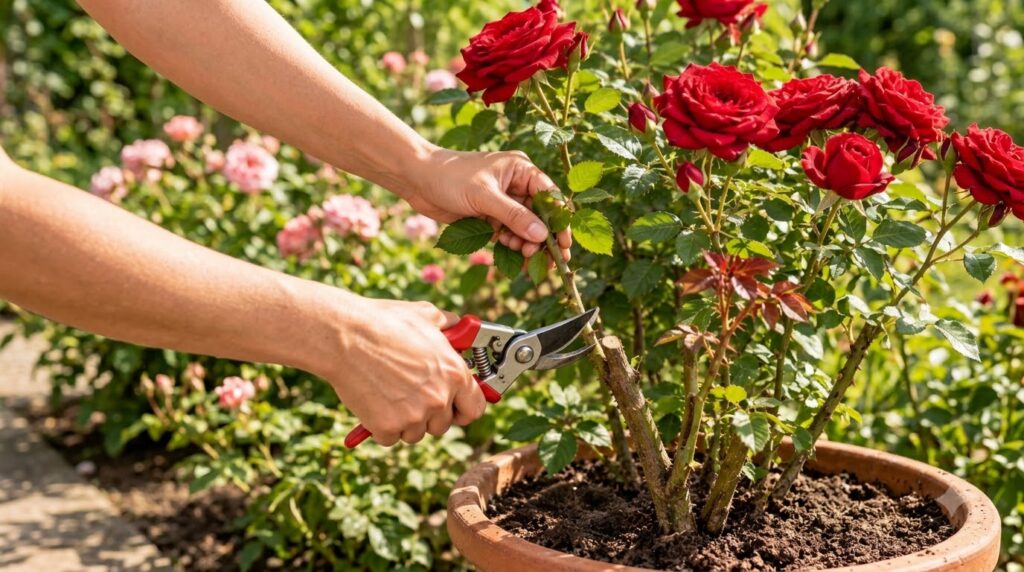
Before you start, make sure you have the right tools. Clean, sharp tools make precise cuts and minimize damage to the plant, reducing the risk of disease.
- Bypass Pruners: Ideal for smaller stems (up to 1/2 inch thick). These make clean, scissor-like cuts.
- Loppers: For thicker branches (up to 1 1/2 inches). Their long handles provide leverage.
- Pruning Saw: Necessary for very thick, woody canes.
- Thick Gloves: Roses have thorns! Protect your hands.
- Rubbing Alcohol or Disinfectant Wipes: To sterilize your tools before and after pruning, especially if you’re dealing with diseased plants.
Basic Pruning Techniques for Stunning Red Roses
Here are the fundamental steps to prune your red roses effectively:
1. Remove Dead, Damaged, or Diseased Wood
This is the first and most important step. Cut back any canes that are dark, shriveled, or show signs of disease. Make your cuts into healthy wood until you see a creamy-white center.
2. Eliminate Weak and Crossing Branches
Remove any thin, spindly branches that are unlikely to support good blooms. Also, cut out branches that are rubbing against each other, as this can create wounds where diseases can enter.
3. Open Up the Center of the Bush
Aim to create an open, vase-like shape. Remove any canes growing inwards towards the center. This improves air circulation and ensures sunlight reaches all parts of the plant.
4. Cut to an Outward-Facing Bud
For the remaining healthy canes, make your cuts about 1/4 inch above an outward-facing bud. This encourages new growth to sprout outwards, maintaining an open form. The cut should be at a 45-degree angle, sloping away from the bud to allow water to run off.
5. Reduce Overall Height (Optional)
You can reduce the overall height of your rose bush to your desired size, typically by about one-third to one-half. This also encourages the plant to send up new growth from the base.
After Pruning Care
Once you’ve finished pruning, your roses will appreciate a little extra care:
- Clean Up: Rake up and discard all pruned material to prevent disease spores from lingering in the garden.
- Fertilize: Apply a balanced rose fertilizer to give your plant a boost as it begins its new growth cycle.
- Water: Provide a good, deep watering, especially if the soil is dry.
Embrace the Beauty
Pruning your red roses might seem like a daunting task at first, but with a little practice and confidence, you’ll soon see the amazing benefits. Not only will your rose bushes be healthier and more robust, but they will reward you with an abundance of breathtaking, fragrant red blooms that will be the envy of every gardener. So grab your pruners, put on your gloves, and get ready to nurture nature’s beauty in your own garden!