Feeling fatigued or a bit low on energy lately? You’re not alone. Iron deficiency is one of the most common nutritional deficiencies worldwide, often leading to tiredness, weakness, and a general lack of vigor. While many associate iron with red meat, the truth is that the plant kingdom is brimming with incredible sources of this vital mineral!
This article will guide you through some of the best plant-based iron champions that can help boost your energy levels and overall well-being. We’ll explore their nutritional profiles, how to incorporate them into your diet, and practical tips to maximize iron absorption. Get ready to discover your new favorite iron-rich foods!
The Importance of Iron in Your Diet
Iron is an essential mineral that plays a crucial role in several bodily functions. Its primary job is to help transport oxygen throughout your body. It’s a key component of hemoglobin, a protein in red blood cells that carries oxygen from your lungs to every cell. Without enough iron, your body can’t produce enough healthy red blood cells, leading to a condition called iron-deficiency anemia.
Symptoms of low iron can include:
- Persistent fatigue and weakness
- Pale skin
- Shortness of breath
- Dizziness
- Cold hands and feet
- Brittle nails
- Headaches
Ensuring adequate iron intake is vital for maintaining energy levels, supporting a healthy immune system, and cognitive function.
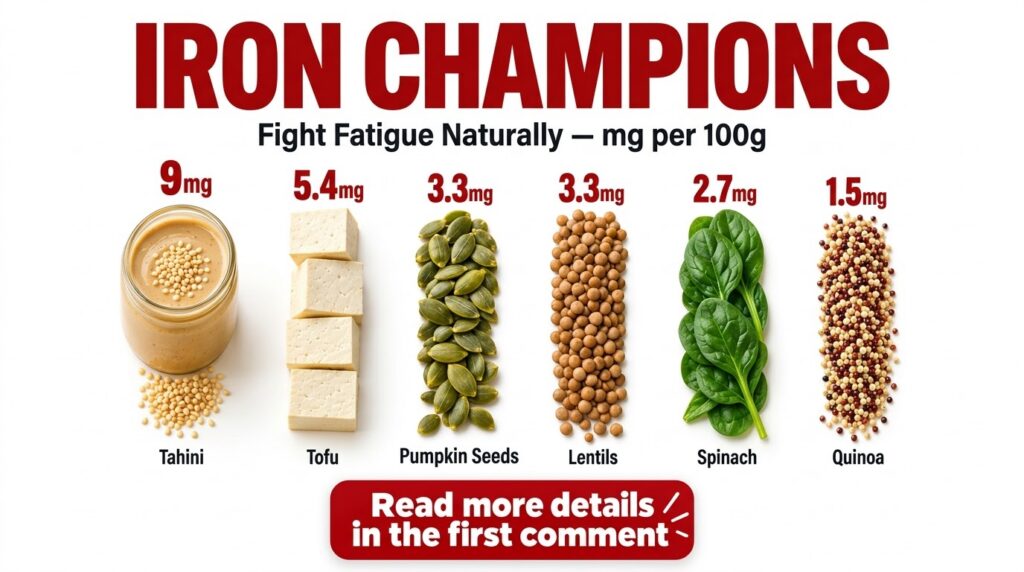
Plant-Based Iron Powerhouses Chart
Here’s a look at some fantastic plant-based foods rich in iron, along with their nutritional highlights:
| Food (100g) | Calories (approx.) | Protein (g) | Carbs (g) | Fat (g) | Fiber (g) | Main Nutrients | Best Benefit |
|---|---|---|---|---|---|---|---|
| Tahini (sesame paste) | 595 | 17 | 21 | 54 | 9 | Iron, Calcium, Magnesium, Copper | Creamy, nutrient-dense spread; healthy fats |
| Tofu (firm) | 76 | 8 | 2 | 5 | 1 | Iron, Calcium, Protein, Manganese | Versatile protein source; excellent for meat substitutes |
| Pumpkin Seeds | 574 | 24 | 18 | 49 | 6 | Iron, Magnesium, Zinc, Omega-3s | Crunchy snack; supports bone and immune health |
| Lentils (cooked) | 116 | 9 | 20 | 0.4 | 8 | Iron, Folate, Fiber, Potassium | Budget-friendly; great for digestive health and heart |
| Spinach (raw) | 23 | 2.9 | 3.6 | 0.4 | 2.2 | Iron, Vitamin K, Vitamin A, Folate | Low-calorie; packed with vitamins and antioxidants |
| Quinoa (cooked) | 120 | 4.4 | 21 | 1.9 | 2.8 | Iron, Protein (complete), Magnesium, Phosphorus | Gluten-free; complete protein source |
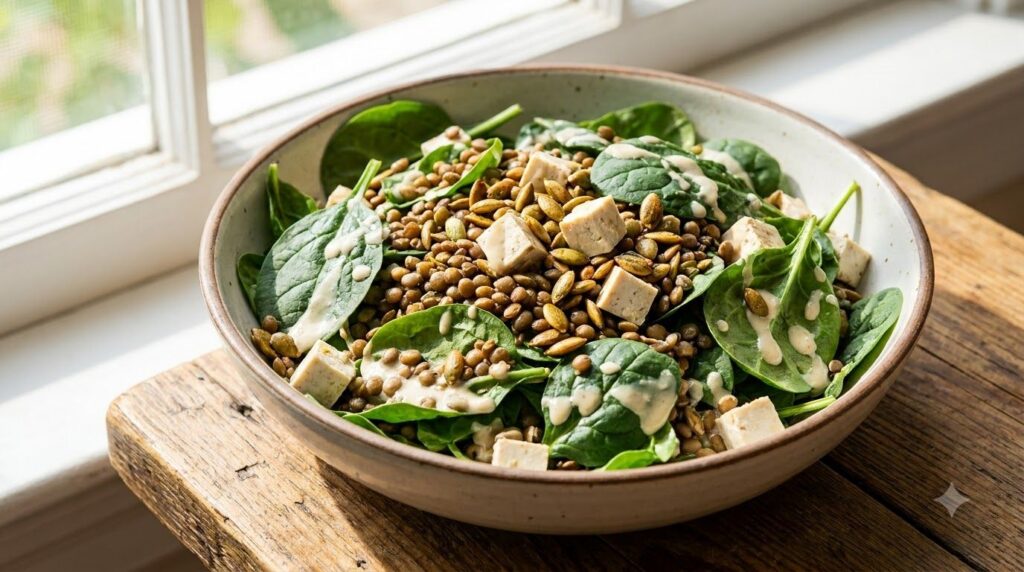
Nutrition Comparison Highlights
As you can see from the chart, these plant-based foods offer a diverse range of nutrients beyond just iron. Lentils and quinoa stand out for their excellent fiber content, crucial for digestive health and satiety. Pumpkin seeds and tahini are rich in healthy fats, which contribute to brain health and nutrient absorption, though they are higher in calories. Tofu provides a complete protein profile, making it a fantastic staple for vegetarians and vegans. Spinach, while lower in calories, offers a powerhouse of vitamins and minerals in a small package.
Remember that the iron in plant foods (non-heme iron) is absorbed differently than iron from animal sources (heme iron). This doesn’t mean it’s less effective, but understanding how to maximize its absorption is key.
Best Ways to Enjoy Plant-Based Iron
- Lentils: Add them to soups, stews, curries, or make a hearty lentil salad. They’re also great in veggie burgers.
- Tofu: Marinate and bake, grill, stir-fry, or scramble it for a protein-rich breakfast. Tofu is incredibly versatile.
- Spinach: Blend into smoothies, sauté with garlic, add to omelets, pasta sauces, or use as a base for salads.
- Pumpkin Seeds: Sprinkle them on salads, yogurt, oatmeal, or eat them as a crunchy snack. They’re also great in homemade granola.
- Quinoa: Serve as a side dish instead of rice, use in salads, or even make a breakfast porridge.
- Tahini: Essential for hummus, but also great in salad dressings, sauces for roasted vegetables, or drizzled over toast.
Who Should Prioritize Plant-Based Iron?
While everyone benefits from adequate iron, certain groups may need to pay closer attention to their intake, especially from plant sources:
- Vegetarians and Vegans: Since they don’t consume meat, understanding plant-based iron sources is crucial.
- Women of Childbearing Age: Due to menstrual blood loss, women often have higher iron needs.
- Pregnant Women: Iron requirements increase significantly to support the growing fetus and increased blood volume.
- Frequent Blood Donors: Regular donations can deplete iron stores.
- Athletes: Increased physical activity can lead to higher iron turnover.
- Individuals with Certain Medical Conditions: Some conditions can affect iron absorption or increase iron loss.
Practical Tips for Maximizing Iron Absorption
Here are some actionable tips to help your body get the most out of plant-based iron:
-
Pair with Vitamin C
Vitamin C is a powerful enhancer of non-heme iron absorption. Always try to consume your iron-rich plant foods with a source of Vitamin C. Think bell peppers, citrus fruits, strawberries, broccoli, tomatoes, or kiwi.
-
Avoid Iron Inhibitors
Certain compounds can inhibit iron absorption. These include phytates (found in grains and legumes), oxalates (in spinach and beet greens), and tannins (in tea and coffee). While you shouldn’t avoid these healthy foods, try to consume tea and coffee between meals rather than with them. Soaking, sprouting, and fermenting grains and legumes can also reduce phytate content.
-
Cook in Cast Iron
Cooking in cast iron cookware can actually increase the iron content of your food, especially acidic foods like tomato sauce.
-
Diversify Your Diet
Eat a wide variety of iron-rich plant foods regularly to ensure you’re getting a broad spectrum of nutrients.
FAQs About Plant-Based Iron
Is plant-based iron as good as meat iron?
Plant-based (non-heme) iron is absorbed differently than animal-based (heme) iron. While heme iron has a higher absorption rate, non-heme iron absorption can be significantly enhanced by combining it with Vitamin C. A well-planned plant-based diet can provide sufficient iron.
How much iron do I need daily?
Daily iron needs vary by age, gender, and life stage. Adult men typically need 8 mg, while adult women aged 19-50 need 18 mg. Pregnant women require even more. Consult a healthcare professional for personalized recommendations.
Can I get too much iron from plant foods?
It’s generally very difficult to get too much iron from food sources alone, especially plant-based ones, unless you have a specific genetic condition like hemochromatosis. Iron toxicity is more commonly associated with excessive supplement intake.
Do spinach and other leafy greens really contain iron?
Yes, spinach and other leafy greens like kale and Swiss chard are good sources of iron. However, they also contain oxalates, which can slightly inhibit iron absorption. Pairing them with Vitamin C sources is beneficial.
Are iron supplements necessary on a plant-based diet?
For most healthy individuals on a varied plant-based diet, supplements may not be necessary. However, if blood tests reveal an iron deficiency, a doctor may recommend supplementation. Always consult a healthcare provider before taking any supplements.
What are some easy ways to add more plant-based iron to my breakfast?
Try oatmeal with pumpkin seeds and berries (for Vitamin C), a tofu scramble with spinach, or a smoothie with fortified plant milk and a handful of spinach.
Conclusion
Embracing plant-based iron powerhouses is a delicious and effective way to boost your energy, support vital bodily functions, and promote overall health. From versatile lentils and tofu to crunchy pumpkin seeds and leafy spinach, the options are plentiful and easy to incorporate into your daily meals.
By understanding how to combine these foods with Vitamin C and making mindful dietary choices, you can ensure your body receives the iron it needs to thrive. Start experimenting with these fantastic ingredients today and feel the difference!
This content is for educational purposes only and should not be considered medical advice. Consult a qualified healthcare professional for personalized dietary recommendations.
Related Healthy Food Content:
- High Protein Breakfast Ideas
- Healthy Smoothie Recipes
- Best Foods for Gut Health
- Smart Grocery Shopping Tips
- Anti-Inflammatory Foods You Should Eat