Cultivate Your Own Bounty: Perennial Berries for Years of Harvest
Imagine stepping into your garden and plucking ripe, juicy berries, year after year, from plants you set in the ground just once. This isn’t a dream; it’s the incredible reality of growing perennial berries! Unlike annuals that require replanting each season, these resilient plants return faithfully, offering a continuous bounty of fresh, flavorful fruit with minimal effort over the long term. Beyond the delicious harvests, perennial berries enhance your landscape, provide valuable food for pollinators, and connect you more deeply with the rhythm of nature. If you’re ready to transform your garden into a productive, sustainable source of sweet treats, read on. We’ll explore nine fantastic perennial berries, guiding you through their care to ensure a fruitful future.
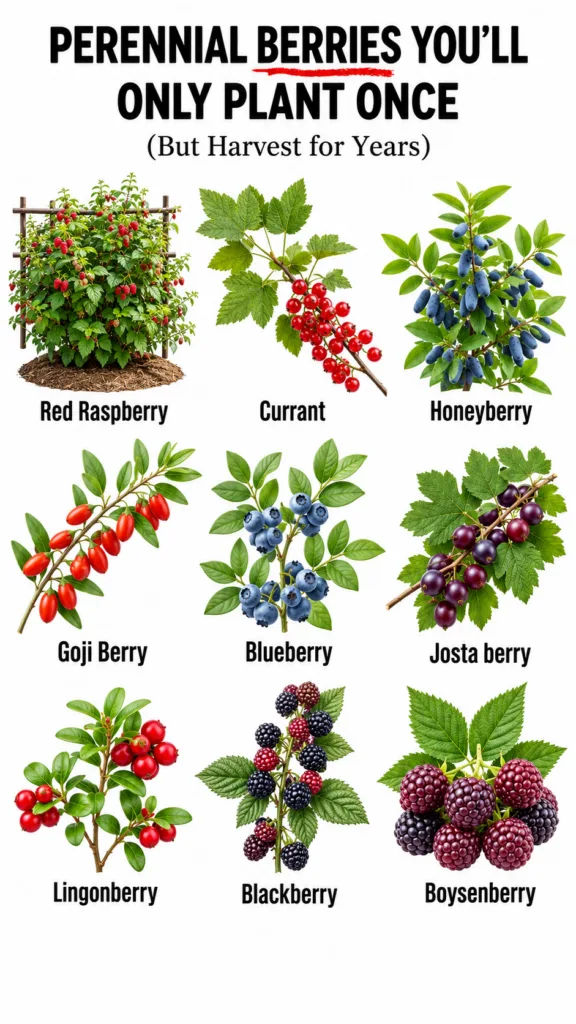 Start with a diverse selection of perennial berries for a varied harvest.
The Enduring Reward of Perennial Berries
The core principle behind perennial berries is simple yet powerful: plant once, harvest repeatedly. These plants establish a robust root system in their first year, allowing them to emerge stronger and more productive each subsequent season. This long-term investment saves you time and money, eliminating the need to purchase and replant new starts annually. Plus, mature perennial plants often yield larger, more abundant harvests, ensuring a steady supply for fresh eating, baking, jams, and freezing. By choosing varieties suited to your USDA hardiness zone, you set the stage for years of sweet success.
Meet Your Long-Term Berry Companions
Let’s dive into some of the most popular and rewarding perennial berries you can grow, complete with practical advice to help them thrive.
1. Strawberry (Fragaria × ananassa)
Who can resist the classic charm of a homegrown strawberry? These low-growing plants are a perennial favorite, perfect for groundcover, containers, or dedicated berry patches.
- Hardiness: Zones 3-10
- Plant type: Spreading groundcover perennial
- Exposure: Full sun (at least 6-8 hours daily)
- Soil: Moist, well-draining, slightly acidic to neutral (pH 5.5-6.8) with rich organic matter.
- Height: 6-12 inches
- Spread: 1-2 feet, spreading by runners.
Harvest: June-July for June-bearing varieties; everbearing and day-neutral types produce smaller flushes throughout the summer and fall. Pick berries when fully red and shiny. To ensure continuous production, consider planting a mix of June-bearing and everbearing varieties.
Care Tip: Mulch around plants with straw to suppress weeds, conserve moisture, and keep berries clean. Renovate June-bearing patches after harvest by mowing foliage, thinning plants, and fertilizing.
Common Mistake: Overcrowding. Allowing too many runners to root can reduce berry size and yield. Thin out excess runners to encourage stronger parent plants.
2. Raspberry (Rubus idaeus)
Raspberries are a delightful addition to any garden, offering sweet, delicate fruit from canes that require simple support.
- Hardiness: Zones 4-8
- Plant type: Deciduous shrub (cane fruit)
- Exposure: Full sun
- Soil: Moist, well-draining loam rich in organic matter (pH 6.0-6.8).
- Height: 3-8 feet
- Spread: 2-3 feet, spreading by suckers.
Harvest: Summer. Red raspberries typically fruit on second-year canes (floricanes); everbearing varieties produce on both first-year (primocanes) and second-year canes. Black and purple raspberries fruit only on floricanes.
Care Tip: Provide a trellis or stakes for support to keep canes upright, improve air circulation, and ease harvesting. Prune after harvest by removing old, fruited canes at ground level to encourage new growth.
Common Mistake: Not pruning. Regular pruning is essential to remove spent canes, prevent disease, and encourage new, productive growth. Learn to distinguish between primocanes and floricanes for effective pruning.
3. Blueberry (Vaccinium spp.)
Blueberries are renowned for their antioxidant-rich fruits and beautiful fall foliage. They thrive in specific soil conditions, making site preparation crucial.
- Hardiness: Zones 3-10 (varies by species/cultivar; highbush generally 4-7, lowbush 2-8, rabbiteye 7-10)
- Plant type: Deciduous shrub
- Exposure: Full sun
- Soil: Very acidic (pH 4.5-5.5), moist, and well-draining with ample organic matter.
- Height: 3-6 feet
- Spread: 3-5 feet.
Harvest: Mid to late summer. Berries turn blue before they are fully ripe; wait a few days after coloring for maximum sweetness.
Care Tip: Test your soil pH before planting. If your soil isn’t naturally acidic, amend with peat moss or elemental sulfur. Consider growing in large containers with an acidic potting mix if your native soil is unsuitable. Plant at least two different varieties for better cross-pollination and higher yields.
Common Mistake: Planting in alkaline soil. Blueberries will not thrive and often decline in soils with a pH above 5.5. Regular soil testing and appropriate amendments are key.
4. Blackberry (Rubus allegheniensis)
Blackberries offer robust flavor and productivity, often growing vigorously with proper management.
- Hardiness: Zones 4-8
- Plant type: Deciduous shrub (cane fruit)
- Exposure: Full sun
- Soil: Well-draining, fertile loam (pH 6.0-6.8).
- Height: 5-8 feet
- Spread: 3-5 feet, spreading by suckers.
Harvest: Late summer. Blackberries are ripe when they are dull black and easily pull free from the plant. Unlike raspberries, the core (torus) stays within the berry when picked.
Care Tip: Trellising is highly recommended for managing growth and facilitating harvest. Prune spent floricanes (canes that fruited) back to the ground after harvest. For primocane-fruiting varieties, you can prune all canes back in late winter for a single fall crop.
Common Mistake: Allowing plants to become a tangled mess. Blackberries can be vigorous. Regular pruning and training are vital for disease prevention, productivity, and easier harvesting.
5. Lingonberry (Vaccinium vitis-idaea)
A lesser-known but highly ornamental and productive berry, lingonberries offer tart, cranberry-like fruits and evergreen foliage.
- Hardiness: Zones 2-6
- Plant type: Evergreen shrub/groundcover
- Exposure: Partial shade is preferred, especially in warmer zones; full sun in cooler climates.
- Soil: Acidic (pH 4.0-5.5), moist, well-draining, and rich in organic matter.
- Height: 6-12 inches
- Spread: 1-2 feet.
Harvest: Late summer to fall, often with a second smaller crop. Berries are bright red when ripe.
Care Tip: Much like blueberries, lingonberries require acidic soil. Incorporate plenty of peat moss or use an acidic fertilizer. They appreciate consistent moisture, especially during dry spells.
Common Mistake: Planting in neutral or alkaline soil. This will quickly lead to chlorosis (yellowing leaves) and stunted growth. Ensure proper soil pH from the start.
6. Currant (Ribes rubrum – Red Currant pictured)
Currants, including red, black, and white varieties, are elegant shrubs that produce flavorful berries in charming clusters.
- Hardiness: Zones 3-8
- Plant type: Deciduous shrub
- Exposure: Full sun to partial shade (prefers some afternoon shade in hot climates).
- Soil: Moist, well-draining, rich loam (pH 6.0-7.0).
- Height: 3-5 feet
- Spread: 3-5 feet.
Harvest: Mid-summer. Harvest entire clusters when berries are firm, brightly colored, and taste sweet-tart.
Care Tip: Prune in late winter or early spring by removing the oldest (3-4 years old), least productive stems to encourage new growth. A mature plant should have about 9-12 main stems of varying ages.
Common Mistake: Neglecting air circulation. Plant currants with adequate spacing (3-5 feet apart) to allow for good airflow, which helps prevent fungal diseases like powdery mildew.
7. Elderberry (Sambucus spp.)
Known for its beautiful flowers and immunity-boosting berries, elderberry is a robust, fast-growing shrub.
- Hardiness: Zones 3-7 (some varieties up to 9)
- Plant type: Deciduous shrub
- Exposure: Full sun to partial shade
- Soil: Moist, well-draining, adaptable to a range of soil types (pH 5.5-7.0). Tolerant of wet conditions.
- Height: 5-12 feet
- Spread: 5-12 feet.
Harvest: Late summer. Berries must be cooked before consumption as raw berries contain compounds that can cause stomach upset. Flowers are also edible and used for syrups and fritters.
Care Tip: Elderberries are often productive without extensive pruning, but you can improve air circulation and manage size by removing older, less vigorous canes at ground level in late winter. Plant at least two varieties for better cross-pollination and berry set.
Common Mistake: Consuming raw berries. Always cook elderberries thoroughly to neutralize potentially toxic compounds before eating.
8. Goji Berry (Lycium barbarum)
These superfood berries, native to Asia, are gaining popularity for their nutritional value and resilience.
- Hardiness: Zones 5-9
- Plant type: Deciduous shrub/vine
- Exposure: Full sun
- Soil: Well-draining, adaptable, but prefers slightly alkaline to neutral (pH 6.5-8.0).
- Height: 3-10 feet (can be trellised like a vine)
- Spread: 4-6 feet.
Harvest: Summer through fall. Berries are bright orange-red when ripe. Gently pull or shake them from the branches.
Care Tip: Goji berries can grow quite large and vining. Provide a sturdy trellis or support system to manage their growth and make harvesting easier. Prune in late winter to shape the plant and encourage new fruiting wood.
Common Mistake: Forgetting about thorns. Goji plants have small, sharp thorns, so wear gloves when handling and harvesting.
9. Honeyberry / Haskap (Lonicera caerulea)
Often referred to simply as ‘Honeysuckle’ in general terms, the edible Honeyberry (or Haskap) produces unique, elongated blue fruits that ripen very early in the season.
- Hardiness: Zones 2-7
- Plant type: Deciduous shrub
- Exposure: Full sun to partial shade (prefers full sun in cooler climates, some afternoon shade in warmer zones)
- Soil: Moist, well-draining, adaptable to various soil types (pH 5.0-7.0).
- Height: 3-6 feet
- Spread: 3-5 feet.
Harvest: Early summer (often before strawberries!). Berries turn blue, but like blueberries, they need a few more days after coloring to develop their full sweet-tart flavor.
Care Tip: Honeyberries are not self-fertile, so you need to plant at least two different compatible varieties for successful pollination and fruit set. Choose varieties that bloom at the same time.
Common Mistake: Planting only one variety. Without cross-pollination, your honeyberry plants will produce very little to no fruit.
General Care for a Bountiful Berry Patch
While each berry has its specific needs, some general practices will ensure your perennial patch thrives:
Site Selection and Soil Preparation
Most berries prefer a site with good air circulation and protection from strong winds. Prepare your soil thoroughly before planting. This often means testing the pH, amending with compost or other organic matter to improve drainage and fertility, and adjusting pH as needed (e.g., adding sulfur for acid-lovers like blueberries, or lime for goji berries if your soil is too acidic). A healthy soil foundation is key to long-term success.
Watering and Mulching
Consistent moisture is crucial, especially during flowering and fruiting. Aim for 1-2 inches of water per week, either from rain or irrigation. Overhead watering can encourage fungal diseases, so consider drip irrigation or soaker hoses. Apply a generous layer of organic mulch (straw, wood chips, shredded leaves) around your plants. Mulch helps retain soil moisture, suppresses weeds, and moderates soil temperature, creating a stable environment for roots.
Fertilization and Pest Management
Feed your perennial berries annually in early spring with a balanced organic fertilizer, or one formulated for acid-loving plants if appropriate. Healthy plants are naturally more resistant to pests and diseases. Regularly inspect your plants for any signs of trouble. Good air circulation through proper spacing and pruning helps prevent many fungal issues. For pests, identify the culprit and try least-disruptive solutions first, such as hand-picking, horticultural oils, or encouraging beneficial insects.
Understanding USDA Zones and Regional Nuances
USDA Hardiness Zones indicate a plant’s ability to survive winter cold. However, they don’t account for summer heat, humidity, rainfall, or local microclimates. Gardeners in warmer zones (8-10) may need to provide afternoon shade for some berries, or select heat-tolerant varieties. In cooler zones (3-5), consider winter protection like extra mulch or burlap wraps for less hardy plants. Always check with your local extension service for specific variety recommendations and planting calendars tailored to your region’s unique climate.
Common Mistakes to Avoid for Perennial Berry Growers
To maximize your harvest and ensure the longevity of your berry plants, sidestep these common pitfalls:
- Ignoring Soil pH: This is especially critical for blueberries and lingonberries. Incorrect pH can lead to nutrient deficiencies and plant decline.
- Improper Spacing: Cramped plants lead to poor air circulation, making them more susceptible to diseases and reducing overall yield. Give them room to grow!
- Skipping Pruning: Regular pruning removes old, unproductive wood, stimulates new growth, and maintains plant health and vigor. It’s not optional for most cane fruits and shrubs.
- Inconsistent Watering: Berries are sensitive to drought, especially when fruits are developing. Dry spells can cause small, sparse, or aborted fruit.
- Planting Unsuitable Varieties: Choosing a variety not suited to your hardiness zone or climate will lead to disappointment. Research specific cultivars that thrive in your area.
Start Your Own Berry Legacy
Planting perennial berries is more than just gardening; it’s an investment in future harvests, a commitment to sustainable living, and a source of continuous joy. The satisfaction of plucking your own delicious fruit, knowing you nurtured it from a single plant, is truly unparalleled. By understanding their needs and providing consistent care, you’ll establish a vibrant berry patch that will reward you and your family with sweet, fresh flavors for many seasons to come. So, choose your favorites, prepare your soil, and get ready to enjoy the enduring bounty of perennial berries!