Boost Your Immunity: Garlic, Ginger, Turmeric Explained
In our journey toward healthier living, few things are as crucial as a robust immune system. It’s our body’s natural defense against everyday illnesses and environmental challenges. While many factors contribute to strong immunity, the food we eat plays a starring role.
Did you know that everyday kitchen staples like garlic, ginger, and turmeric are packed with compounds that can help fortify your body’s defenses? These powerful ingredients have been cherished for centuries in traditional medicine and culinary practices around the world. They’re not just flavor enhancers; they’re nutritional powerhouses!
In this article, we’ll explore the unique benefits of garlic, ginger, and turmeric for your immune health. You’ll learn about the science behind their effectiveness, practical ways to incorporate them into your meals, and important considerations for safe consumption. Get ready to elevate your wellness naturally!
The Power Trio: Garlic, Ginger, and Turmeric for Immunity
Let’s dive into the individual strengths of these incredible superfoods.
Garlic: The Potent Protector
Garlic is more than just a flavorful addition to your favorite dishes. This pungent bulb has a long history of use for its medicinal properties.
- Benefits: Garlic is well-known for its antimicrobial, antiviral, and antibacterial properties. Research suggests it may help reduce the severity of common colds and the flu. It also supports heart health and has antioxidant effects.
- Scientific Explanation: The magic in garlic largely comes from allicin, a sulfur-containing compound released when garlic is crushed, chopped, or chewed. Allicin is responsible for many of garlic’s health-promoting effects.
- Best Ways to Eat: To maximize allicin, consume garlic raw or add it towards the end of cooking. Think fresh garlic in salad dressings, pestos, bruschetta, or finely minced in a finished sauté. Roasting garlic also mellows its flavor and offers a different set of benefits.
- Nutrition Snapshot: Garlic is a good source of Vitamin C, Vitamin B6, manganese, and selenium.
Ginger: The Warming Wellness Root
Ginger, with its distinctive spicy and aromatic flavor, is another ancient remedy revered for its health benefits.
- Benefits: Ginger is a powerful anti-inflammatory and antioxidant. It’s famed for its ability to soothe nausea and support digestive health. Its warming properties can also be comforting during cold and flu season, and some studies suggest it has antiviral activity.
- Scientific Explanation: The primary bioactive compound in ginger is gingerol, which gives ginger its unique flavor and many of its medicinal properties. Gingerol has potent anti-inflammatory and antioxidant effects.
- Best Ways to Eat: Fresh ginger can be grated into hot teas, stir-fries, soups, smoothies, and marinades. It also works wonderfully in baked goods like gingerbread or muffins.
- Nutrition Snapshot: Ginger provides manganese, potassium, copper, and magnesium.
Turmeric: The Golden Healer
This vibrant yellow spice, a staple in Indian cuisine, has gained significant attention for its remarkable health-promoting compounds.
- Benefits: Turmeric is widely celebrated for its strong anti-inflammatory and antioxidant properties. It can support overall immune cell function, aid in digestion, and may help with joint health.
- Scientific Explanation: The main active compound in turmeric is curcumin, which is responsible for its brilliant color and most of its powerful health benefits. Curcumin’s bioavailability (how well the body absorbs it) is enhanced when consumed with black pepper, due to a compound called piperine.
- Best Ways to Eat: Turmeric shines in curries, lentil dishes, and roasted vegetables. Try a soothing “golden milk” latte or add a pinch to smoothies and eggs.
- Nutrition Snapshot: Turmeric contains iron, manganese, Vitamin B6, and dietary fiber.
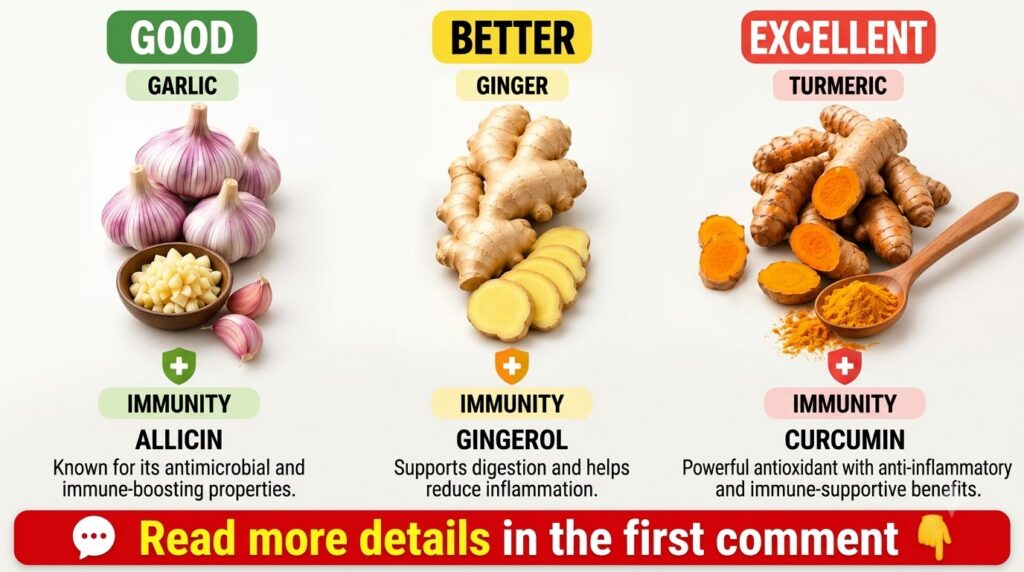
Nutritional Snapshot: Good, Better, Excellent for Immunity
While all three are fantastic for your health, here’s a quick comparison of their key immune-supporting aspects:
| Ingredient | Main Active Compound | Key Immune Benefit | Absorption Tip |
|---|---|---|---|
| Garlic | Allicin | Potent antimicrobial properties | Consume raw or lightly cooked |
| Ginger | Gingerol | Strong anti-inflammatory and antiviral support | Fresh is often best |
| Turmeric | Curcumin | Powerful anti-inflammatory and antioxidant | Combine with black pepper |
Incorporating These Immune Boosters into Your Diet
Adding garlic, ginger, and turmeric to your daily routine can be simple and delicious.
Everyday Meal Ideas
- Garlic: Mince a clove into homemade salad dressings, add to pasta sauces, sauté with vegetables, or spread roasted garlic on whole-wheat toast.
- Ginger: Brew fresh ginger tea with a slice of lemon and honey. Add grated ginger to stir-fries, marinades for chicken or fish, and fruit smoothies.
- Turmeric: Stir into your morning scrambled eggs, add to lentil or vegetable curries, mix into rice dishes, or blend into a “golden latte” with warm milk and a pinch of black pepper.
Tips for Maximizing Benefits
- Activate Turmeric: Always pair turmeric with a pinch of black pepper to significantly boost the absorption of curcumin by your body.
- Chop Garlic: Crush or mince garlic and let it sit for 5-10 minutes before cooking to allow allicin to form.
- Go Fresh: While dried spices are convenient, fresh garlic, ginger, and turmeric roots often contain higher concentrations of beneficial compounds.
- Be Consistent: Regular, moderate consumption is more beneficial than occasional large doses.
Potential Considerations and Risks
While generally safe for most people, it’s important to be aware of potential considerations:
- Garlic: Large amounts of raw garlic can sometimes cause bad breath, body odor, stomach upset, or heartburn. It may also interact with blood-thinning medications.
- Ginger: High doses of ginger might cause mild heartburn, diarrhea, or stomach discomfort in some individuals. Like garlic, it may have blood-thinning effects.
- Turmeric: While usually well-tolerated, very high doses of turmeric can cause digestive upset. Due to its potential blood-thinning properties, those on anticoagulant medications or with gallstone issues should consult a doctor before consuming large amounts.
Always consult a qualified healthcare professional for personalized dietary recommendations, especially if you have underlying health conditions or are taking medications.
Practical Tips for a Healthier Immune System
- Eat a Balanced Diet: Focus on a wide variety of fruits, vegetables, whole grains, and lean proteins.
- Stay Hydrated: Drink plenty of water throughout the day.
- Prioritize Sleep: Aim for 7-9 hours of quality sleep each night.
- Manage Stress: Practice stress-reducing techniques like meditation or yoga.
- Regular Exercise: Incorporate moderate physical activity into your routine.
FAQs About Immune-Boosting Foods
Can I take garlic, ginger, and turmeric together?
Yes, combining them in meals is generally safe and can offer complementary benefits. Many recipes, especially in Asian and Indian cuisine, naturally use these ingredients together.
Are supplements as effective as fresh ingredients?
While supplements can provide concentrated doses of active compounds, whole foods offer a broader spectrum of nutrients and fiber that work synergistically. Fresh ingredients are often preferred for overall health benefits.
How much should I consume daily for immune benefits?
There’s no single recommended daily amount. For garlic, 1-2 cloves daily might be beneficial. For ginger, about 1-2 grams of fresh ginger root per day (about a 1/2-inch piece). For turmeric, 1/2-1 teaspoon of ground turmeric with black pepper daily can be a good starting point. Always start with smaller amounts and listen to your body.
Are there any side effects to watch out for?
Mild digestive upset (heartburn, gas) can occur with large amounts. If you’re on blood-thinning medication, consult your doctor due to potential interactions.
Can children consume these ingredients for immunity?
In moderation, as part of a balanced diet, yes. Small amounts of cooked garlic and ginger are generally safe. Turmeric is also fine in cooking. Always introduce new foods gradually and observe for any reactions.
Does cooking reduce their immune-boosting properties?
Cooking can reduce some heat-sensitive compounds, like allicin in garlic. However, many beneficial compounds, like gingerol and curcumin, remain largely intact. For garlic, raw consumption often maximizes allicin. For turmeric, cooking with a fat and black pepper can enhance curcumin absorption.
What’s the best way to activate turmeric’s benefits?
Always consume turmeric with black pepper and a source of healthy fat (like olive oil, coconut oil, or avocado) to significantly increase the bioavailability and absorption of curcumin.
Conclusion
Garlic, ginger, and turmeric are not just culinary stars; they are powerful allies in supporting your immune system. By regularly incorporating these “good, better, excellent” ingredients into your diet, you can naturally enhance your body’s defenses, boost overall wellness, and enjoy incredibly flavorful meals.
Start experimenting with these natural heroes in your kitchen today. Your immune system will thank you!
This content is for educational purposes only and should not be considered medical advice. Consult a qualified healthcare professional for personalized dietary recommendations.