Imagine biting into a juicy fig, a sweet grape, or a tangy kiwi that you grew yourself, right in your backyard! It’s a dream for many gardeners, and with the right techniques, it’s more achievable than you might think. One of the most rewarding and cost-effective ways to expand your fruit garden is by propagating plants from cuttings. This method allows you to create new plants that are genetically identical to the parent plant, ensuring you get the exact fruit you love.
At Garden – L. Quyên, we believe that gardening should be enjoyable and accessible to everyone. That’s why we’re diving into the wonderful world of fruit propagation. Today, we’ll explore how you can grow 12 different delicious fruits from simple cuttings, turning your garden into a thriving home harvest!
What Exactly Are Cuttings?
Plant cuttings are essentially small pieces of a parent plant – usually a stem, leaf, or root – that are removed and encouraged to grow into a new, independent plant. This asexual reproduction method bypasses seeds, meaning the new plant will be a clone of the original, preserving desirable traits like fruit flavor, disease resistance, or plant size.
Why Choose Cuttings for Fruit Propagation?
- Cost-Effective: Instead of buying new plants, you can multiply your existing favorites for free.
- True to Type: Unlike seeds, which can result in genetic variations, cuttings guarantee a plant identical to its parent.
- Faster Fruiting: Plants grown from cuttings often mature and bear fruit much faster than those grown from seed.
- Easy & Accessible: Many fruit plants are surprisingly easy to propagate from cuttings, making it a great project for gardeners of all skill levels.
Essential Tips for Successful Fruit Cuttings
Before we delve into specific fruits, here are some general guidelines to boost your success rate:
- Timing is Key: The best time to take cuttings varies by plant type and region, but often late spring to early summer for softwood, and late fall to early spring for hardwood cuttings.
- Healthy Parent Plant: Always select cuttings from vigorous, disease-free parent plants.
- Sterile Tools: Use clean, sharp pruning shears or a knife to make clean cuts and prevent disease transmission.
- Rooting Hormone: While not always necessary, a rooting hormone (powder or liquid) can significantly increase rooting success for many species.
- Well-Draining Medium: Cuttings need a light, well-draining potting mix, often a blend of peat moss and perlite or sand.
- High Humidity: Create a humid environment using a plastic dome, plastic bag, or misting regularly to prevent the cuttings from drying out.
- Patience: Rooting takes time, often several weeks to months. Don’t disturb your cuttings too frequently.
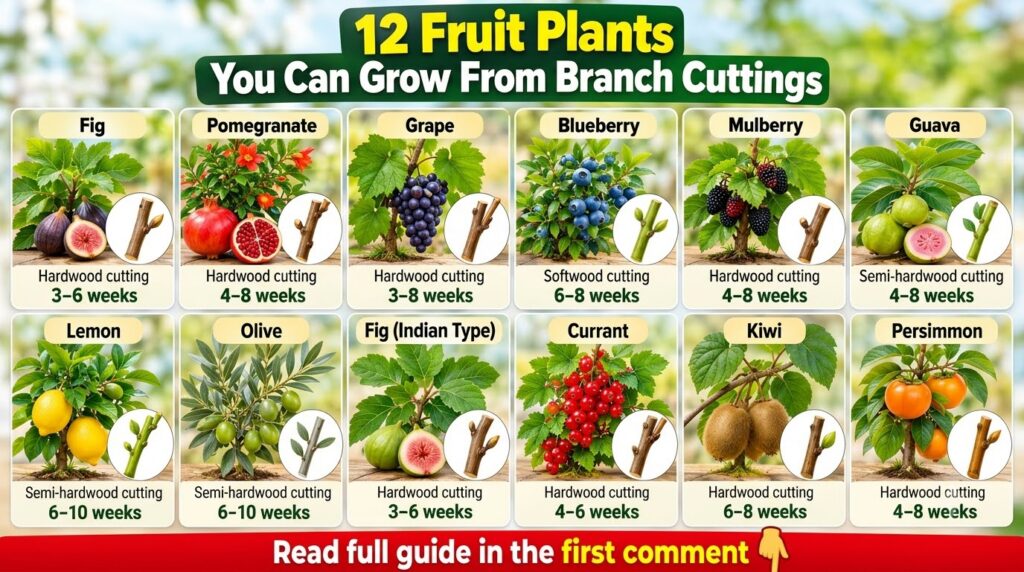
12 Fruits You Can Grow from Cuttings
1. Figs (Ficus carica)
Figs are incredibly easy to grow from hardwood cuttings. Take 8-12 inch long dormant cuttings in late winter or early spring, bury them deeply in moist soil or potting mix, leaving only a couple of buds exposed. Rooting typically occurs within a few weeks, and you can often get fruit in the first year!
2. Pomegranate (Punica granatum)
Pomegranates also do well from hardwood cuttings. Take 10-12 inch cuttings in late winter. Plant them in well-draining soil, ensuring at least two nodes are buried. They usually root within 2-3 months.
3. Grapes (Vitis vinifera)
Grapes are champions of propagation by hardwood cuttings. Collect 12-18 inch cuttings in late winter from the previous season’s growth. Bury two-thirds of the cutting in moist soil. Rooting can take 6-8 weeks, and they grow quickly once established.
4. Kiwi (Actinidia deliciosa)
Kiwi vines can be propagated from semi-hardwood cuttings taken in summer. Cuttings should be 6-8 inches long with a few leaves. Treat with rooting hormone and keep in a humid environment. Rooting typically takes 4-8 weeks.
5. Blackberries (Rubus fruticosus)
Blackberries root easily from semi-hardwood or softwood cuttings. Take 6-8 inch cuttings in late spring to early summer. You can also propagate them via tip layering or root cuttings.
6. Raspberries (Rubus idaeus)
Similar to blackberries, raspberries can be grown from softwood cuttings or root cuttings. Take softwood cuttings in spring or early summer, 4-6 inches long. Root cuttings, taken in dormancy, are also very effective.
7. Blueberries (Vaccinium spp.)
Blueberries are often grown from softwood cuttings taken in late spring to early summer. Use 4-6 inch cuttings and provide an acidic rooting medium, as blueberries require specific soil conditions. Rooting can take longer, up to 2-3 months.
8. Currants (Ribes spp.)
Red, black, and white currants are very easy to grow from hardwood cuttings. Take 8-10 inch cuttings in late fall or early winter when dormant. They root readily and establish quickly.
9. Gooseberries (Ribes uva-crispa)
Gooseberries, like currants, are best propagated from dormant hardwood cuttings. Choose 8-10 inch pieces from healthy, mature wood. Plant in autumn or early spring for best results.
10. Olives (Olea europaea)
Olives can be grown from semi-hardwood cuttings taken in late spring to early summer. Cuttings should be 6-10 inches long. They can be slow to root, often taking 2-3 months, and benefit greatly from rooting hormone and bottom heat.
11. Lemons (Citrus limon)
While many citrus can be tricky, lemons can be propagated from semi-hardwood cuttings. Take 6-8 inch cuttings in late spring or early summer. Keep humidity high and maintain warm temperatures for rooting, which can take several months.
12. Elderberries (Sambucus spp.)
Elderberries are incredibly forgiving and root easily from hardwood cuttings. Take 10-12 inch dormant cuttings in late winter or early spring. They have a high success rate and grow into productive shrubs quickly.
Step-by-Step Guide to Taking & Planting Cuttings
- Select Your Branch: Choose a healthy, vigorous stem that is free from pests or diseases. For hardwood cuttings, select mature, pencil-thick wood from the previous season’s growth. For softwood/semi-hardwood, choose new growth that is still pliable but not too soft.
- Make the Cut: Using sharp, sterile shears, make a clean cut just below a node (where a leaf or bud emerges). Your cutting should be 4-12 inches long, depending on the fruit type.
- Prepare the Cutting: Remove any leaves from the lower half to two-thirds of the cutting. If using rooting hormone, dip the cut end into the hormone powder or liquid according to product instructions.
- Plant the Cutting: Insert the prepared cutting into your pre-moistened, well-draining rooting medium. Ensure at least one node is buried beneath the surface. You can plant multiple cuttings in one pot, spacing them a few inches apart.
- Provide Aftercare: Place the pot in a warm location with indirect light. Maintain consistent moisture in the rooting medium but avoid waterlogging. Create a mini-greenhouse effect with a plastic bag or dome to ensure high humidity.
Troubleshooting Common Issues
- No Rooting: Ensure proper humidity, temperature, and moisture. Rooting hormone can help.
- Rotting: This often indicates too much moisture or a non-sterile cutting tool. Improve drainage and airflow.
- Wilting: Increase humidity and ensure the rooting medium is adequately moist.
- Pests: Inspect cuttings regularly and address any pest issues promptly with organic solutions.
Growing your own fruit from cuttings is a truly rewarding endeavor that can transform your garden and provide you with an abundance of fresh, homegrown produce. With a little knowledge, a few simple tools, and a dash of patience, you’ll be well on your way to a flourishing fruit paradise. Happy gardening!