Grow Healthier, More Productive Fruit Trees with Post-Harvest Pruning
Gardening is a journey of continuous learning, and for those who enjoy the sweet reward of homegrown fruit, mastering the art of pruning is crucial. While many gardeners focus on planting and harvesting, the period immediately after harvest offers a golden opportunity to shape your fruit trees for future success. This practice, known as post-harvest pruning, is nature’s healing touch, ensuring your trees remain healthy, vigorous, and incredibly productive year after year!
Why Post-Harvest Pruning is Essential for Your Fruit Trees
Pruning might seem daunting, but understanding its benefits makes it an indispensable part of your gardening routine. Post-harvest pruning is particularly effective because the tree has just expended energy producing fruit and is entering a period of slight dormancy or reduced activity, making it less stressful.
Promotes Health and Vigor
By removing dead, diseased, or damaged branches, you prevent potential entry points for pests and diseases, keeping your tree robust. It also helps to improve air circulation and sunlight penetration, which are vital for overall tree health.
Boosts Future Yields
Removing old, unproductive wood encourages the tree to produce new growth that will bear fruit in the next season. It helps redistribute the tree’s energy, ensuring that nutrients go to where they’re needed most, leading to more flowers and, ultimately, more fruit.
Improves Fruit Quality
Thinning out the canopy ensures that remaining branches receive adequate sunlight and air. This results in larger, sweeter, and better-colored fruits because each fruit has more resources dedicated to its development.
Disease Prevention
Dead or crossing branches can rub against each other, creating wounds that are perfect breeding grounds for fungi and bacteria. Prompt removal minimizes these risks, contributing to a healthier orchard.
When and How to Prune After Harvest
The timing and technique of post-harvest pruning vary slightly depending on the type of fruit tree, but some general principles apply to all. Our friends at L. Quyên have put together a fantastic guide on this very topic!
The Right Timing
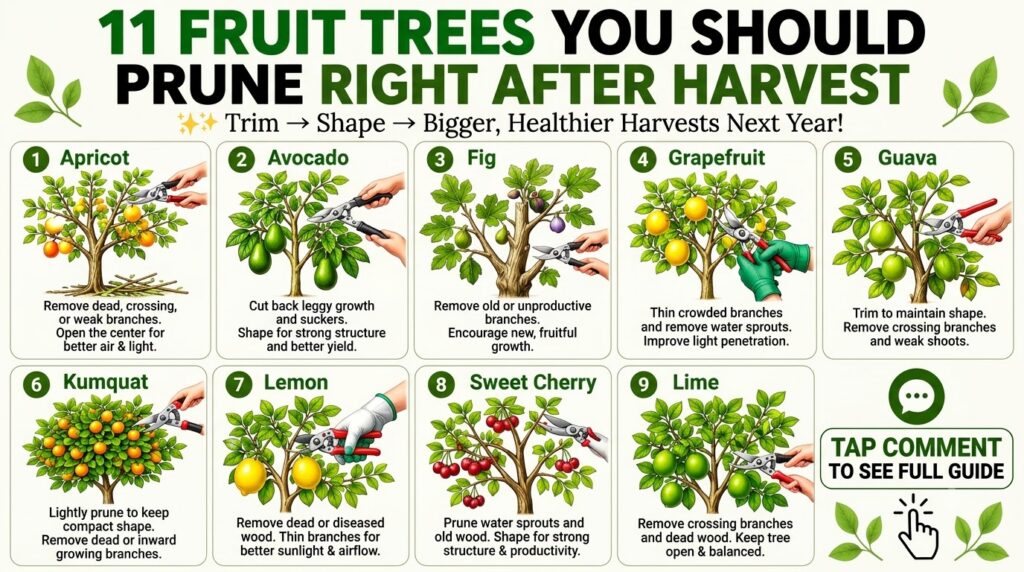
Generally, deciduous fruit trees (those that lose their leaves in winter, like apples, peaches, and cherries) are best pruned in late winter when dormant. However, some specific fruit trees truly benefit from immediate post-harvest pruning, especially those that fruit on old wood or benefit from shaping before winter sets in. The infographic above showcases 11 such trees, including apricots, figs, and sweet cherries, which thrive when pruned right after their harvest.
General Pruning Techniques
- Remove the Three D’s: Always start by cutting away any Dead, Diseased, or Damaged branches.
- Open the Canopy: Prune crossing branches and those growing inwards to improve air circulation and light penetration. Aim for a vase-like shape for many fruit trees.
- Control Height and Spread: Trim branches to maintain a manageable size, making future harvests easier and keeping the tree robust.
- Make Clean Cuts: Use sharp, clean pruning shears or saws to avoid tearing bark, which can invite disease. Cut just outside the branch collar.
Specific Pruning Tips for Popular Fruit Trees
While the general rules apply, some fruit trees have unique needs. Here are a few examples that often benefit from post-harvest attention:
- Stone Fruits (e.g., Apricots, Sweet Cherries): These often benefit from summer pruning (post-harvest) to reduce vigor, improve sunlight exposure to developing fruit buds for the next year, and prevent silver leaf disease in some climates. Focus on removing upright growth and opening the canopy.
- Citrus Trees (e.g., Lemons, Limes, Grapefruits, Kumquats): Citrus can be pruned lightly throughout the year, but a more significant cleanup after a main harvest helps remove suckers, water sprouts, and thin out dense growth. This encourages a healthy shape and better air circulation.
- Figs and Guavas: These can be pruned after their main crop to encourage more fruiting wood for the next season. Figs especially tolerate hard pruning and will respond with vigorous new growth.
- Avocados: Prune avocado trees after harvest to remove dead or weak branches and to manage their size. Aim for an open structure to ensure good light penetration.
Essential Tools and Safety First
Having the right tools is half the battle. Invest in high-quality pruning shears (hand pruners for smaller branches), loppers (for thicker branches), and a pruning saw (for larger limbs). Always wear sturdy gloves and eye protection to prevent injuries. For taller trees, use a stable ladder or consider hiring a professional.
Common Pruning Mistakes to Avoid
- Over-Pruning: Removing too much foliage at once can stress the tree and reduce its ability to photosynthesize.
- Pruning at the Wrong Time: While this article focuses on post-harvest, pruning some trees too late in the season can stimulate new growth that is vulnerable to frost. Always research specific tree needs.
- Leaving Stubs: Cuts that are too far from a bud or branch collar can create stubs that don’t heal properly and can become entry points for disease.
- Using Dull Tools: Dull tools can tear branches, leaving ragged wounds that are slow to heal and prone to infection.
Embrace the Art of Pruning for a Bountiful Garden
Post-harvest pruning is more than just cutting branches; it’s an act of care that contributes significantly to the long-term health and productivity of your fruit trees. By taking the time to prune correctly, you’re not just ensuring a healthier tree, but also guaranteeing a more abundant and delicious harvest in the seasons to come. So, grab your shears and get ready to help your fruit trees thrive!
Happy gardening!