Unlock Your Soil’s Secrets with Simple Hand Tests!
Every thriving garden has a secret, and it’s right beneath your feet: healthy soil! Understanding your soil’s composition and health is the first step towards a flourishing garden, bountiful harvests, and vibrant blooms. But you don’t need expensive lab tests to get started. With just your hands and a few household items, you can uncover vital information about your garden’s foundation.
Join us as we explore six easy, practical hand tests that will empower you to become a soil detective and give your plants exactly what they need to thrive!
Why Healthy Soil Matters
Think of your soil as the pantry, plumbing, and foundation for your plants. It provides essential nutrients, stores water, allows for proper drainage, and provides anchorage for roots. Poor soil can lead to stunted growth, nutrient deficiencies, pest problems, and plants that just won’t thrive. Good soil, on the other hand, means happier, healthier plants and less work for you!
The Power of Simple Hand Tests
These DIY soil tests are fantastic because they are:
- Accessible: No special equipment or scientific background needed.
- Cost-Effective: You likely have everything you need already.
- Informative: They give you immediate, actionable insights into your soil’s condition.
- Engaging: A fun way to connect with your garden and understand its ecosystem.
Let’s dig in and learn how to perform these vital tests!
6 Essential Hand Tests for Your Garden Soil
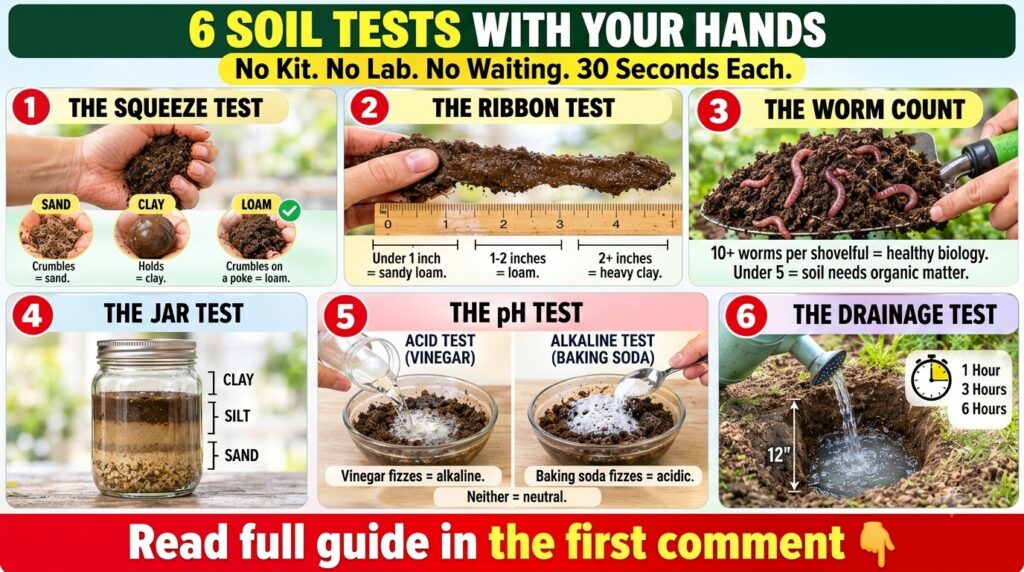
1. The Visual Inspection & Feel Test
Your eyes and hands are your best tools here.
- How to do it: Grab a handful of dry soil from different areas of your garden.
- What to look for:
- Color: Darker soil usually indicates higher organic matter content, which is excellent for fertility. Lighter, sandy soils may be less fertile.
- Texture: Does it feel gritty (sand), smooth/floury (silt), or sticky/clumpy (clay)? Good soil often has a crumbly, loose texture.
- Debris: Look for plant roots, small stones, or even tiny bits of organic matter.
- What it tells you: Gives a baseline understanding of your soil’s general type and organic content.
2. The Squeeze Test (Moisture & Aggregate Stability)
This test reveals how well your soil holds together and retains moisture.
- How to do it: Take a small amount of damp soil (not soaking wet, not bone dry) and squeeze it firmly in your fist. Then, open your hand and gently poke the ball.
- What to look for:
- Falls apart: If it crumbles immediately, it’s likely sandy and drains too quickly.
- Holds shape but crumbles easily: This is ideal! It suggests good loam with a balanced texture.
- Stays in a tight ball and is hard to break: You likely have heavy clay soil, which can retain too much water and compact easily.
- What it tells you: Indicates moisture retention and soil structure.
3. The Ribbon Test (Soil Texture)
This is a classic for determining the proportions of sand, silt, and clay.
- How to do it: Take about a tablespoon of moist soil. Roll it into a ball and then press it between your thumb and forefinger, trying to make a ribbon.
- What to look for:
- No ribbon forms: Very sandy soil.
- Ribbon forms but breaks before 1 inch: Loamy sand or sandy loam.
- Ribbon forms 1-2 inches long: Loam, silt loam, or sandy clay loam.
- Ribbon forms longer than 2 inches: Clay loam, silty clay, or clay soil.
- What it tells you: Gives a more precise idea of your soil’s texture (proportion of sand, silt, and clay).
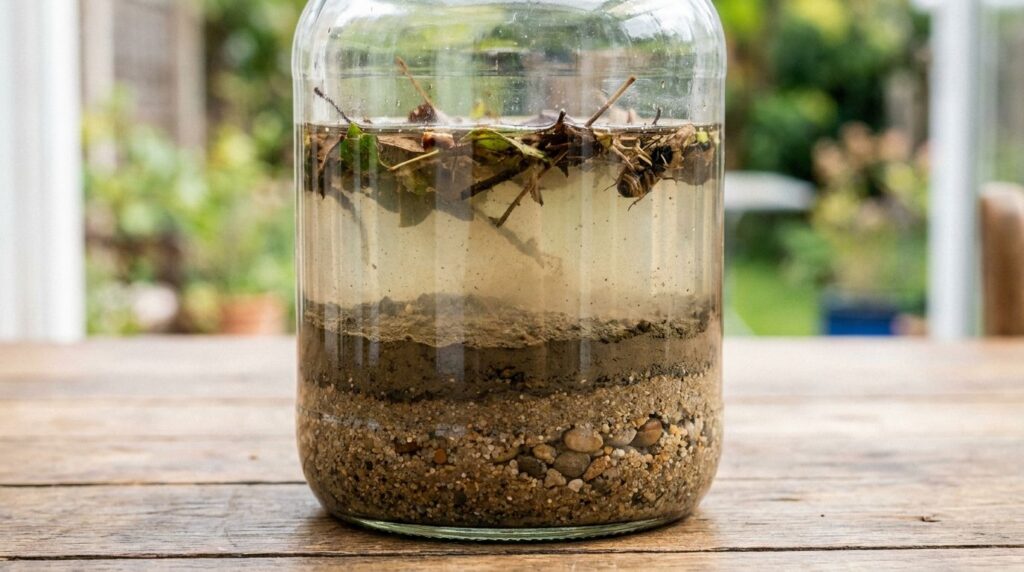
4. The Jar Test (Sedimentation)
This test visually separates your soil layers, showing proportions of sand, silt, and clay.
- How to do it: Fill a clear jar halfway with soil, then fill it nearly to the top with water. Add a tablespoon of dish soap (helps separate particles). Shake vigorously for a minute until everything is suspended. Let it sit undisturbed for 24-48 hours.
- What to look for: Layers will settle. Sand settles first (bottom), then silt, then clay (top layer). Any floating material is organic matter.
- What it tells you: Provides a visual representation of your soil’s composition, helping you understand drainage and nutrient holding capacity.
5. The Worm Test (Soil Life & Organic Matter)
Worms are nature’s garden helpers!
- How to do it: Dig a small hole (about 6×6 inches) in your garden soil. Gently sift through the soil.
- What to look for: Count the number of earthworms you find.
- What it tells you: More worms indicate rich, healthy soil with good organic matter content and aeration. Few or no worms suggest poor soil health, possibly low organic matter or compaction.
6. The Perk Test (Drainage)
Good drainage is crucial to prevent root rot.
- How to do it: Dig a hole about 1 foot deep and 1 foot wide. Fill it with water and let it drain completely. Once drained, fill it again and measure how much the water level drops in an hour.
- What to look for:
- Drains in less than 10 minutes: Soil drains too quickly (sandy).
- Drains 1-2 inches per hour: Ideal drainage for most plants.
- Drains less than 1 inch per hour: Poor drainage (heavy clay), risking waterlogged roots.
- What it tells you: How quickly water moves through your soil, critical for plant health.
Interpreting Your Results & Improving Your Soil
After performing these tests, you’ll have a much clearer picture of your soil. Here’s a quick guide to what your results might mean:
- If your soil is too sandy: It drains too quickly and struggles to hold nutrients. Add plenty of organic matter like compost, well-rotted manure, or peat moss to improve water retention and fertility.
- If your soil is too clayey: It drains slowly, can become compacted, and may be difficult for roots to penetrate. Incorporate organic matter to improve aeration and structure. Gypsum can also help, but organic matter is usually the best first step.
- If your soil is low in organic matter (few worms, light color): Regularly add compost, leaf mold, or cover crops. This feeds soil microbes, improves structure, and boosts fertility.
- If drainage is poor: Raised beds or incorporating significant amounts of coarse sand and organic matter can help, though the latter can be a lot of work for large areas.
Start Digging!
Understanding your soil is a continuous journey, and these simple hand tests are powerful tools in your gardening arsenal. By regularly checking your soil’s health, you can make informed decisions, amend your soil effectively, and ultimately enjoy a more productive and beautiful garden. So, roll up your sleeves, get your hands dirty, and unlock the incredible secrets your soil is waiting to share!