Sofa stains are a common problem that can ruin the aesthetics of any living room. Whether it’s a spilled drink, food from children, or simply daily wear and tear, those unsightly marks can make your favorite piece of furniture look old and neglected. But don’t worry, we have the solution! This comprehensive guide will teach you a simple and effective trick to remove those stubborn stains, using ingredients you probably already have at home. Stop hiding your sofa under blankets and get ready to restore its original splendor.
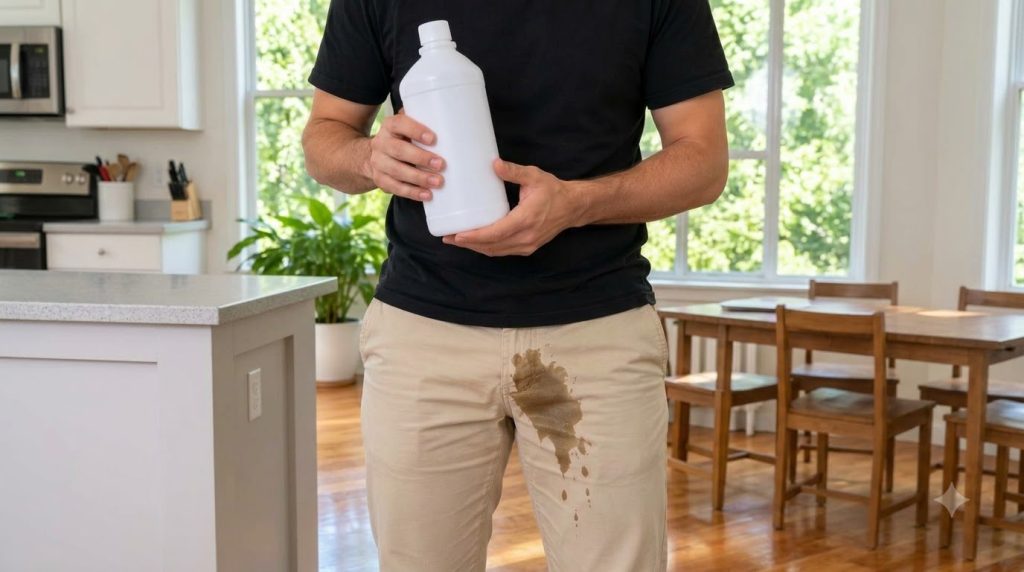
This guide is designed for anyone who wants to keep their home clean and inviting without resorting to expensive chemical products or professional services. If you’re looking for a practical, economical, and safe solution for your family and pets, you’ve come to the right place. You’ll learn how to identify the type of stain, prepare a homemade cleaning solution, and apply it correctly for the best results.
Why You’ll Love This Guide
- Easy to prepare
- Uses common and inexpensive ingredients
- Environmentally friendly
- Safe for most sofa fabrics
- Achieves amazing results
- Saves you money on commercial cleaners
- Ideal for regular maintenance and emergencies
- Beginner-friendly for home cleaning
Ingredients / Materials
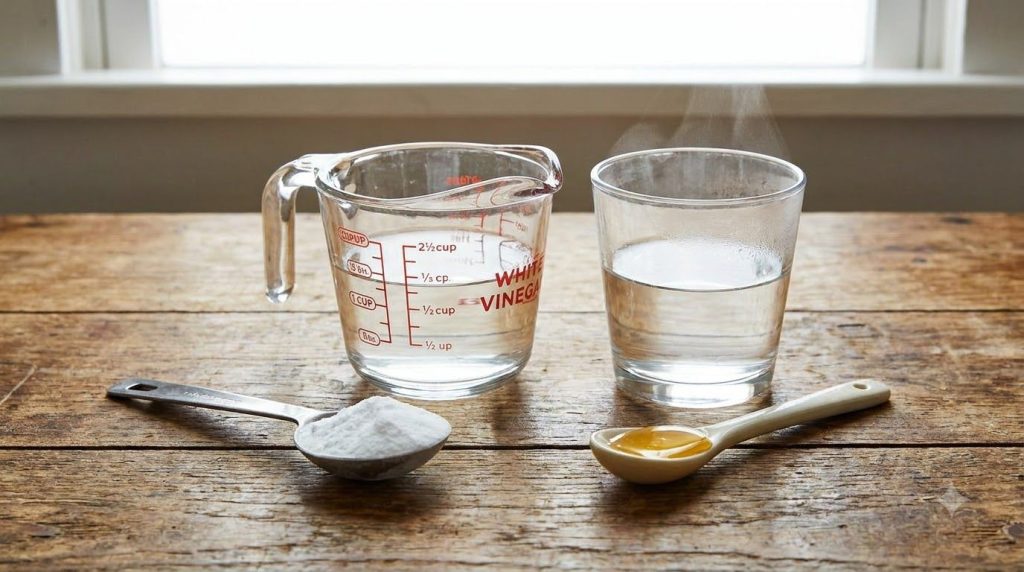
For this cleaning hack, you will need the following materials and ingredients:
- 1 tablespoon of baking soda
- 1/2 cup of distilled white vinegar
- 1/2 cup of warm water
- 1 teaspoon of mild liquid dish soap (without bleach)
- A clean microfiber cloth or soft towel (light-colored, to avoid color transfer)
- A soft-bristle brush (optional, for ingrained stains)
- Spray bottle (optional, for even application)
- Vacuum cleaner with upholstery attachment (for the final step)
Equipment Needed
- Small bowl or mixing container
- Measuring spoon
- Measuring cup
- Spray bottle (if used)
Step-by-Step Instructions
-
Prepare the Stain (5 minutes):
Before applying any solution, remove excess dirt or liquid with a dry cloth or paper towel, pressing gently to absorb. Do not rub, as this could spread the stain. If it’s a solid stain (like food), gently scrape it off with a spatula or the edge of a credit card.
-
Vacuum the Area (5-10 minutes):
Use your vacuum cleaner with the upholstery attachment to remove any loose dirt particles or dust around and on the stain. This will prevent dirt from becoming more embedded when wetting the area.
-
Create Your Cleaning Solution (2 minutes):
In a small bowl, mix the baking soda, white vinegar, warm water, and dish soap. Stir well until the baking soda dissolves. The mixture may bubble a bit due to the vinegar and baking soda; this is normal.
-
Test in an Inconspicuous Area (10-15 minutes):
This step is crucial! Before applying the solution directly to the visible stain, test a small amount in a hidden area of the sofa (e.g., the back or under a cushion). Apply a drop of the solution and let it sit for a few minutes. Then, blot it dry with a clean cloth. Check for discoloration or damage to the fabric. If there are no adverse changes, you can proceed.
-
Apply the Solution (5-10 minutes):
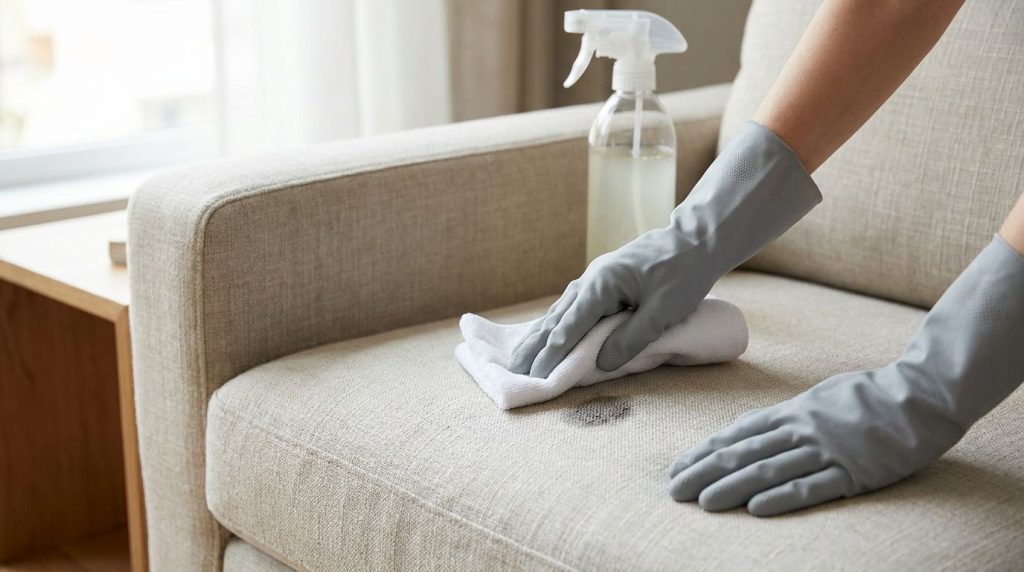
Using a clean microfiber cloth (damp, not soaking wet, with the solution) or a spray bottle, apply the mixture directly to the stain. Cover the entire stain evenly. If the stain is very stubborn, you can use the soft-bristle brush to gently scrub in circular motions from the outside towards the center of the stain.
-
Let it Act (15-30 minutes):
Allow the solution to penetrate the fabric and work on the stain. The exact time will depend on the severity of the stain. For fresh, light stains, 15 minutes may be enough; for older or deeper stains, let it sit for up to 30 minutes.
-
Blot and Dry (5-10 minutes):
With a clean cloth lightly dampened with warm water (water only), begin to blot the treated area to remove the solution and the stain. Work from the outside towards the center. Then, use a dry, clean cloth to blot up excess moisture, pressing firmly.
-
Final Drying (Several hours):
Allow the sofa to air dry completely. Open windows for good ventilation. Avoid using the sofa until it is completely dry to prevent mold or bad odors. Once dry, you can vacuum again to lift the fabric fibers and ensure an even finish.
Expert Tips
- Act Fast: The sooner you treat a stain, the easier it will be to remove. Don’t let stains set.
- Don’t Soak the Sofa: Excess moisture can damage the sofa’s filling and lead to mold. Always use lightly damp cloths.
- Read Manufacturer Labels: Before applying any homemade cleaner, check your sofa’s label. Some fabrics (like silk or velvet) require dry cleaning or special treatments. ‘W’ codes mean you can use water-based cleaners, ‘S’ for solvents, ‘X’ for vacuum only, and ‘WS’ for both.
- Ventilation is Key: Ensure the area is well-ventilated during and after cleaning to speed up drying and disperse fumes.
- Keep the Area Dry: To aid drying, you can use a fan or a hairdryer on its lowest, coolest setting, keeping it at a safe distance.
- Post-Drying Brushing: Once dry, gently brush the area with an upholstery brush or your hands to restore the fabric’s original texture and prevent stiffness.
- Avoid Harsh Rubbing: Rubbing too hard can damage fabric fibers or cause the stain to spread further. Always blot gently and with patience.
Variations
- For Grease Stains: You can add a small amount of rubbing alcohol (isopropyl alcohol) to the solution, after testing in an inconspicuous area. Alcohol is excellent for dissolving grease.
- For Red Wine or Coffee Stains: Before applying the solution, you can try covering the stain with salt or baking soda to absorb the liquid. Let it sit for about 15 minutes, then vacuum before applying the cleaning solution.
- Vinegar-Free Version (for sensitive odors): If the smell of vinegar bothers you, you can omit it and use only warm water and dish soap. However, vinegar is a very effective natural disinfectant and deodorizer.
- Sofa Refresher (without stains): To refresh the sofa without stains, you can sprinkle baking soda over the entire surface, let it sit for 15-30 minutes, and then vacuum. This helps neutralize odors.
Storage Instructions
The cleaning solution should be prepared just before use to ensure its maximum effectiveness, especially due to the reaction between baking soda and vinegar. If you have a small amount left over, you can store it in a sealed spray bottle for no more than 24 hours at room temperature, but it is preferable to discard it and prepare a fresh batch for each use.
Safety Notes
- Ventilation: Work in a well-ventilated area to avoid prolonged inhalation of vinegar fumes.
- Pre-Test: Never skip testing in an inconspicuous area! This is essential to prevent permanent damage to your sofa.
- Do Not Mix with Bleach: Never mix vinegar with bleach! The combination produces toxic and dangerous gases.
- Skin Sensitivity: Although the ingredients are natural, if you have sensitive skin, consider wearing gloves to avoid any irritation.
- Children and Pets: Keep cleaning products and the mixture out of reach of children and pets. Make sure the sofa is completely dry before they use it again.

Frequently Asked Questions
How long does the sofa take to dry?
It depends on the ambient humidity and the amount of solution applied, but generally between 2 and 6 hours. Good ventilation speeds up the process.
Is it safe for all fabric types?
Not for all. Always check your sofa’s label and perform a test in an inconspicuous area. Avoid this method on delicate fabrics such as silk, velvet, or those with cleaning codes ‘S’ or ‘X’.
Can I use cold water instead of warm?
Warm water helps to dissolve the ingredients better and lift stains, but cold water can also work, though with slightly less effectiveness.
What should I do if the stain persists?
For very old or stubborn stains, you may need to repeat the process or consider a commercial upholstery cleaner specific to the type of stain and fabric.
How often can I clean my sofa with this solution?
You can use it for spot cleaning as needed. For general cleaning, an annual or semi-annual professional cleaning is recommended, depending on usage.
Will this method remove odors?
Yes, vinegar and baking soda are excellent natural deodorizers. They will help neutralize bad odors associated with stains.
Conclusion
Keeping your sofa stain-free doesn’t have to be a daunting or expensive task. With this simple and effective DIY guide, you have the power to transform your living room, restoring your sofa to its original beauty. Remember the importance of acting quickly, testing in an inconspicuous area, and using the right ingredients. Go ahead and try this homemade trick and enjoy an always impeccable and inviting home! Your sofa will thank you, and your guests will be impressed. It’s time to say goodbye to those annoying stains once and for all!