Stubborn stains? Rough heels? Yellowed pillowcases? A stovetop covered in grease? Before spending money on expensive products, try these four practical household tricks using simple, budget-friendly ingredients you likely already have! From refreshing dirty clothes to tackling kitchen grease, these DIY solutions will make your everyday cleaning a little easier and more effective. Get ready to transform your home with these simple, yet powerful, home hacks.
🧺 HACK #1: Rescue Heavily Stained Laundry
Got a white shirt covered in mud or other stubborn dirt? Here’s how to help lift that grime using a tried-and-true method that harnesses the power of common household items, including the mighty white vinegar!
Ingredients
- 1 gallon (approximately 4 liters) of lukewarm water
- 2 tablespoons of liquid laundry detergent
- 1 tablespoon of baking soda (optional, boosts cleaning power)
- ½ cup of distilled white vinegar (for a separate soak, excellent for odors and brightening)
- 1 laundry basin or large tub
- A soft laundry brush or an old toothbrush
Instructions
- Prepare the Garment: First, shake or brush off any loose, dried mud or debris from the stained item. If there are thick, muddy areas, rinse them gently with cool water to prevent setting the stain.
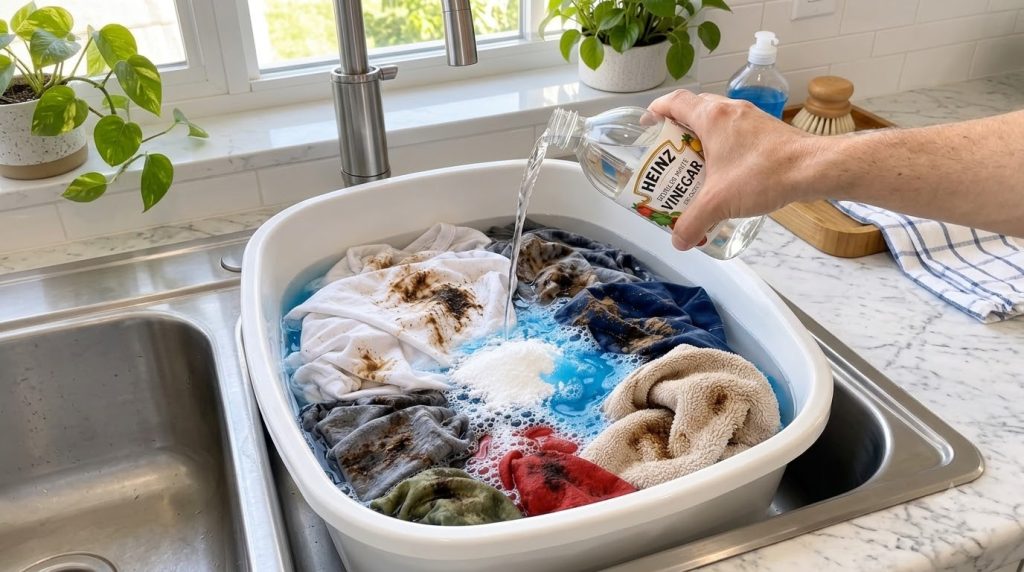
- Mix the Soaking Solution: Fill your laundry basin with lukewarm water. Add the liquid laundry detergent and the optional baking soda. Stir until the detergent is evenly dissolved and the ingredients are well mixed.
- Initial Soak: Place the dirty clothes into the basin, ensuring they are fully submerged in the cleaning solution. Let them soak for 15–30 minutes. Always check the garment’s care label to ensure soaking is permitted.
- Address Stubborn Spots: After the initial soak, gently rub the stained fabric against itself or use a soft laundry brush to work the detergent mixture into the fibers. Focus on the heavily stained areas, applying gentle pressure.
- Vinegar Boost (Optional, for extra tough stains or odors): If stains persist or the item has an unpleasant odor, remove the clothes from the detergent solution, rinse them lightly, and then prepare a separate basin with fresh lukewarm water and add ½ cup of distilled white vinegar. Soak the garment in the vinegar solution for another 15-30 minutes. Vinegar is excellent for breaking down mineral deposits, eliminating odors, and brightening fabrics.
- Rinse and Wash: Once the stains appear to lift, thoroughly rinse the clothing under cool, running water until all soap residue is gone. Finally, wash the item as usual in your washing machine according to its care instructions.
Why This Hack Works
Liquid laundry detergent effectively breaks down and suspends dirt particles, making them easier to rinse away. Baking soda, an alkaline substance, boosts the detergent’s cleaning power, helps neutralize odors, and gently scours. White vinegar, with its mild acetic acid, excels at dissolving mineral buildup, removing stubborn residue from hard water, and neutralizing lingering smells, leaving fabrics brighter and fresher.
👣 HACK #2: Soften Dry, Cracked Heels
Tired of rough, dry, or even cracked heels? Before you splurge on expensive pedicure treatments, try this soothing and effective home remedy using simple kitchen staples to bring back your feet’s smoothness.
Ingredients
- Warm water
- ½ cup of white vinegar
- ½ cup of Epsom salts (or baking soda)
- A large basin or foot tub
- Pumice stone or foot file
- Moisturizing lotion or petroleum jelly
Instructions
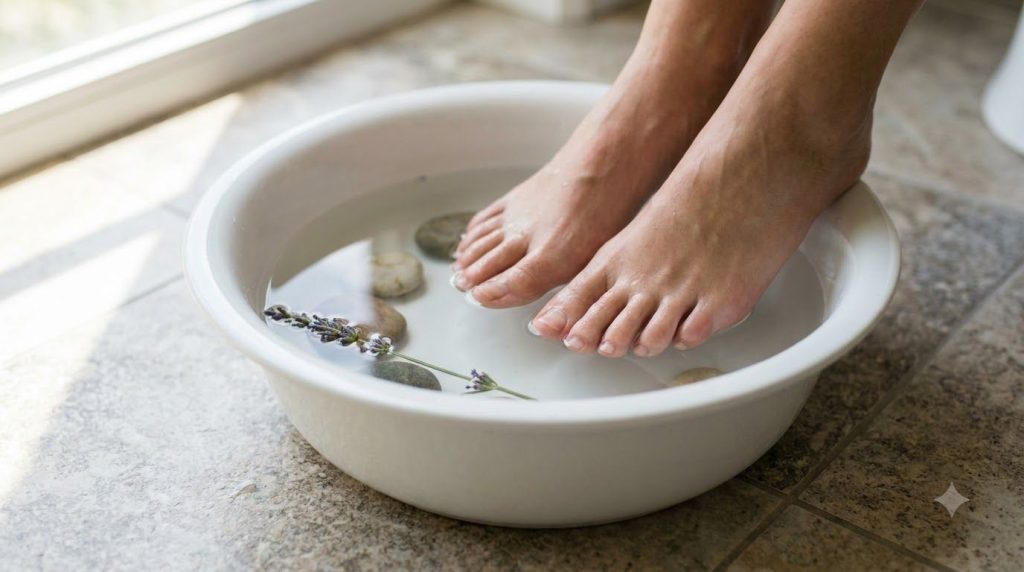
- Prepare the Soak: Fill a large basin or foot tub with enough warm water to cover your ankles. Add ½ cup of white vinegar and ½ cup of Epsom salts (or baking soda) to the water. Stir to dissolve.
- Soak Your Feet: Submerge your feet in the solution for 15-20 minutes. The warm water will soften your skin, while the vinegar and Epsom salts work to loosen dead skin cells.
- Exfoliate Gently: After soaking, use a pumice stone or foot file to gently scrub away softened dead skin from your heels and other rough areas. Be careful not to scrub too vigorously, especially if you have sensitive skin or any open cracks.
- Rinse and Moisturize: Rinse your feet with clean water and pat them dry with a towel. Immediately apply a generous amount of moisturizing lotion or petroleum jelly, massaging it into your heels. For extra hydration, put on a pair of cotton socks before bed.
Why This Hack Works
The acetic acid in white vinegar helps to gently exfoliate dead skin cells, making them easier to slough off. Epsom salts (magnesium sulfate) help to draw out toxins, reduce inflammation, and further soften the skin. This combination prepares your heels for effective exfoliation and deep moisturization, leading to smoother, healthier-looking feet.
☀️ HACK #3: Brighten Yellowed Pillows
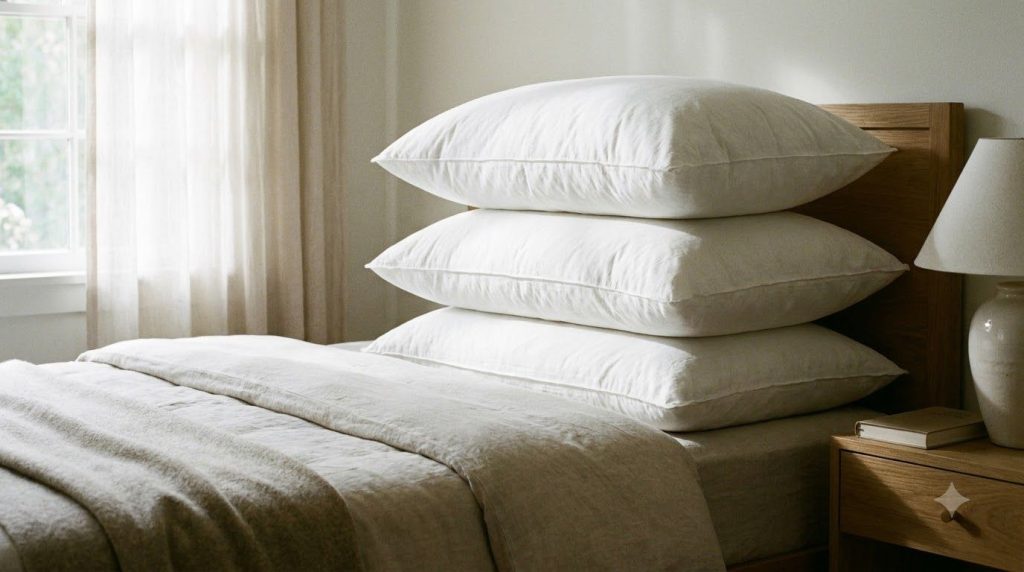
Over time, pillows can develop unsightly yellow stains from sweat, body oils, and accumulated dust. Don’t throw them out! This powerful washing machine hack can bring them back to life, making them look almost new again.
Ingredients
- 2 hot water safe pillows
- 1 cup powdered laundry detergent
- 1 cup powdered dishwasher detergent (without bleach)
- ½ cup borax
- 1 cup distilled white vinegar
Instructions
- Check Pillow Labels: Ensure your pillows are machine-washable and can withstand hot water. Most synthetic and down pillows are fine, but memory foam often is not. Wash two pillows at a time to keep the washing machine balanced.
- Pre-Treat (Optional): For very stubborn yellow spots, you can make a paste with a little borax and water and apply it directly to the stain before washing.
- Prepare the Wash: Place two pillows in your washing machine.
- Add Cleaning Agents: Add the powdered laundry detergent, powdered dishwasher detergent, and borax directly into the detergent dispenser or drum.
- Start Hot Wash Cycle: Set your washing machine to the hottest water setting available and a heavy-duty cycle. As the machine fills with water, pour in the cup of white vinegar.
- Extra Rinse: Run an extra rinse cycle to ensure all soap residue is thoroughly removed from the pillows.
- Drying: Tumble dry your pillows on a low heat setting, preferably with a few tennis balls in socks (to prevent noise and marks) to help fluff them up and ensure they dry evenly and completely, preventing mildew.
Why This Hack Works
This combination creates a potent cleaning concoction. Hot water helps to sanitize and activate the cleaning agents. Laundry detergent tackles general dirt, while powdered dishwasher detergent is formulated to cut through tough grease and oil (like body oils). Borax boosts cleaning power, brightens, and deodorizes. White vinegar acts as a natural fabric softener, helps remove mineral deposits, and brightens fabrics, effectively neutralizing the yellowing caused by sweat and oils.
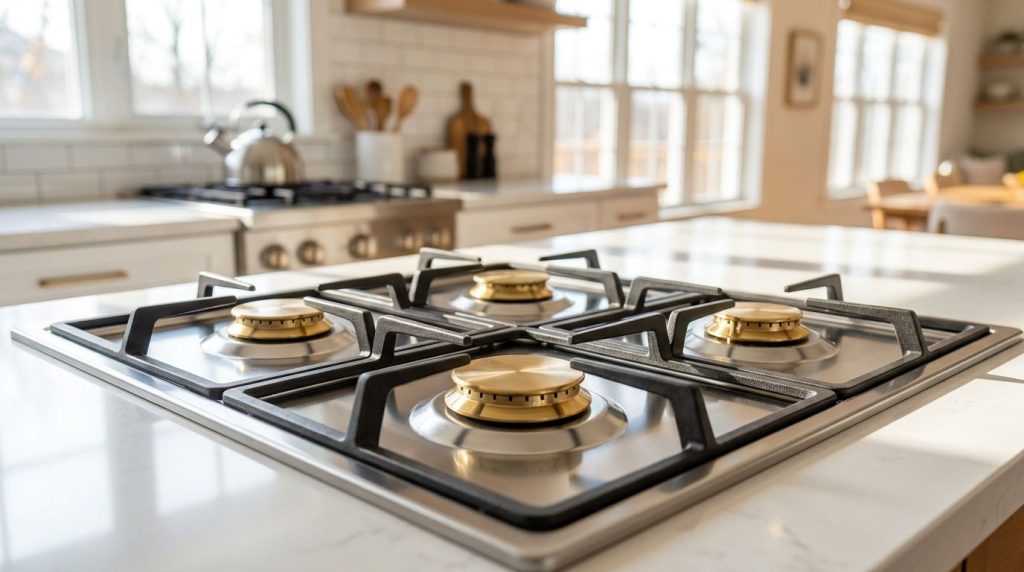
🍳 HACK #4: Conquer Greasy Stovetops
A greasy stovetop is a common kitchen headache, but you don’t need harsh chemicals to get it sparkling clean. This simple baking soda and vinegar method will cut through grease and grime with ease, leaving your cooking surface immaculate.
Ingredients
- ½ cup baking soda
- ¼ cup white vinegar (or more, as needed)
- Warm water
- Spray bottle
- Sponge or microfiber cloth
Instructions
- Ensure Stovetop is Cool: Always make sure your stovetop is completely cool before attempting to clean it.
- Remove Grates/Burners: If applicable, remove any grates, burner covers, or removable parts. These can be cleaned separately using the same method or soaked in warm, soapy water.
- Apply Baking Soda: Sprinkle a generous layer of baking soda directly over the greasy areas of your stovetop. Ensure all problem spots are covered.
- Spray with Vinegar: Fill a spray bottle with white vinegar. Lightly spray the baking soda until it forms a paste and begins to fizz. The fizzing reaction indicates the baking soda and vinegar are working together to break down the grease.
- Let it Sit: Allow the paste to sit for 10-15 minutes (or up to 30 minutes for very tough grease). This gives the mixture time to penetrate and loosen the grime.
- Scrub and Wipe: Using a damp sponge or microfiber cloth, gently scrub the stovetop in circular motions. The baking soda acts as a mild abrasive, while the vinegar helps to lift the grease.
- Rinse and Buff: Wipe away the paste with a clean, damp cloth, rinsing the cloth frequently. For a streak-free shine, finish by buffing the surface with a dry microfiber cloth.
Why This Hack Works
Baking soda is a mild alkali that helps to dissolve grease and food particles, while its granular texture provides gentle abrasion without scratching surfaces. White vinegar, being acidic, further breaks down fatty and oily residues. When combined, the fizzing reaction helps to lift tough, baked-on grime, making it easier to wipe away. This dynamic duo is a powerful and natural alternative to harsh chemical cleaners.
Make Your Home Shine with Simple Solutions!
These four simple home hacks prove that you don’t need a cabinet full of expensive, specialized cleaning products to tackle common household dilemmas. With the power of everyday ingredients like white vinegar, baking soda, and a little elbow grease, you can keep your laundry fresh, your heels soft, your pillows bright, and your kitchen sparkling. Give these budget-friendly DIY solutions a try and discover how easy it is to maintain a clean, comfortable, and well-cared-for home!