Revive Your Garden: 6 Signs of Dead Soil
Have you ever looked at your garden and wondered why your plants aren’t thriving, despite all your efforts? The secret to a flourishing garden often lies beneath the surface: in your soil! Healthy, vibrant soil is the foundation for strong, productive plants. But what happens when your soil is struggling? It might be showing you signs that it’s ‘dead’ or severely lacking in vitality.
Don’t worry, it’s a common challenge many gardeners face, and the good news is that most soil problems can be fixed! By learning to read the subtle clues your garden gives you, you can take steps to bring your soil back to life and transform your gardening experience. Let’s dive into the 6 key signs that your soil might be ‘dead’ and what you can do about it.
Why Healthy Soil Matters
Think of your soil as the pantry for your plants. It provides essential nutrients, water, and air, and anchors your plants firmly in place. Healthy soil is teeming with beneficial microorganisms, fungi, and insects that work together to break down organic matter, cycle nutrients, and create an ideal environment for roots to grow. When soil health declines, these vital processes slow down, leading to weak plants, pest issues, and poor harvests.
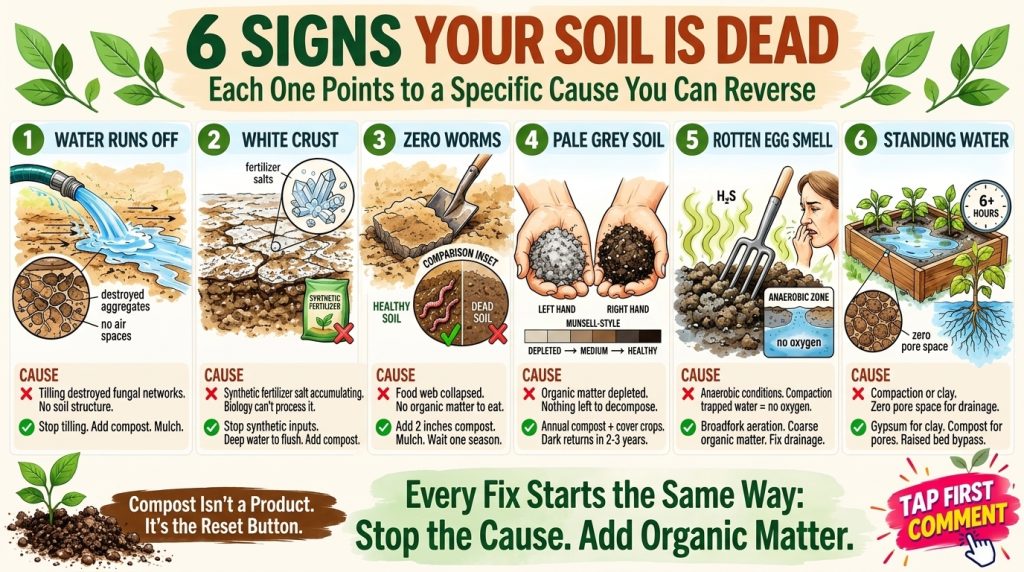
6 Signs Your Soil Might Be “Dead”
1. Water Runs Off Instead of Soaking In
If you water your garden and notice the water pooling on the surface or running off quickly instead of soaking into the ground, it’s a clear sign of compaction and poor soil structure. Healthy soil has a crumbly texture with plenty of pore spaces for water and air. Compacted or ‘dead’ soil is dense, preventing water from penetrating to plant roots.
How to fix it:
- Add Organic Matter: Incorporate plenty of compost, well-rotted manure, or other organic materials. This improves soil structure over time.
- Avoid Compaction: Try to walk on pathways instead of directly on your garden beds.
- No-Till Gardening: Minimize digging and tilling, which can disrupt soil structure.
2. White Crust on the Surface
A white, powdery, or crystalline crust on the soil surface often indicates a build-up of salts. This can happen from over-fertilization, using water high in mineral content, or poor drainage that prevents salts from leaching away. High salt levels can dehydrate plant roots and inhibit nutrient uptake.
How to fix it:
- Leach the Soil: Water thoroughly and deeply to help flush salts away.
- Reduce Synthetic Fertilizers: Switch to organic fertilizers, which release nutrients more slowly.
- Improve Drainage: Address any underlying drainage issues.
3. A Complete Lack of Earthworms
Earthworms are the unsung heroes of the garden! They aerate the soil, improve drainage, and convert organic matter into nutrient-rich castings. If you dig into your soil and find no earthworms, or very few, it’s a strong indicator that your soil is lacking organic matter, is compacted, or has been exposed to harsh chemicals.
How to fix it:
- Incorporate Compost: Organic matter is food for worms and creates a welcoming habitat.
- Avoid Pesticides: Many pesticides can harm beneficial soil organisms like earthworms.
- Mulch Heavily: A layer of mulch provides food and shelter for worms.
4. Pale, Lifeless-Looking Soil
Healthy soil is typically dark, rich, and crumbly, thanks to a high content of organic matter. If your soil looks pale, sandy, or like dense clay with little life, it’s likely depleted of essential nutrients and organic material. This lack of vitality directly impacts plant growth, leading to pale, stunted, or unproductive plants.
How to fix it:
- Bulk Up with Compost: Continuously add compost and other organic amendments to enrich the soil.
- Grow Cover Crops: These can add organic matter and nutrients when tilled back into the soil.
- Mulch, Mulch, Mulch: Organic mulches break down over time, adding to soil health.
5. A Foul, Rotten Egg Smell
Digging into your garden and being met with a strong, unpleasant smell—often like rotten eggs—is a sign of anaerobic conditions. This means there’s a lack of oxygen in the soil, usually caused by severe waterlogging and compaction. Anaerobic bacteria thrive in these conditions and produce gasses that are toxic to plant roots.
How to fix it:
- Improve Drainage: Address waterlogging by improving garden bed drainage or creating raised beds.
- Aerate the Soil: Gently aerate with a broadfork or pitchfork, being careful not to over-disturb the soil.
- Add Organic Matter: Improves aeration and drainage.
6. Persistent Standing Water
Similar to water runoff, persistent standing water even hours after rain or watering indicates severe drainage problems. This can be due to heavy clay soil, a hardpan layer beneath the surface, or severe compaction. Roots need oxygen, and sitting in water for extended periods can lead to root rot and plant death.
How to fix it:
- Install Raised Beds: This is an excellent solution for areas with very poor drainage.
- Incorporate Sand and Organic Matter: For heavy clay soils, these can help improve texture and drainage.
- Consider a French Drain: For very problematic areas, a landscaping solution might be needed.
Bringing Your Soil Back to Life: Practical Steps
Reviving ‘dead’ soil is a process that takes time and consistency, but the rewards are immense. Here are some overarching strategies to consider:
- Prioritize Organic Matter: This is the single most important thing you can do. Regularly add compost, leaf mold, and well-rotted manures.
- Mulch Your Beds: A constant layer of organic mulch protects the soil, retains moisture, suppresses weeds, and feeds soil organisms as it breaks down.
- Practice No-Dig/No-Till: Minimizing soil disturbance helps preserve the delicate soil structure and microbial networks.
- Test Your Soil: A soil test can provide valuable information about nutrient deficiencies and pH imbalances, guiding your amendments.
- Rotate Crops: Different plants use different nutrients and can help improve soil structure in varied ways.
- Use Cover Crops: Planted during off-seasons, cover crops protect the soil from erosion, add organic matter, and can even suppress weeds.
Conclusion
Your garden soil is a living ecosystem, and giving it the care it deserves is the surest way to a vibrant, productive garden. By recognizing these 6 signs of ‘dead’ soil and implementing these simple, natural solutions, you’re not just growing plants; you’re nurturing the very foundation of life in your garden. Start small, be patient, and watch as your soil—and your plants—come alive!