Unlock Your Garden’s Potential: 6 Easy Soil Tests!
Ever wonder what your garden truly needs to thrive? The secret to a flourishing garden, brimming with healthy plants and delicious produce, lies right beneath your feet: your soil! Understanding your soil’s composition is the first step towards creating a vibrant, productive space, and you don’t need expensive lab kits to get started.
Imagine being a soil detective, using just your hands and a few household items to uncover vital clues about your garden’s health. It’s easier and more fun than you might think!
Why Understanding Your Soil is Key
Your soil is much more than just dirt; it’s a dynamic ecosystem supporting your plants. Healthy soil provides essential nutrients, regulates water, and offers a home to beneficial microorganisms. By understanding its unique characteristics, you can make informed decisions about amendments and care, leading to stronger, more resilient plants and a naturally beautiful garden.
Your Hands-On Guide to 6 Simple Soil Tests
Get ready to dig in and discover the hidden world of your garden soil. These six easy, hands-on tests will give you valuable insights into its texture, drainage, pH, and overall vitality.
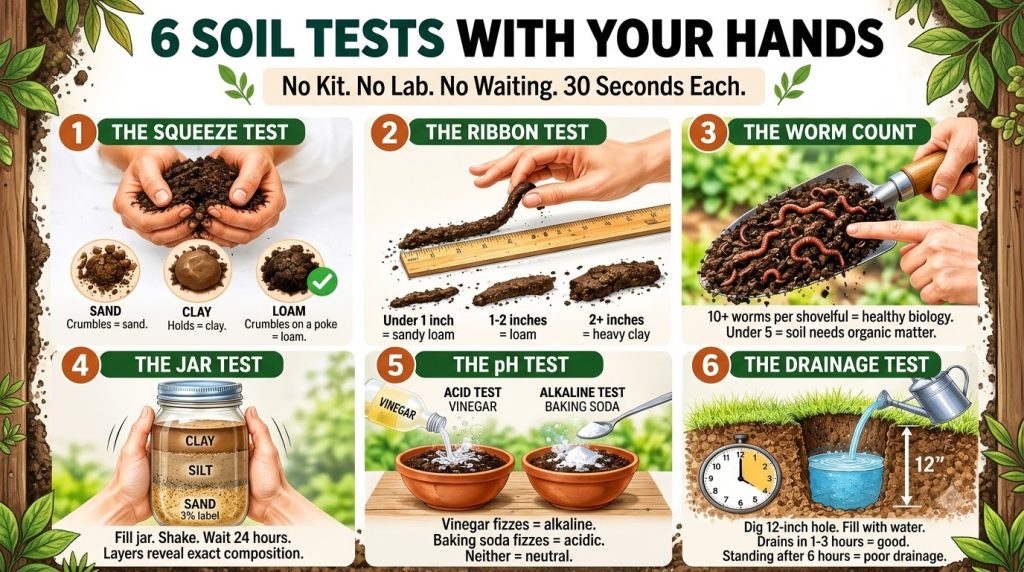
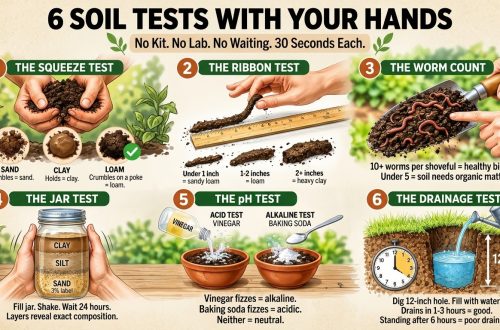
1. The Squeeze (Texture) Test
This test helps you understand the proportion of sand, silt, and clay in your soil.
- How to do it: Take a handful of damp (but not dripping wet) soil. Squeeze it firmly in your palm.
- What it tells you:
- Sandy Soil: It feels gritty and falls apart easily when you open your hand.
- Silty Soil: It feels smooth and somewhat slippery, forming a clod that breaks apart with gentle pressure.
- Clay Soil: It feels sticky and can be rolled into a long, thin ribbon or snake without breaking.
- Loamy Soil: This ideal soil type will form a ball that crumbles easily if you poke it. It has a good balance of sand, silt, and clay.
2. The Drainage (Percolation) Test
This test reveals how well water drains through your soil, crucial for preventing root rot.
- How to do it: Dig a hole about 6-8 inches deep and wide. Fill it with water and let it drain completely. Once drained, fill it again and time how long it takes for the water to drain.
- What it tells you:
- Fast Drainage (less than 10 minutes/inch): Could indicate very sandy soil or an area that dries out quickly.
- Good Drainage (10-30 minutes/inch): Ideal for most plants, indicating healthy, balanced soil.
- Slow Drainage (more than 30 minutes/inch): Suggests heavy clay soil or compaction, which can lead to waterlogging.
3. The pH (Fizz) Test
While not as precise as a professional test, this simple method gives you an idea of your soil’s acidity or alkalinity.
- How to do it: Take two small soil samples from different spots. Place one in a cup and add about a tablespoon of white vinegar. If it fizzes, your soil is likely alkaline. For the second sample, add distilled water to make a paste, then add a tablespoon of baking soda. If it fizzes, your soil is likely acidic. No reaction from either suggests neutral soil.
- What it tells you:
- Alkaline Soil: Often common in drier climates; some plants prefer this, but many prefer slightly acidic.
- Acidic Soil: Common in wetter, forested areas; favored by plants like blueberries and azaleas.
- Neutral Soil: Ideal for a wide range of plants.
4. The Compaction Test
Compacted soil makes it hard for roots to grow and for water and air to penetrate.
- How to do it: Find a spot in your garden and try to push your finger (or a stiff wire/fork) into the soil. Note how much resistance you feel.
- What it tells you:
- Easy to penetrate: Good, loose soil, healthy for root growth.
- Difficult to penetrate: Indicates compaction, which can restrict roots and drainage.
5. The Organic Matter Observation
Organic matter is the lifeblood of healthy soil, providing nutrients and improving structure.
- How to do it: Simply observe your soil. Is it dark and crumbly? Does it have a rich, earthy smell? Can you see visible signs of decomposed plant material?
- What it tells you:
- Dark, crumbly, earthy-smelling soil: Rich in organic matter, indicating good fertility and microbial activity.
- Light-colored, sandy, or stiff soil with little smell: Likely low in organic matter and could benefit from compost.
6. The Worm Count (Biodiversity) Test
Earthworms are nature’s tiny farmers, aerating the soil and breaking down organic matter.
- How to do it: Dig a small patch (about 1 square foot, 6 inches deep) and gently sift through the soil. Count the number of earthworms you find.
- What it tells you:
- 10 or more worms: Excellent soil health with good aeration and organic matter breakdown.
- Fewer than 5 worms: Your soil might be compacted, lacking organic matter, or have an imbalanced pH.
Bringing It All Together: What Your Tests Mean
Once you’ve completed these tests, you’ll have a much clearer picture of your soil’s needs. For example, if your soil is heavy clay and drains slowly, adding organic matter like compost can dramatically improve its structure. If it’s too acidic or alkaline, you can adjust the pH naturally with amendments like lime (for acidic) or elemental sulfur (for alkaline).
Cultivate a Healthier Garden, Naturally
By taking a few moments to understand your soil, you’re not just growing plants; you’re nurturing a complete ecosystem. These simple, natural remedies for your garden empower you to make informed choices, leading to more robust plants, better yields, and a healthier lifestyle overall.
So roll up your sleeves, get your hands dirty, and unlock the incredible potential hidden in your garden’s soil. Happy gardening!