Welcome, fellow garden enthusiasts! Have you ever wondered why some plants flourish effortlessly while others, despite your best efforts, seem to struggle? The secret often lies beneath the surface: in your soil. Understanding your garden’s soil type is one of the most fundamental steps to becoming a truly successful gardener. It’s the foundation for healthy growth, vibrant blooms, and bountiful harvests.
Just like we have different dietary needs, plants have specific preferences for their growing medium. The wrong soil can lead to wasted seeds, stunted growth, and endless frustration. But don’t worry, we’re here to help you decode your garden’s language and match the perfect plants to every soil type!
Why Your Soil Matters More Than You Think
Soil isn’t just dirt; it’s a complex ecosystem teeming with life and essential nutrients. It provides anchorage for roots, holds water, facilitates nutrient absorption, and ensures proper air circulation. Different soil types have varying textures, drainage capabilities, and nutrient retention properties, all of which directly impact a plant’s ability to thrive. A plant that loves well-draining, sandy soil will drown in heavy, clay-rich earth, and vice-versa.
Decoding Your Garden’s Foundation: Common Soil Types
Before you even think about planting, it’s crucial to identify what kind of soil you’re working with. This knowledge will empower you to choose the right plants and make informed decisions about soil amendments. Let’s explore the common soil types and what makes each unique.
Know Your Soil: Characteristics & Best Plants
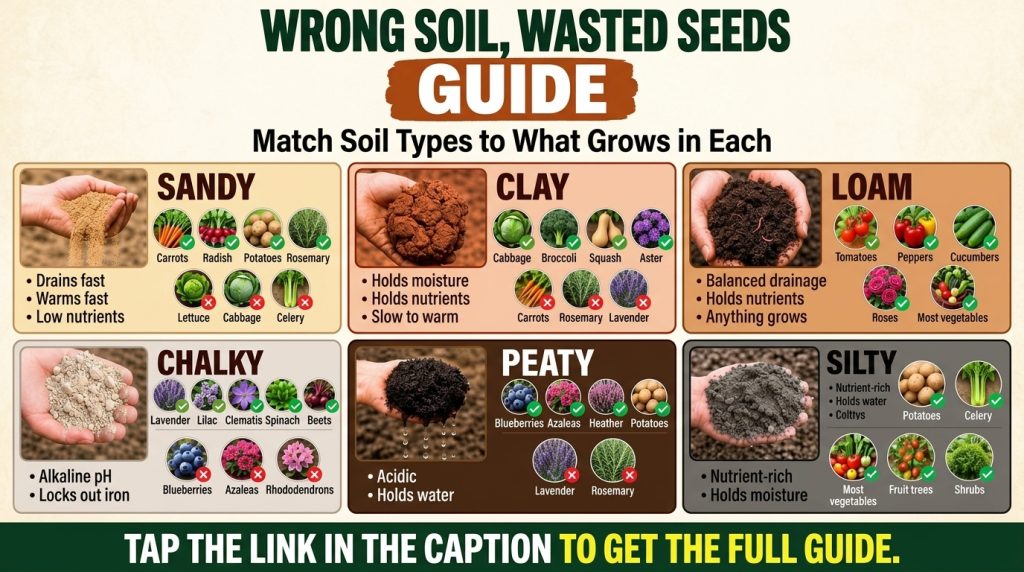
Sandy Soil
- Characteristics: Gritty texture, drains very quickly, warms up fast in spring, but struggles to retain water and nutrients.
- Thriving Plants: Carrots, Potatoes, Asparagus, Lettuce, Radishes, Lavender, Rosemary, Coneflowers, Cosmos, Sedum.
Clay Soil
- Characteristics: Heavy, sticky, dense, drains slowly, often rich in nutrients but can become waterlogged and compacted.
- Thriving Plants: Broccoli, Cabbage, Brussels Sprouts, Peas, Beans, Hostas, Astilbe, Hydrangeas, Hollyhocks, Daylilies.
Loam Soil
- Characteristics: Often considered the ‘ideal’ soil. It’s a balanced mix of sand, silt, and clay, offering good drainage, excellent water retention, and rich nutrient content.
- Thriving Plants: Most vegetables (Tomatoes, Peppers, Zucchini, Corn), Fruit trees, Roses, Perennials, Shrubs, almost anything!
Chalky Soil
- Characteristics: Alkaline (high pH), stony, free-draining, often light and easy to work, but nutrient deficiencies can occur.
- Thriving Plants: Beets, Spinach, Cabbage, Sweet Peas, Clematis, Lavender, Dahlias, Irises, many ornamental grasses.
Peaty Soil
- Characteristics: Dark, acidic, high in organic matter, retains moisture exceptionally well, but can be low in some essential nutrients.
- Thriving Plants: Blueberries, Cranberries, Camellias, Rhododendrons, Azaleas, Ferns, Potatoes, certain root vegetables.
Silty Soil
- Characteristics: Smooth, fine particles, good water retention, fertile, but can compact easily and become waterlogged if not managed.
- Thriving Plants: Most vegetables (Corn, Beans, Squash), Flowering Shrubs, Climbing Roses, Willows, Periwinkle.
Simple Ways to Improve Your Soil
Even if your soil isn’t perfect, you can always improve it! The most effective way to enhance any soil type is by incorporating plenty of organic matter, such as compost or well-rotted manure. Organic matter improves drainage in clay soil, increases water retention in sandy soil, and adds essential nutrients across the board. Regular soil testing can also help you understand specific nutrient deficiencies and pH levels, guiding your amendment choices.
Start Digging with Confidence!
Armed with this knowledge, you’re now ready to approach your garden with a new level of understanding and confidence. Take a moment to observe your soil, feel its texture, and understand its properties. By matching the right plants to their preferred soil types, you’ll create a happier, healthier, and more productive garden that truly flourishes. Happy gardening!