Imagine having an endless supply of fresh greens and herbs right in your kitchen, all from something you might normally throw away! Sounds too good to be true? It’s not! Regrowing vegetables and herbs from kitchen scraps is a fun, sustainable, and incredibly rewarding way to keep your garden going, no matter the season. Here at Garden – L. Quyên, we love sharing simple, practical tips to help you grow more and enjoy a greener lifestyle.
This method isn’t just about saving money; it’s about reducing waste, connecting with nature, and ensuring you always have the freshest ingredients at your fingertips. Let’s dive into the fascinating world of infinite harvests!
Why Regrow Your Veggies and Herbs?
The benefits of regrowing your own produce are plentiful:
- Sustainability: By using parts of plants you’d typically discard, you reduce food waste and contribute to a more sustainable lifestyle.
- Cost-Effective: Save money on groceries! Why buy new when you can grow your own from scraps?
- Freshness Guaranteed: Enjoy the freshest possible ingredients, picked just moments before use.
- Educational Fun: It’s a fantastic project for all ages, teaching about plant life cycles and sustainable practices.
- Year-Round Supply: Many regrowable plants can thrive indoors, providing fresh greens even in winter.
The Magic Behind Regrowth
Many common vegetables and herbs have the amazing ability to regenerate from their base or stem. They store energy and nutrients in these parts, allowing them to sprout new roots and leaves when given the right conditions – water, light, and a little bit of patience. It’s like magic, but it’s pure plant science!
Common Vegetables and Herbs You Can Regrow
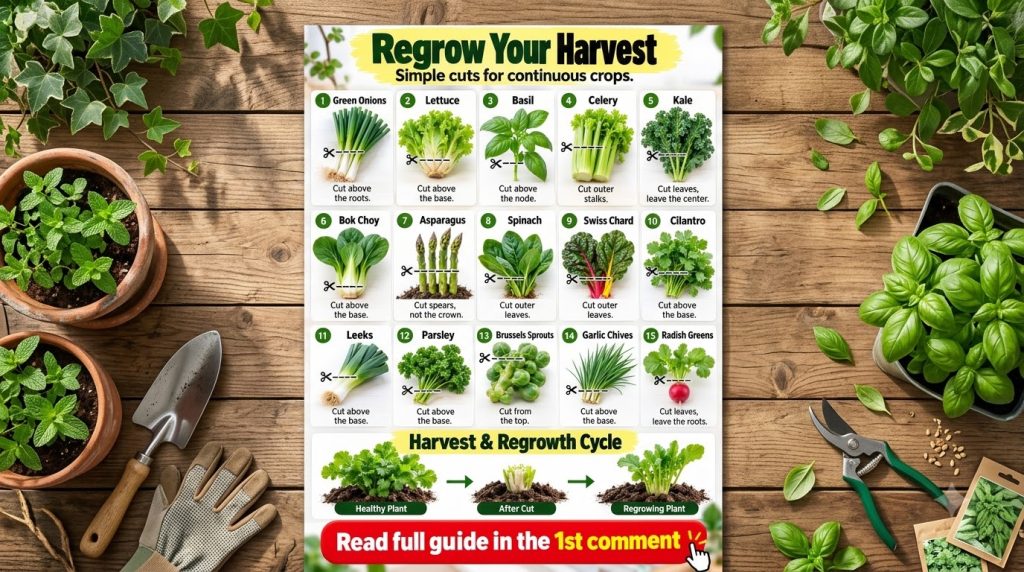
You’d be surprised at how many common kitchen staples can be given a second life. Here are some of our favorites:
Leafy Greens
- Romaine Lettuce: Cut the bottom 1-2 inches of the head. Place it in a shallow bowl with about an inch of water. New leaves will start to sprout in a few days.
- Celery: Cut off the base of the celery bunch. Place it in a shallow dish with warm water, exposing the top of the base to light. New stalks will emerge from the center.
- Bok Choy: Similar to lettuce and celery, cut the base and place it in water.
- Cabbage: The core of a cabbage can regrow. Place it in water and watch for new leaves.
Herbs
- Basil: Take 3-4 inch stems from your store-bought basil, making sure they have at least two leaf nodes. Place them in a glass of water, ensuring the nodes are submerged. Roots will form in a week or two, then you can plant them.
- Mint: Similar to basil, mint stems root easily in water.
- Cilantro & Parsley: Cut stems just above a leaf node and place them in water. These can be a bit slower but are definitely worth the effort!
Root Vegetables & More
- Green Onions/Scallions: This is one of the easiest! Leave about an inch of the white root end and place it in a glass with a small amount of water. New shoots will appear in just a day or two. You can harvest them multiple times!
- Leeks: Cut the white root end and place it in a glass of water.
- Garlic: Place a single garlic clove in a shallow dish of water with the root end down. It will sprout green shoots perfect for garnishing.
Step-by-Step Guide for Regrowing (Example: Green Onions)
Let’s take green onions as a prime example of how easy this can be:
- Harvesting the Base: When you use green onions, cut off the green stalks, leaving about 1-2 inches of the white and root end intact.
- Water Placement: Stand the remaining white ends vertically in a small glass or jar. Add just enough water to cover the roots and the very bottom of the white part – don’t submerge the entire stub.
- Light & Location: Place the glass on a sunny windowsill or under a grow light.
- Change Water: Change the water every day or two to prevent mold and ensure fresh nutrient supply.
- Watch Them Grow: Within a few days, you’ll see new green shoots emerging from the center. You can harvest these by snipping off the green tops once they reach a desirable height.
- Planting (Optional): After a few rounds of water regrowth, you can plant the rooted bases directly into soil for more sustained growth.
Tips for Success
- Fresh Scraps: Use the freshest possible scraps for the best results. Older, wilted scraps might not have enough energy to regrow.
- Clean Water: Regularly change the water to keep it fresh and free of bacteria or mold.
- Plenty of Light: Most plants need ample sunlight to regrow. A sunny windowsill is ideal.
- Patience is Key: Some plants take longer than others to show new growth. Don’t give up!
- Transition to Soil: Once good roots have formed in water, consider transferring your plants to a pot with well-draining potting mix for more robust, long-term growth.
Regrowing your greens is a delightful journey that brings a touch of nature’s resilience right into your home. It’s a testament to the power of plants and a simple way to embrace a more sustainable, self-sufficient lifestyle. Give it a try, and soon you’ll be enjoying your very own infinite harvest!