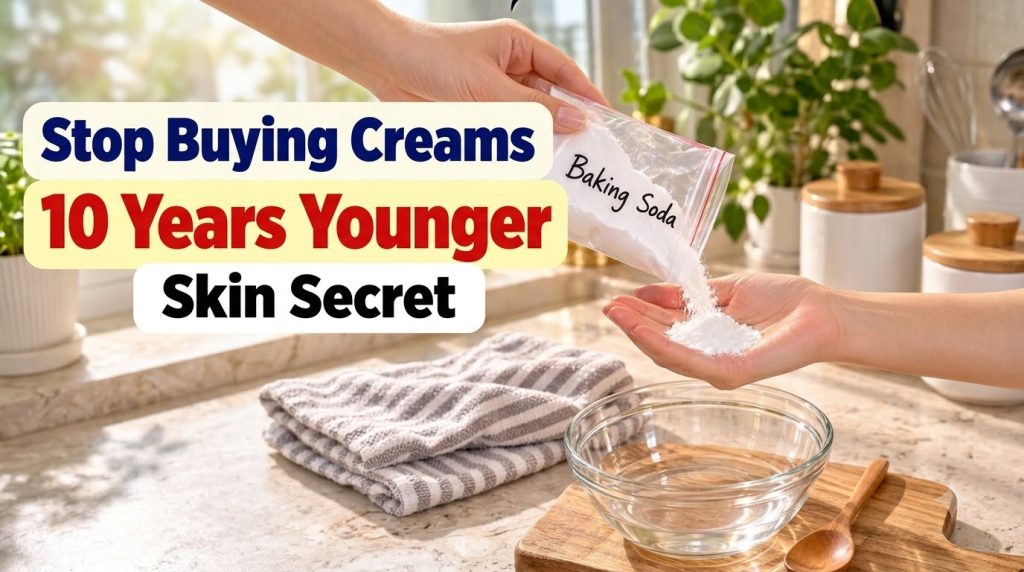
Are you dreaming of refreshed, glowing skin without breaking the bank on expensive creams? We all want that radiant, youthful look, but sometimes the best secrets are hiding right in our pantry! Today, we’re diving into a powerful yet humble ingredient that might just be your new favorite DIY beauty hack: baking soda.
Yes, that common kitchen staple can be a game-changer for your skincare routine! Forget complex formulas and chemical-laden products for a moment. Let’s explore how a simple, natural approach can help you achieve smoother, brighter, and more youthful-looking skin.
The Magic of Baking Soda for Your Skin
Baking soda, scientifically known as sodium bicarbonate, is much more than just a leavening agent for your baked goods. In the world of natural beauty, it’s celebrated for its gentle exfoliating properties. When mixed with water, it forms a mild abrasive paste that can help remove dead skin cells, revealing the fresher, brighter skin underneath.
Regular exfoliation is key to youthful skin. It helps to:
- Unclog pores, which can reduce the appearance of blackheads and prevent breakouts.
- Smooth out rough patches and uneven texture.
- Improve skin tone and radiance, giving you that coveted ‘glass skin’ glow.
- Allow your other skincare products to penetrate more effectively.
Addressing Common Skin Concerns
Many of us struggle with dullness, large pores, and the early signs of aging like fine lines. Baking soda, when used correctly, can help address these concerns by promoting cell turnover and giving your skin a fresh start. It’s an incredibly affordable solution compared to many high-end anti-aging treatments!
How to Create Your Own Baking Soda Face Mask
Ready to try this simple secret for yourself? Here’s an easy, go-to recipe for a purifying and brightening face mask. Always remember to perform a patch test on a small area of your skin before applying it to your entire face, especially if you have sensitive skin.
Basic Baking Soda & Water Mask
This simple mask is perfect for a quick refresh and gentle exfoliation.
What You’ll Need:
- 1-2 tablespoons of baking soda
- Enough water to form a paste (start with 1 tablespoon)
- A small, clean bowl
- A spoon or spatula for mixing
Instructions:
- Combine Ingredients: In your clean bowl, mix the baking soda with a small amount of water. Add water gradually, stirring until you achieve a smooth, spreadable paste. It shouldn’t be too runny or too thick.
- Cleanse Your Face: Wash your face with a gentle cleanser and pat it dry.
- Apply the Mask: Gently apply the baking soda paste to your face, avoiding the delicate eye area and lips. Use light, circular motions, especially on areas where you want more exfoliation (like the T-zone).
- Leave On: Let the mask sit on your skin for no more than 5-10 minutes. For very sensitive skin, start with just 2-3 minutes.
- Rinse Off: Rinse your face thoroughly with lukewarm water, making sure to remove all traces of the baking soda.
- Moisturize: Finish by applying your favorite hydrating moisturizer to lock in moisture and soothe your skin.
Baking Soda & Honey Mask for Added Benefits
For an extra boost of hydration and antimicrobial properties, add a touch of honey to your baking soda mask.
What You’ll Need:
- 1 tablespoon of baking soda
- 1 teaspoon of raw honey
- 1-2 teaspoons of water (as needed for consistency)
Instructions:
- Mix baking soda and honey in a bowl.
- Add water slowly until you get a smooth, manageable paste.
- Apply to a clean face, leave for 5-7 minutes, then rinse thoroughly.
- Follow with your favorite moisturizer.
Important Tips for Using Baking Soda on Your Skin
- Patch Test is Essential: Always test a small area of skin (like behind your ear or on your inner arm) 24 hours before full application to check for any irritation.
- Be Gentle: Do not scrub harshly. Baking soda is an abrasive, and excessive rubbing can irritate your skin.
- Frequency: Start by using baking soda masks no more than once a week. If your skin tolerates it well, you might increase to twice a week, but listen to your skin!
- Avoid Open Wounds or Active Acne: Do not apply baking soda to broken skin or inflamed acne, as it can cause further irritation.
- Moisturize After: Baking soda can be drying, so always follow up with a good quality moisturizer to keep your skin hydrated and balanced.
- Know Your Skin Type: While generally safe for most, individuals with extremely dry or very sensitive skin might find baking soda too harsh. If you experience redness, burning, or discomfort, rinse immediately and discontinue use.
Embracing natural, DIY beauty solutions like baking soda masks can be a wonderfully affordable and effective way to care for your skin. It’s all about making healthy habits a part of your everyday self-care routine. With consistency and careful application, you might just find that this simple kitchen secret helps you unlock a beautifully youthful and glowing complexion!