Welcome back, fellow garden enthusiasts! We all dream of a lush, productive garden, brimming with healthy plants and abundant harvests. While many factors contribute to a thriving garden, one often overlooked secret weapon lies beneath the soil: proper planting depth. Getting this right can mean the difference between struggling seedlings and robust, resilient plants with powerful root systems.
Today, we’re diving deep into the art of planting depth, exploring how this fundamental technique can unlock your garden’s full potential. You might be surprised at how much of an impact it makes!
Why Does Planting Depth Matter So Much?
Imagine a skyscraper with a shaky foundation – it won’t stand for long, right? Plants are no different! Their roots are their foundation, anchoring them firmly in the soil and acting as their lifeline for absorbing water and nutrients. Planting at the correct depth ensures:
- Stronger Root Development: Roots can spread out effectively, accessing more soil and thus more resources.
- Better Stability: Well-rooted plants are less susceptible to wind damage or toppling over.
- Optimal Nutrient and Water Uptake: Roots are positioned in the ideal zone to draw essential elements from the soil.
- Disease Prevention: Correct depth can prevent stem rot or other issues that arise from improper soil contact.
Mastering Planting Depths for Your Favorite Plants
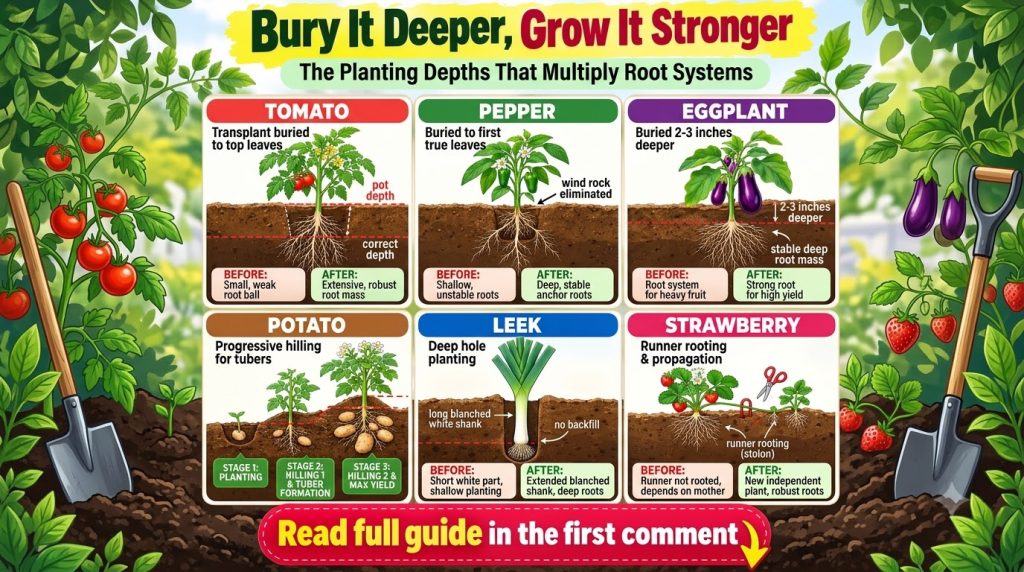
Let’s look at specific examples from our infographic to see how different plants have unique needs:
Tomatoes: Plant Them Deep!
Tomatoes are unique in their ability to grow roots along their stems. For a super strong tomato plant, remove the lower leaves and plant the seedling deep, burying up to two-thirds of the stem. The buried stem will develop new roots, creating a much more robust root system for better nutrient absorption and drought resistance.
Peppers and Eggplants: Just Right at Soil Level
Unlike tomatoes, peppers and eggplants prefer to be planted at the same depth they were in their nursery pots. Ensure the top of the root ball is level with the surrounding soil. Planting them too deep can lead to stem rot, while planting too shallow can expose delicate roots to the elements.
Potatoes: The Art of Hilling
Potatoes are fascinating! Plant seed potatoes in shallow trenches (about 4-6 inches deep). As the plant grows, you’ll practice ‘hilling’ – gradually mounding soil around the growing stems, leaving only the top leaves exposed. This encourages the plant to produce more tubers along the buried stem, leading to a much larger harvest.
Leeks: Blanching for Tenderness
For those lovely long, white, tender leek stems, deep planting is key. Plant leeks in a trench or deep hole (6-8 inches deep) and gradually fill in the soil around the stem as it grows. This process, called blanching, prevents sunlight from reaching the lower stem, keeping it pale and succulent.
Strawberries: Mind the Crown!
Strawberries have a critical sweet spot: their ‘crown’ (the central part where leaves emerge) must be planted precisely at soil level. If the crown is buried, the plant can rot. If it’s too high, the roots can dry out. Precision is important for these sweet berries!
Tips for Planting Success
- Prepare Your Soil: Ensure your soil is well-draining and amended with compost for optimal root growth.
- Water Thoroughly: Always water newly planted seedlings immediately after planting to help settle the soil around the roots.
- Handle with Care: Be gentle with delicate roots during transplanting to minimize shock.
- Observe Your Plants: Pay attention to how your plants are growing. Healthy, vigorous growth is a sign you’ve got the depth right!
By paying close attention to these essential planting depths, you’re not just putting a plant in the ground; you’re setting it up for a lifetime of success. A little extra care at planting time translates into healthier, more productive plants and a more joyful gardening experience. Happy planting, everyone!