As the vibrant colors of autumn fade and the chill of winter approaches, many gardeners might be tempted to put their tools away and forget about the garden until spring. However, winter garden preparation is a crucial step for ensuring a spectacular bloom and a healthy harvest next year. Neglecting winter clean-up can lead to pest infestations, disease spread, and a less vigorous garden come springtime. Today, we’re focusing on 9 essential plants that particularly benefit from a good winter tidy-up.
Why Winter Clean-up is So Important
Think of winter clean-up as putting your garden to bed properly. It’s not just about aesthetics; it’s about setting the stage for success. Here’s why it matters:
-
Pest and Disease Control: Many pests and fungal diseases can overwinter in plant debris, dead leaves, and spent stems. Removing these eliminates hiding spots and reduces the chances of them re-emerging in spring.
-
Improved Air Circulation: Clearing out dense, old foliage can improve air circulation around plants, which is vital for preventing fungal issues.
-
Nutrient Cycling: While some plant matter can break down and return nutrients to the soil, diseased material should always be removed to prevent contamination.
-
Aesthetic Appeal: A tidy garden, even in winter, looks much better and allows you to enjoy the garden’s bare bones.
-
Early Spring Start: A clean garden means less work in spring, allowing your new growth to emerge unhindered.
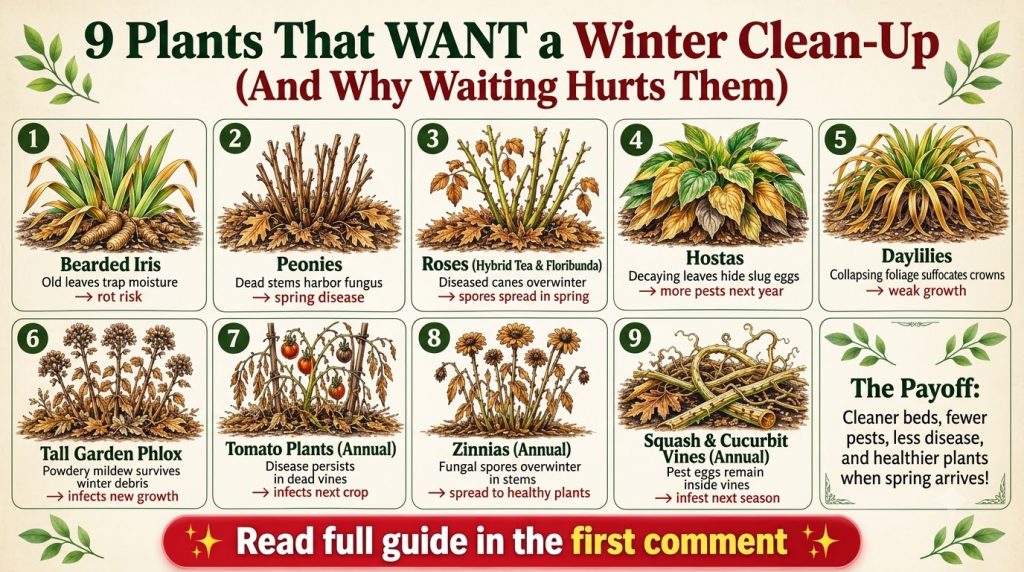
9 Plants That Need Winter Clean-up
Here’s a list of plants that particularly benefit from your attention before winter truly sets in:
1. Bearded Iris
After their beautiful blooms fade and the foliage starts to yellow, it’s important to cut back iris leaves to about 4-6 inches. This removes potential hiding spots for iris borers, a common pest that can devastate your plants.
2. Peonies
Once the foliage yellows or browns, cut peony stems back to about 2-3 inches above the ground. This helps prevent botrytis blight, a fungal disease that can overwinter in decaying foliage and spread to new growth in spring.
3. Roses
For most roses, a good autumn clean-up involves removing all remaining leaves (especially those with black spot or other diseases) and deadheading spent blooms. This minimizes fungal spores and prepares the plant for dormancy. For some varieties, a light prune might also be beneficial, but heavy pruning is typically reserved for late winter/early spring.
4. Hostas
As soon as hosta leaves turn yellow and mushy, cut them back to the ground. This is crucial for preventing slugs and snails from overwintering in the decaying foliage and emerging to feast on tender new shoots in spring.
5. Daylilies
Similar to hostas, once daylily foliage begins to yellow and die back, it’s best to cut it down to a few inches above the crown. This helps control thrips and other pests that might hide in the decaying leaves.
6. Coneflowers (Echinacea)
While some gardeners leave coneflower seed heads for winter interest and bird food, cutting back the foliage to the ground in late fall can reduce the spread of powdery mildew and other fungal diseases that often affect these plants.
7. Phlox
Phlox is highly susceptible to powdery mildew. To prevent its return, cut back all garden phlox stems to the ground after they have finished flowering and the foliage starts to die back. Dispose of infected material away from your garden.
8. Lavender
While established lavender shouldn’t be heavily pruned in fall, a light trim to remove spent flower stalks and any leggy growth can be beneficial. Avoid cutting into old wood. This tidies the plant and prepares it for a stronger flush in spring.
9. Mint
If your mint patch is growing vigorously, cutting it back to the ground in late fall can rejuvenate the plant and prevent it from becoming too invasive. This also removes any diseased or insect-infested foliage, ensuring a fresh start next year.
General Winter Clean-up Tips
-
Sanitize Your Tools: Always clean and sterilize your pruning shears and other tools between plants, especially if you suspect disease.
-
Dispose of Debris Properly: Do not compost diseased plant material. Bag it and discard it to prevent spreading pathogens.
-
Mulch for Protection: After clean-up, apply a fresh layer of mulch around susceptible plants to insulate roots and retain soil moisture.
-
Water Wisely: Provide a deep watering to evergreens and newly planted trees and shrubs before the ground freezes solid.
Taking the time for winter garden prep might seem like an extra chore, but it’s an investment in the health and beauty of your garden. By focusing on these 9 key plants and following general clean-up guidelines, you’ll be rewarded with a more vibrant, pest-free, and disease-resistant garden come spring. Happy gardening!