Imagine expanding your garden’s beauty and bounty without spending a dime on new plants. Propagation, the art of creating new plants from existing ones, is one of the most rewarding skills a gardener can master. It’s a sustainable practice that not only saves money but also deepens your connection to the life cycles in your garden. Whether you dream of a hedge filled with fragrant lavender, a continuous supply of fresh blueberries, or more stunning hydrangeas, learning to propagate your favorite shrubs opens up a world of possibilities. With a little guidance and patience, you’ll be nurturing new life and cultivating a thriving landscape.
The Art of Shrub Propagation: Cuttings & Suckers
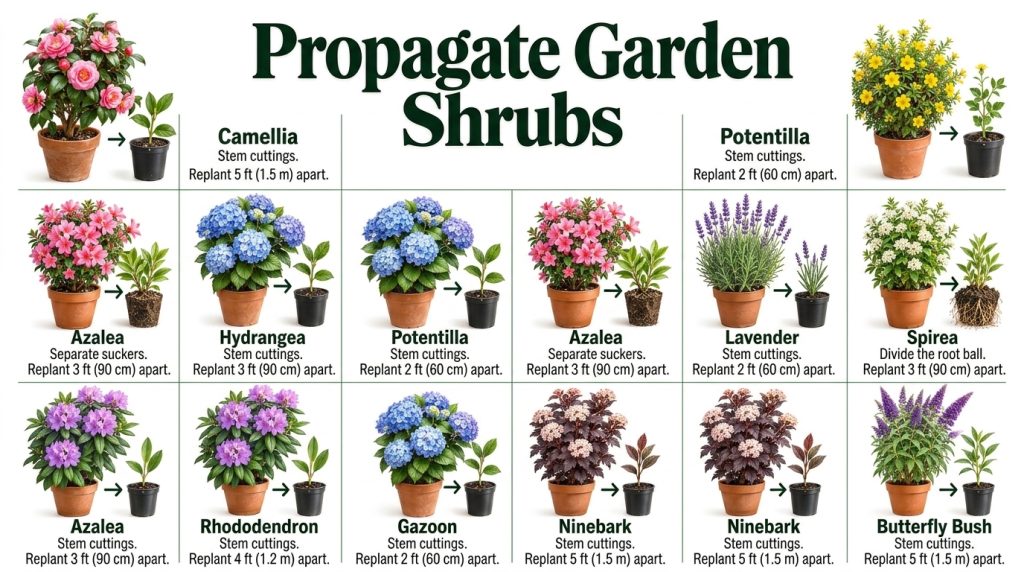
Shrubs can be propagated through various methods, but two of the most common and effective for home gardeners are stem cuttings and managing suckers. Understanding which type of cutting to take and when is key to success:
- Softwood Cuttings: Taken from new, soft, flexible growth typically in late spring or early summer. These root quickly but are more susceptible to drying out.
- Semi-Hardwood Cuttings: Taken from partially matured wood in late summer or early fall. The stems are firmer than softwood but still flexible. This is a common and highly successful method for many shrubs.
- Hardwood Cuttings: Taken from dormant, mature wood in late fall or winter. These are slower to root but very hardy once established.
- Suckers: These are new shoots that emerge from the roots of the parent plant, often some distance away. They are essentially new, genetically identical plants that can be carefully dug up and transplanted.
Nine Shrubs to Multiply in Your Garden
Let’s delve into specific guidance for propagating some of the most popular garden shrubs:
Rosemary (Salvia rosmarinus)
Known for its fragrant foliage and culinary uses, Rosemary is an excellent candidate for propagation.
Hardiness: USDA Zones 7-10 as a perennial, often grown as an annual or overwintered indoors in colder zones.
Plant type: Evergreen shrubby herb
Exposure: Full sun
Height: 2-6 feet
Spread: 2-4 feet
Propagation: Take 4-6 inch semi-hardwood stem cuttings in late spring or early summer after the plant has flowered. Remove leaves from the bottom inch or two, dip in rooting hormone, and place in a well-draining potting mix. Keep consistently moist but not waterlogged.
Practical Tip: Creating a mini-greenhouse effect by covering the pot with a plastic bag helps maintain humidity crucial for rooting.
Spacing: Once rooted and growing, plant new rosemary 15-20 inches (38-51 cm) apart for full growth.
Lavender (Lavandula spp.)
Beloved for its calming aroma and beautiful purple blooms, Lavender is easily propagated from cuttings.
Hardiness: USDA Zones 5-9, depending on the species and cultivar.
Plant type: Perennial shrubby herb
Exposure: Full sun
Height: 1-3 feet
Spread: 1-3 feet
Propagation: Take 3-4 inch semi-hardwood cuttings from non-flowering stems in late spring to early summer or early fall. Prepare them by stripping the lower leaves and dipping in rooting hormone before planting in a sandy, well-draining mix.
Practical Tip: Ensure excellent drainage, as lavender is highly susceptible to root rot in wet conditions. A mix of perlite and potting soil works well.
Spacing: Plant new lavender 12-18 inches (30-46 cm) apart, allowing for good air circulation.
Hydrangea (Hydrangea spp.)
These showy shrubs with their large, beautiful blooms are straightforward to propagate.
Hardiness: USDA Zones 3-9, varies significantly by species (e.g., *Hydrangea macrophylla* vs. *Hydrangea paniculata*).
Plant type: Deciduous shrub
Exposure: Partial sun to full sun (morning sun is ideal)
Height: 3-15 feet
Spread: 3-15 feet
Propagation: Softwood cuttings taken in late spring or early summer are best. Choose a 4-6 inch stem with at least two sets of leaves, cut below a node, remove lower leaves, and trim upper leaves in half to reduce moisture loss. Root in a moist, sterile potting mix.
Practical Tip: Provide consistent, high humidity for hydrangea cuttings, perhaps using a clear dome or plastic bag.
Spacing: Mature hydrangeas need ample room, typically 3-5 feet (0.9-1.5 m) apart, depending on the variety.
Rose (Rosa spp.)
While some roses are grafted, many can be successfully rooted from cuttings.
Hardiness: USDA Zones 4-11, highly variable by cultivar.
Plant type: Deciduous or evergreen shrub, climber, or groundcover
Exposure: Full sun
Height: 1-20+ feet
Spread: 1-15+ feet
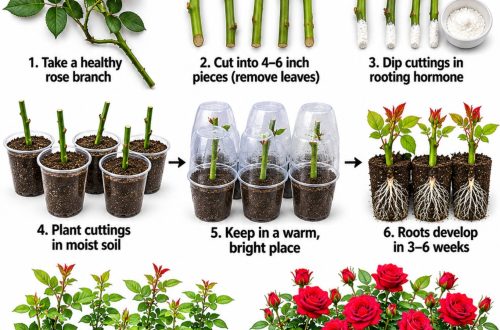
Propagation: Semi-hardwood cuttings taken in late spring to early summer or hardwood cuttings in fall/winter. Take 6-8 inch sections from healthy stems, remove leaves from the lower half, and a thorn or two at the base. Dip in rooting hormone and plant in a rich, well-draining soil mix.
Practical Tip: For semi-hardwood cuttings, choose stems that have just finished flowering but are still somewhat flexible.
Spacing: Allow 2-3 feet (0.6-0.9 m) for most shrub roses, more for larger or climbing varieties.
Raspberry (Rubus idaeus and other Rubus spp.)
Raspberries are vigorous growers that readily produce new plants from suckers.
Hardiness: USDA Zones 3-9, varies by species.
Plant type: Deciduous fruit-bearing shrub
Exposure: Full sun
Height: 3-8 feet
Spread: Spreading by suckers
Propagation: Suckers are the easiest way. In early spring or fall, carefully dig up a healthy sucker that is at least 6-12 inches tall, ensuring it has a good root ball. Replant it immediately in its new location.
Practical Tip: Prune suckers that emerge too far from the main patch to maintain a tidy berry bed. Only select strong, healthy ones for transplanting.
Spacing: Plant new raspberry suckers 2-3 feet (0.6-0.9 m) apart in rows, allowing for future spread.
Blueberry (Vaccinium spp.)
These delicious fruit producers can be propagated, though it requires patience.
Hardiness: USDA Zones 3-9, depending on variety (e.g., highbush, lowbush, rabbiteye).
Plant type: Deciduous or evergreen fruit-bearing shrub
Exposure: Full sun to partial shade
Height: 2-12 feet
Spread: 2-12 feet
Propagation: Take 4-6 inch softwood or semi-hardwood cuttings in late spring to early summer. Blueberries require very acidic soil, so root them in a mix of peat moss and perlite or sand. Rooting hormone is highly recommended.
Practical Tip: Maintain high humidity and consistent moisture. Blueberries are slow to root, often taking 6-8 weeks or more.
Spacing: Plant new blueberry bushes 4-6 feet (1.2-1.8 m) apart, allowing for good air circulation and fruit production.
Boxwood (Buxus spp.)
A classic choice for formal hedges and topiary, boxwood roots reliably from cuttings.
Hardiness: USDA Zones 5-9, species dependent.
Plant type: Evergreen shrub
Exposure: Full sun to partial shade
Height: 1-20 feet
Spread: 1-20 feet
Propagation: Take 4-6 inch semi-hardwood cuttings in late summer or early fall. Remove the lower leaves, scratch the bark lightly at the base, and dip in rooting hormone before planting in a well-draining, sandy potting mix.
Practical Tip: Boxwood cuttings appreciate warmth at the root zone; a heating mat can accelerate rooting.
Spacing: For hedges, plant 2-3 feet (0.6-0.9 m) apart, or wider for specimen plants.
Elderberry (Sambucus spp.)
Known for its berries and often grown for wildlife and herbal uses, elderberry is very easy to propagate.
Hardiness: USDA Zones 3-9.
Plant type: Deciduous shrub or small tree
Exposure: Full sun to partial shade
Height: 6-12 feet
Spread: 5-12 feet
Propagation: Hardwood cuttings taken in late fall or winter are incredibly successful. Take 8-12 inch sections of dormant, pencil-thick stems, ensuring a bud at the top and bottom. Stick them directly into the ground or a pot filled with moist soil, with two-thirds of the cutting buried.
Practical Tip: Elderberry cuttings often root so readily that rooting hormone isn’t strictly necessary, but it can improve success rates.
Spacing: Allow ample space, 6-10 feet (1.8-3.0 m) apart, for mature elderberry bushes.
Rhododendron (Rhododendron spp.)
With their stunning flowers, rhododendrons are a prized addition to many gardens and can be propagated with care.
Hardiness: USDA Zones 4-9, varies widely by species and hybrid.
Plant type: Evergreen or deciduous shrub
Exposure: Partial shade
Height: 1-20+ feet
Spread: 2-20+ feet
Propagation: Take 4-6 inch semi-hardwood cuttings in late summer or early fall after the current year’s growth has begun to harden. Remove lower leaves, making sure to keep the terminal bud intact. Dip in rooting hormone (often a stronger concentration for rhododendrons) and plant in an acidic, well-aerated medium like peat moss and perlite.
Practical Tip: Rhododendrons are slower to root, often taking 2-3 months. Maintaining consistent high humidity is crucial during this period.
Spacing: Plant new rhododendrons 3-6 feet (0.9-1.8 m) apart, depending on the mature size of the variety.
Step-by-Step: Taking Successful Cuttings
While specific timing varies, the general process for taking and rooting stem cuttings is similar:
- Prepare Your Tools: Use a sharp, clean knife or pruners to prevent disease and make a clean cut. Sterilize tools with rubbing alcohol between plants.
- Select Healthy Stems: Choose a vigorous, non-flowering stem from the current year’s growth. Avoid stems that are too woody or too soft.
- Make the Cut: Cut a 4-8 inch section (depending on the plant) just below a leaf node (the point where a leaf attaches to the stem). This area contains growth hormones that aid in rooting.
- Prepare the Cutting: Remove all leaves from the bottom 1-2 inches of the stem. For larger leaves (like hydrangeas), you can cut the remaining leaves in half to reduce water loss.
- Apply Rooting Hormone: Dip the cut end into rooting hormone powder or gel. This step significantly increases rooting success for many plants.
- Plant the Cutting: Insert the prepared cutting into a pre-moistened, sterile, well-draining rooting medium (e.g., perlite, vermiculite, sand, or a seed-starting mix). Plant deeply enough so at least one node is below the soil surface.
- Create a Humid Environment: Cover the pot with a clear plastic bag or a propagation dome to create a humid environment. Ensure the plastic doesn’t touch the leaves directly.
- Provide Indirect Light and Warmth: Place your cuttings in a location with bright, indirect light and a consistent warm temperature (around 65-75°F or 18-24°C).
Caring for New Plants and Avoiding Pitfalls
Successfully rooting a cutting is just the first step. Nurturing it into a thriving plant requires ongoing attention:
- Consistent Moisture: Keep the rooting medium consistently moist, but never soggy. Overwatering is a common killer of new cuttings. Feel the top inch of soil; if it feels dry, it’s time to water.
- Airflow: Briefly open your humidity dome or plastic bag daily to allow for air exchange and prevent fungal growth.
- Patience: Rooting times vary greatly, from a few weeks to several months. Resist the urge to tug on cuttings to check for roots. Instead, gently tip the pot to see if roots are developing around the edges, or wait until you see new leaf growth.
- Hardening Off: Once the cutting has rooted and is showing new growth, gradually introduce it to outdoor conditions (if applicable). This process, called hardening off, involves slowly exposing it to increasing amounts of sun, wind, and less consistent humidity over 7-10 days before permanent planting.
- Transplanting: When the root ball is robust, transplant your new shrub into a larger pot or its permanent garden location, following the recommended mature spacing.
Regional Considerations for Shrub Propagation
The best time to take cuttings or transplant suckers can vary significantly depending on your local climate and USDA Hardiness Zone. Gardeners in warmer zones (9-11) might have a longer window for propagation, sometimes even year-round for certain plants. In colder zones (3-5), timing is more critical, often aligning with specific periods of new growth in spring/early summer or dormancy in fall/winter.
Always consider your local average last and first frost dates when planning to propagate and transplant. Warm soil temperatures are generally beneficial for rooting, so taking cuttings when the ground is naturally warm but before extreme summer heat sets in can improve success. Consulting your local university extension service can provide tailored advice for your specific microclimate.
Cultivate a Richer Garden, One Shrub at a Time
Propagating your favorite shrubs is an empowering gardening skill that brings immense satisfaction. It allows you to expand your garden, share plants with friends, or simply enjoy the magic of growing new life from a simple cutting. With the practical guidance for Rosemary, Lavender, Hydrangea, Rose, Raspberry, Blueberry, Boxwood, Elderberry, and Rhododendron, you’re well-equipped to start. Embrace the journey, observe your plants, and soon you’ll have a more abundant and sustainable garden, thanks to your own green thumb. Happy propagating!