Extend Your Harvest: Why November is Prime Planting Time!
As the days grow shorter and a crisp chill fills the air, many gardeners think their planting days are over until spring. But what if we told you that November isn’t just for raking leaves and bundling up? It’s a fantastic month to get a head start on next season’s garden, extend your fall harvest, and even enjoy fresh produce throughout the colder months! With the right planning and a little know-how, you can keep your garden vibrant and productive.
Planting in November offers several benefits. For many cool-season crops, the cooler soil temperatures can actually encourage stronger root development before the ground freezes solid. This means they’ll be ready to burst forth with vigor once spring arrives. Plus, certain vegetables thrive in the cooler weather, developing sweeter flavors and avoiding the bolt that often occurs in summer heat.
Ready to discover which resilient crops can still go into the ground this November? Let’s dive into our top nine picks that will ensure your garden keeps giving!
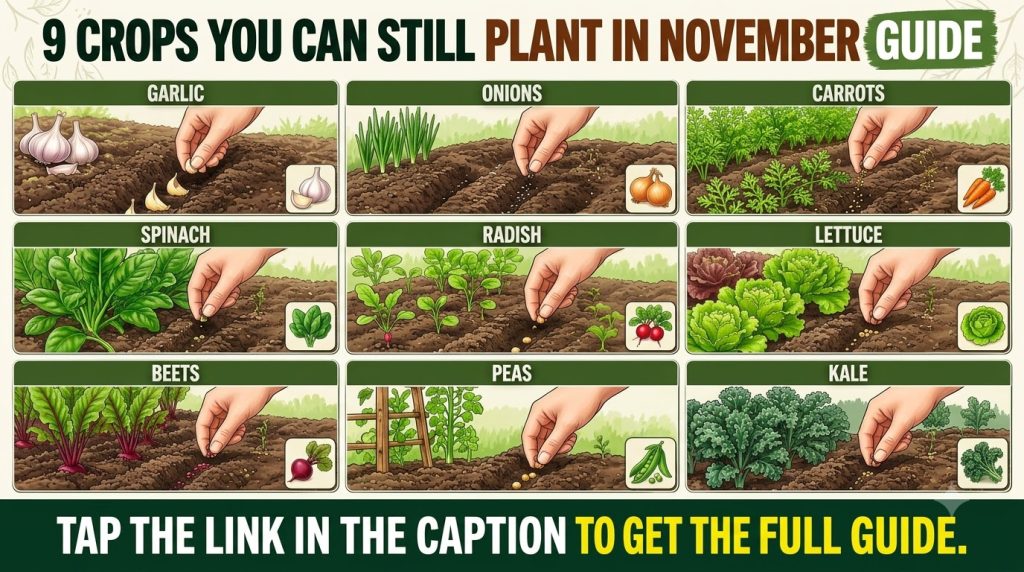
9 Crops You Can Still Plant in November
1. Garlic
November is the ideal time to plant garlic for a summer harvest. Planting garlic cloves now allows them to establish strong root systems before winter sets in. They’ll then go dormant and resume growth in early spring, leading to large, flavorful bulbs by mid-summer.
- How to Plant: Break apart garlic bulbs into individual cloves, planting each clove root-end down, about 2-3 inches deep and 4-6 inches apart.
- Tip: Cover with a thick layer of mulch (straw or leaves) to insulate the soil and protect young shoots from harsh freezes.
2. Onions (Sets)
Similar to garlic, planting onion sets (small, immature bulbs) in November can give you an early crop next year. Choose overwintering varieties for the best success.
- How to Plant: Plant onion sets about 1 inch deep and 4-6 inches apart.
- Tip: Ensure good drainage to prevent rot during wet winter months.
3. Carrots
While often a spring crop, planting certain carrot varieties in late fall can lead to a sweet harvest in early spring. The cold weather can even enhance their flavor! Protect them with a cloche or cold frame.
- How to Plant: Sow seeds thinly about 1/2 inch deep in well-drained, loose soil.
- Tip: Choose quick-maturing or winter-hardy varieties.
4. Spinach
Spinach is incredibly cold-hardy and perfect for fall and winter gardens. You can plant it in November for a late fall harvest or to overwinter for an early spring crop.
- How to Plant: Sow seeds 1/2 inch deep and about 1 inch apart, thinning later if needed.
- Tip: A layer of row cover can protect it from the harshest freezes and extend your harvest window.
5. Radishes
Fast-growing and surprisingly tolerant of cool weather, radishes can still provide a quick harvest if planted early in November. Look for winter radish varieties for better cold tolerance.
- How to Plant: Plant seeds 1/2 inch deep and 1 inch apart.
- Tip: Harvest quickly as they can become woody if left too long in the ground.
6. Lettuce
Many lettuce varieties, especially those in the ‘winter’ or ‘hardy’ categories, can be planted in November. They might grow slowly through winter but will surge with new growth as soon as temperatures rise in spring.
- How to Plant: Sow seeds 1/4 inch deep. For overwintering, consider planting in a cold frame or under cloches.
- Tip: Loose-leaf varieties often do better than head lettuce in cold conditions.
7. Beets
Beets are another root crop that benefits from cool weather, often becoming sweeter. Plant them in early November for a late fall or very early spring harvest.
- How to Plant: Plant seeds 1/2 inch deep, 2-4 inches apart.
- Tip: You can also harvest the greens for a nutritious side dish!
8. Peas (Winter/Snow Varieties)
In milder climates or with good protection, you can plant overwintering pea varieties in November. These will establish roots and then go dormant, providing an incredibly early spring harvest.
- How to Plant: Sow seeds 1 inch deep and 2-3 inches apart.
- Tip: Provide a trellis or support system for climbing varieties.
9. Kale
Kale is a superstar of the cold-weather garden. Not only is it incredibly nutritious, but it also becomes sweeter after a frost. Plant in November for a continuous harvest throughout fall and into early winter.
- How to Plant: Sow seeds 1/2 inch deep, 4-6 inches apart, thinning to a foot apart as they grow.
- Tip: Harvest outer leaves regularly to encourage new growth.
Get Ready for a Bountiful (and Early!) Spring
Don’t let the end of the traditional gardening season deter you. November planting is a fantastic way to maximize your garden’s potential, enjoy fresh produce longer, and get a jump start on next year’s bounty. Imagine harvesting your own fresh garlic or sweet spinach while your neighbors are just starting to plan their spring beds!
So, grab your gardening gloves, prepare your soil, and embrace the cooler weather. Your garden (and your taste buds!) will thank you. Happy planting!