Imagine biting into a crisp apple picked fresh from your own backyard, or gathering juicy berries still warm from the sun. The dream of a home orchard doesn’t have to wait for spring. In fact, planting fruit trees during the cooler months can give them a significant head start, allowing their roots to quietly settle into their new home before the burst of spring growth. This strategic timing reduces transplant shock and builds a strong foundation, setting your trees up for a lifetime of abundant harvests.
Many gardeners overlook the unique advantages of winter planting, assuming that gardening is strictly a warm-weather activity. However, for dormant fruit trees, the cooler temperatures and often moister soil of late fall and winter provide ideal conditions for root establishment. This guide will walk you through the benefits of this method and introduce you to nine fantastic fruit trees that thrive when planted during their slumber.
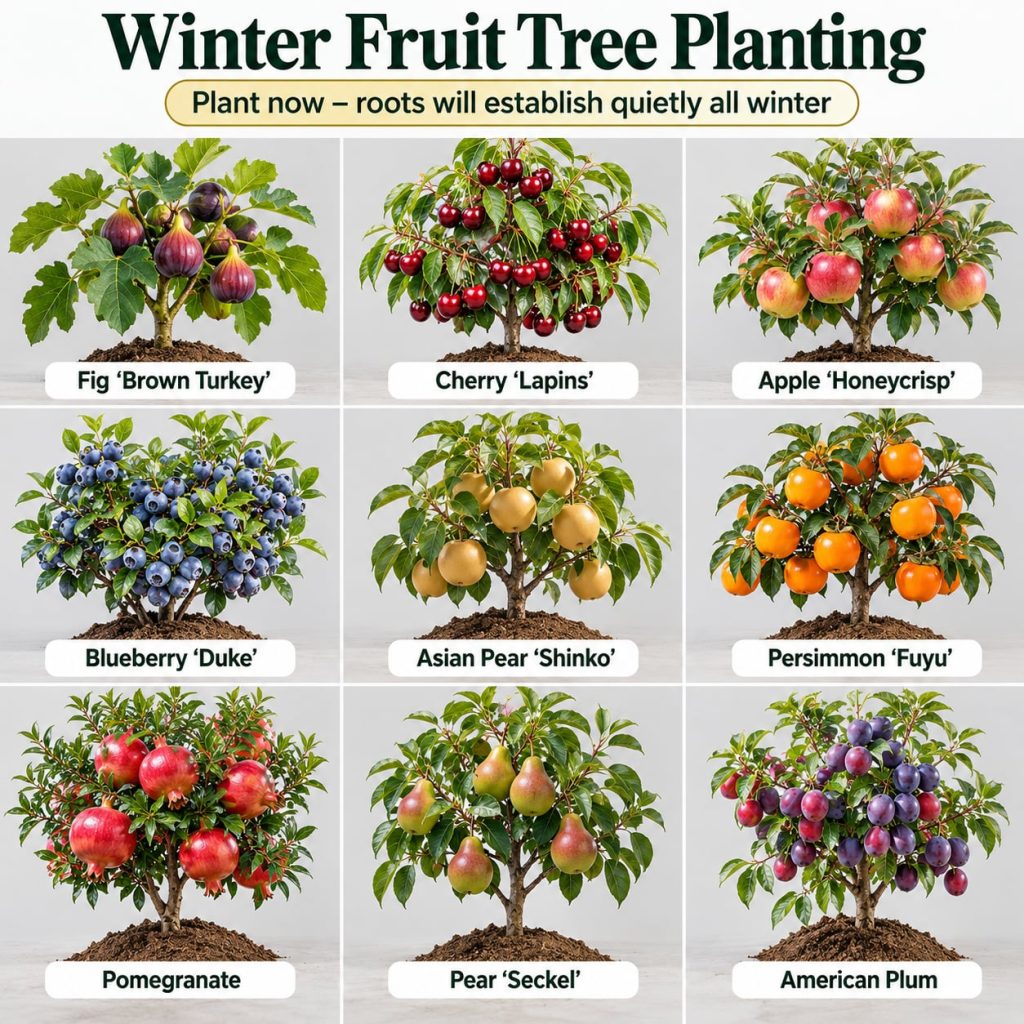 Start your home orchard by planting these fruitful trees in winter.
The Quiet Power of Winter Planting
When fruit trees are dormant, typically from late fall through early spring, their energy is focused primarily on root development rather than producing leaves or fruit. Planting them during this period allows their root systems to grow undisturbed in the cooler, often rainier soil. By the time spring arrives and temperatures rise, these established roots are ready to support vigorous new growth, leading to healthier trees and often earlier fruit production.
This method is particularly effective for bare-root trees, which are typically available during the dormant season. Potted trees can also be planted, provided the ground is not frozen solid. The key is to plant them while they are still in their resting phase, giving them a stress-free transition to their permanent home.
Featured Fruit Trees for Your Winter Planting Project
Here are nine excellent fruit tree varieties to consider for your dormant season planting, each with unique characteristics and care requirements:
1. Fig ‘Brown Turkey’ (Ficus carica ‘Brown Turkey’)
- Hardiness: USDA Zones 7-10. Can be grown in containers and overwintered indoors in colder zones.
- Plant type: Deciduous shrub or small tree.
- Exposure: Full sun.
- Soil: Well-drained, adaptable, prefers slightly alkaline conditions.
- Watering: Regular, especially during fruit development.
- Height & Spread: 10-25 feet tall and wide.
- Practical Tip: Mulch heavily around the base in cooler zones for winter root protection.
- Common Mistake: Planting in poorly drained soil, which can lead to root rot.
2. Cherry ‘Lapins’ (Prunus avium ‘Lapins’)
- Hardiness: USDA Zones 5-8.
- Plant type: Deciduous tree.
- Exposure: Full sun.
- Soil: Well-drained, fertile loam.
- Watering: Consistent moisture, particularly when young and during fruiting.
- Height & Spread: 15-20 feet (standard), smaller on dwarf rootstock.
- Practical Tip: Prune after fruiting to maintain shape and promote air circulation, which helps prevent disease.
- Common Mistake: Not protecting fruit from birds, which can decimate a crop quickly.
3. Apple ‘Honeycrisp’ (Malus domestica ‘Honeycrisp’)
- Hardiness: USDA Zones 3-7.
- Plant type: Deciduous tree.
- Exposure: Full sun.
- Soil: Well-drained, slightly acidic to neutral.
- Watering: Regular, consistent moisture is crucial for crisp, sweet fruit.
- Height & Spread: Varies by rootstock (dwarf 8-10 ft, semi-dwarf 12-15 ft, standard 20+ ft).
- Practical Tip: Ensure a compatible apple pollinator variety is planted nearby for good fruit set.
- Common Mistake: Overlooking pest and disease management, as apples can be susceptible to various issues.
4. Blueberry ‘Duke’ (Vaccinium corymbosum ‘Duke’)
- Hardiness: USDA Zones 4-7.
- Plant type: Deciduous shrub (highbush type).
- Exposure: Full sun.
- Soil: Highly acidic (pH 4.5-5.5), well-drained, rich in organic matter.
- Watering: Consistent moisture, never allow the soil to dry out completely.
- Height & Spread: 4-6 feet tall and wide.
- Practical Tip: Amend soil with elemental sulfur or peat moss to achieve the necessary acidity before planting.
- Common Mistake: Planting in standard garden soil without adjusting pH, leading to nutrient deficiencies.
5. Asian Pear ‘Shinko’ (Pyrus pyrifolia ‘Shinko’)
- Hardiness: USDA Zones 5-9.
- Plant type: Deciduous tree.
- Exposure: Full sun.
- Soil: Well-drained, adaptable to various types.
- Watering: Regular, especially during establishment and dry periods.
- Height & Spread: 12-18 feet tall and wide.
- Practical Tip: Thin developing fruit heavily to ensure larger, higher-quality pears at harvest.
- Common Mistake: Ignoring codling moth control, which can damage fruit.
6. Persimmon ‘Fuyu’ (Diospyros kaki ‘Fuyu’)
- Hardiness: USDA Zones 7-10.
- Plant type: Deciduous tree.
- Exposure: Full sun.
- Soil: Well-drained, adaptable to various types.
- Watering: Moderate, tolerates some drought once established.
- Height & Spread: 15-20 feet tall and wide.
- Practical Tip: Harvest ‘Fuyu’ persimmons when fully colored but still firm for the best crisp, non-astringent eating experience.
- Common Mistake: Planting in a location prone to late spring frosts, which can damage emerging flowers.
7. Pomegranate (Punica granatum)
- Hardiness: USDA Zones 7-10 (some varieties to Zone 6).
- Plant type: Deciduous shrub or small tree.
- Exposure: Full sun.
- Soil: Well-drained, adaptable to poor soils.
- Watering: Drought tolerant once established, but consistent watering improves fruit size and quality.
- Height & Spread: 10-20 feet tall and wide.
- Practical Tip: Prune to shape as a multi-stemmed shrub or single-trunk tree, and remove suckers from the base regularly.
- Common Mistake: Expecting fruit in climates with short, cool summers; pomegranates need long, hot summers to ripen properly.
8. Pear ‘Seckel’ (Pyrus communis ‘Seckel’)
- Hardiness: USDA Zones 4-8.
- Plant type: Deciduous tree.
- Exposure: Full sun.
- Soil: Well-drained, prefers loam.
- Watering: Regular, consistent moisture is important for fruit development.
- Height & Spread: 15-20 feet (standard), smaller on dwarf rootstock.
- Practical Tip: Harvest ‘Seckel’ pears when mature but still firm; they will ripen beautifully off the tree.
- Common Mistake: Not ensuring good air circulation, which can increase susceptibility to pear scab in humid conditions.
9. American Plum (Prunus americana)
- Hardiness: USDA Zones 3-8.
- Plant type: Deciduous tree.
- Exposure: Full sun.
- Soil: Adaptable, prefers well-drained loam.
- Watering: Regular, especially when young.
- Height & Spread: 15-20 feet tall and wide.
- Practical Tip: Plant at least two compatible American plum varieties or a specific hybrid for optimal cross-pollination and fruit set.
- Common Mistake: Allowing suckers to grow uncontrolled, as American plums can form dense thickets if not managed.
Preparing for Winter Planting Success
Successful winter planting hinges on proper site selection and preparation. Here’s a quick guide:
Site Selection and Soil Preparation
Choose a location that receives at least 6-8 hours of direct sunlight daily. Fruit trees generally prefer well-drained soil. If you have heavy clay, amend it with organic matter like compost to improve drainage. For sandy soils, compost will help retain moisture and nutrients. Perform a soil test to understand your soil’s pH and nutrient levels, adjusting as recommended.
Bare-Root vs. Container Trees
Bare-root trees are usually available during their dormant season. Upon arrival, keep their roots moist and plant them as soon as possible. Dig a hole wide enough to accommodate the roots without bending, and deep enough so the root flare (the point where the trunk widens at the soil line) is at or slightly above ground level. Fan out the roots as you backfill with soil, gently tamping to remove air pockets. Water thoroughly.
Container-grown trees can be planted any time the ground isn’t frozen. Remove the tree from its pot, gently loosen any circling roots, and plant at the same depth it was in the container. Again, ensure the root flare is visible.
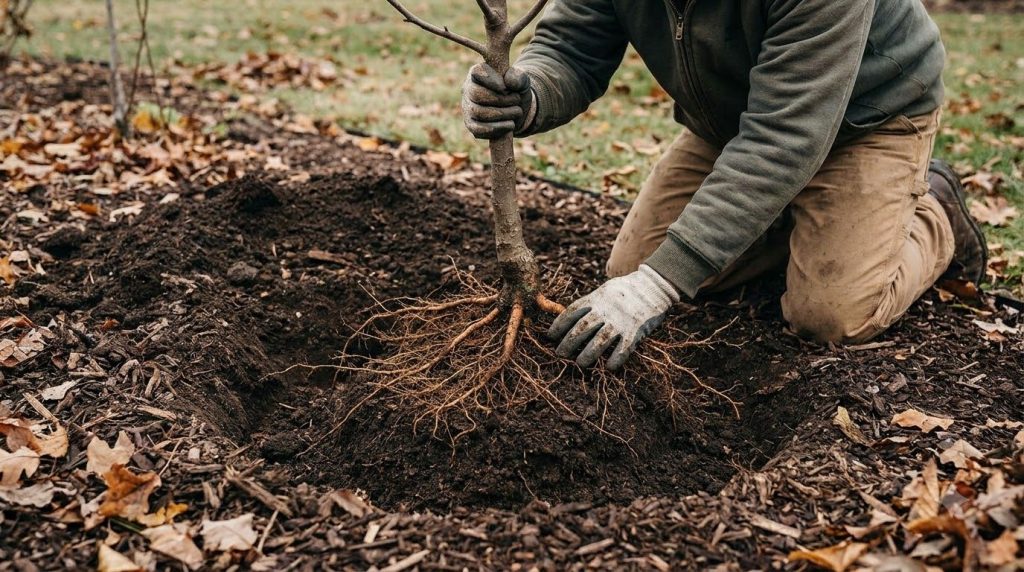 Plant bare-root trees while dormant to give them a head start.
Watering and Mulching
Even in winter, newly planted trees need water. Water deeply immediately after planting, and then monitor soil moisture, especially during dry spells. Apply a 2-4 inch layer of organic mulch (like wood chips or straw) around the base of the tree, keeping it a few inches away from the trunk. Mulch conserves moisture, moderates soil temperature, and suppresses weeds.
Regional Considerations for Winter Fruit Tree Planting
The success of winter planting greatly depends on your local climate and USDA hardiness zone:
- Warmer Zones (USDA 8-10+): Winter is often the ideal time for planting. The ground rarely freezes, allowing roots to establish consistently through the cool season.
- Temperate Zones (USDA 6-7): Late fall, before the first hard freeze, or very early spring as soon as the ground thaws, are prime times. Adequate mulching is critical to protect roots from temperature fluctuations.
- Colder Zones (USDA 3-5): Planting is best done in late fall before the ground freezes solid, or in early spring as soon as the soil is workable. Trees in these zones will require extra protection from harsh winter winds and rodent damage (e.g., tree guards). Consider varieties known for superior cold hardiness.
Always check your local extension service for specific recommendations regarding planting times and suitable varieties for your microclimate and average last/first frost dates.
Common Winter Planting Mistakes to Avoid
While winter planting offers many benefits, a few missteps can hinder success:
- Planting in Frozen Ground: Attempting to plant when the soil is frozen solid is futile and can damage delicate roots. Wait for a thaw.
- Improper Planting Depth: Planting too deep can suffocate roots, while too shallow can lead to root exposure and drying. Always ensure the root flare is at or slightly above the soil line.
- Neglecting Winter Watering: While trees are dormant, they still need moisture. Don’t assume winter rains or snow are always sufficient, especially during dry periods.
- Ignoring Soil Preparation: Skipping soil amendments for drainage or pH can lead to long-term health issues for your trees.
- Lack of Protection: Young trees, especially in colder zones, can suffer from winter sunscald, rodent damage, or harsh winds. Use tree guards, wrap trunks, or build windbreaks as needed.
Start Your Orchard Journey Today
Embracing winter fruit tree planting can be a truly rewarding experience, offering your trees the best possible start for a healthy, productive life. By understanding the unique benefits of dormancy and providing careful attention to site selection, planting technique, and initial care, you’ll be well on your way to enjoying a bountiful harvest for years to come. Don’t let the colder months deter your gardening ambitions; instead, see them as a strategic window to cultivate your own delicious, homegrown fruits. Happy planting!