Chicken is a staple protein in many diets, celebrated for its versatility, affordability, and lean protein content. Whether you’re a seasoned chef or a beginner in the kitchen, chicken often finds its way onto dinner plates worldwide. However, while the source ingredient remains the same, the way you cook your chicken can dramatically alter its nutritional profile and impact your overall health goals. Understanding these differences is key to making informed choices that align with a healthy lifestyle.
In this article, we’ll dive into the nutritional variations of chicken prepared using three common methods: boiling, grilling, and frying. We’ll explore how each technique affects calorie count, fat content, and other key nutrients, helping you choose the best option for your wellness journey.
Boiled Chicken: The Lean Choice
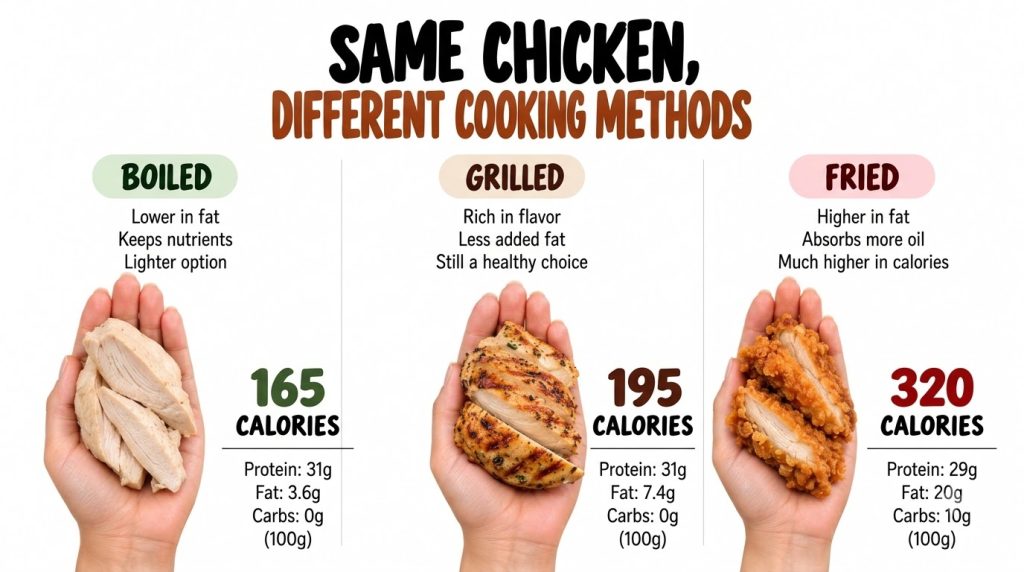
Boiling chicken is perhaps the simplest and often considered the healthiest way to cook it, especially if you’re aiming for a low-fat meal. When chicken is boiled, it cooks in water, meaning no additional fats or oils are typically introduced during the cooking process. This method helps to render out some of the chicken’s natural fat, leaving a leaner piece of meat.
Nutritional Profile
- Calories: Generally the lowest among the three methods, as no extra oils are used.
- Fat: Minimal fat content, making it ideal for low-fat diets.
- Protein: High, as boiling preserves the protein content effectively.
- Other Nutrients: While some water-soluble vitamins may leach into the cooking water, boiling largely retains the meat’s essential minerals.
Boiled chicken is often used in soups, salads, and for meal prep, offering a bland but versatile base that can be flavored with herbs and spices without adding significant calories.
Grilled Chicken: A Healthy & Flavorful Option
Grilling is another popular and healthy cooking method that imparts a distinct smoky flavor to chicken. Similar to boiling, grilling typically involves minimal added fats, often just a light brush of oil to prevent sticking or a marinade for flavor. The high heat of grilling cooks the chicken quickly, often sealing in juices and creating a desirable char.
Nutritional Profile
- Calories: Low to moderate, depending on marinades and any added oil. Generally lower than fried chicken.
- Fat: Low, especially if skinless chicken is used and excess fat drips away during cooking.
- Protein: High, similar to boiled chicken.
- Other Nutrients: Grilling can help retain many nutrients. Be mindful of potential charring; over-charred meat may contain compounds that are best limited.
Grilled chicken is a fantastic option for those seeking a flavorful meal without excessive fat, pairing wonderfully with vegetables and whole grains.
Fried Chicken: Indulgence with Caveats
Frying, particularly deep-frying, introduces a significant amount of oil to the chicken, fundamentally changing its nutritional composition. While undeniably delicious and crispy, fried chicken is typically the most calorie-dense and fat-heavy option due to the absorption of cooking oil and often a breaded coating.
Nutritional Profile
- Calories: Significantly higher due to the oil absorption and breading.
- Fat: Much higher, including saturated and potentially trans fats, depending on the type of oil used and how it’s handled.
- Protein: Still high, but the added fat and carbohydrates from breading often overshadow this.
- Other Nutrients: The high heat can degrade some heat-sensitive nutrients, and the focus shifts away from nutrient density due to high caloric load.
While an occasional treat, regularly consuming fried chicken may contribute to higher calorie and fat intake, which can impact weight management and heart health over time. If you crave that crispy texture, consider air frying or pan-frying with minimal healthy oils as a lighter alternative.
Choosing Your Cooking Method Wisely
The best cooking method for chicken largely depends on your dietary goals and health priorities. If you’re focused on weight management, reducing fat intake, or maintaining a lean diet, boiled or grilled chicken are excellent choices. They provide a high-quality protein source without adding excessive calories or unhealthy fats.
For those who enjoy richer flavors and textures, frying can be an occasional indulgence. However, being mindful of portion sizes and exploring healthier frying techniques like air frying or using less oil can make a difference. Always remember to remove the skin from chicken if you want to further reduce fat and calories, regardless of the cooking method.
The Bottom Line
Chicken remains a fantastic source of lean protein, but its nutritional impact is heavily influenced by how it’s prepared. By understanding the differences between boiling, grilling, and frying, you can make smarter choices that support your health and wellness goals without sacrificing flavor. Prioritize methods that minimize added fats and maximize nutrient retention, and enjoy chicken as part of a balanced diet.
Disclaimer: This article is intended for educational purposes only and is not a substitute for professional medical advice, diagnosis, or treatment. Always seek the advice of your physician or other qualified health provider with any questions you may have regarding a medical condition.