Are you looking to enhance your upper body strength and achieve more defined arms? Building strong, toned arms isn’t just about aesthetics; it also contributes to overall functional fitness, making daily tasks easier and improving your posture. The good news is that you don’t need a fancy gym membership or complex equipment to start. Simple, effective arm toning exercises can be done right in the comfort of your home or integrated into your gym routine.
Achieving better results from your workouts, especially when targeting specific muscle groups like the arms, truly hinges on focusing on proper form. Even the most straightforward exercises become significantly more effective when executed correctly. This guide will walk you through easy-to-follow exercises that can help you build strength and definition, alongside crucial tips for maximizing your efforts.
Why Tone Your Arms? More Than Just Looks
Toned arms offer a range of benefits beyond just looking good. Incorporating arm exercises into your fitness routine can:
- Improve Functional Strength: Strong arms make everyday activities like carrying groceries, lifting objects, or even opening jars much easier.
- Enhance Posture: Strengthening the muscles in your shoulders and upper back, often worked alongside arm exercises, can help improve your posture and reduce the risk of slouching.
- Boost Metabolism: Muscle tissue burns more calories at rest than fat tissue. Building lean muscle mass, including in your arms, can contribute to a healthier metabolism.
- Increase Bone Density: Weight-bearing exercises, including those that work your arms, may help support bone density, which is important for long-term skeletal health.
- Elevate Confidence: Feeling strong and capable can significantly boost your self-esteem and overall well-being.
Key Principles for Effective Arm Toning
To get the most out of your arm workouts, keep these fundamental principles in mind:
Proper Form is Paramount
As mentioned, proper form is the cornerstone of effective exercise. It ensures you’re targeting the correct muscles, maximizing your results, and crucially, preventing injuries. Always prioritize technique over the amount of weight lifted or the number of repetitions. If you’re unsure, it’s often helpful to watch videos or use a mirror to check your alignment.
Consistency is Key
Like any fitness goal, consistency is vital for seeing results. Aim to incorporate arm exercises into your routine 2-3 times a week, allowing for rest days in between to help your muscles recover and grow.
Progressive Overload
To continue challenging your muscles and promoting growth, gradually increase the intensity of your workouts. This could mean using slightly heavier weights, performing more repetitions, or reducing rest times between sets as you get stronger.
Simple Arm Toning Exercises You Can Do Anywhere
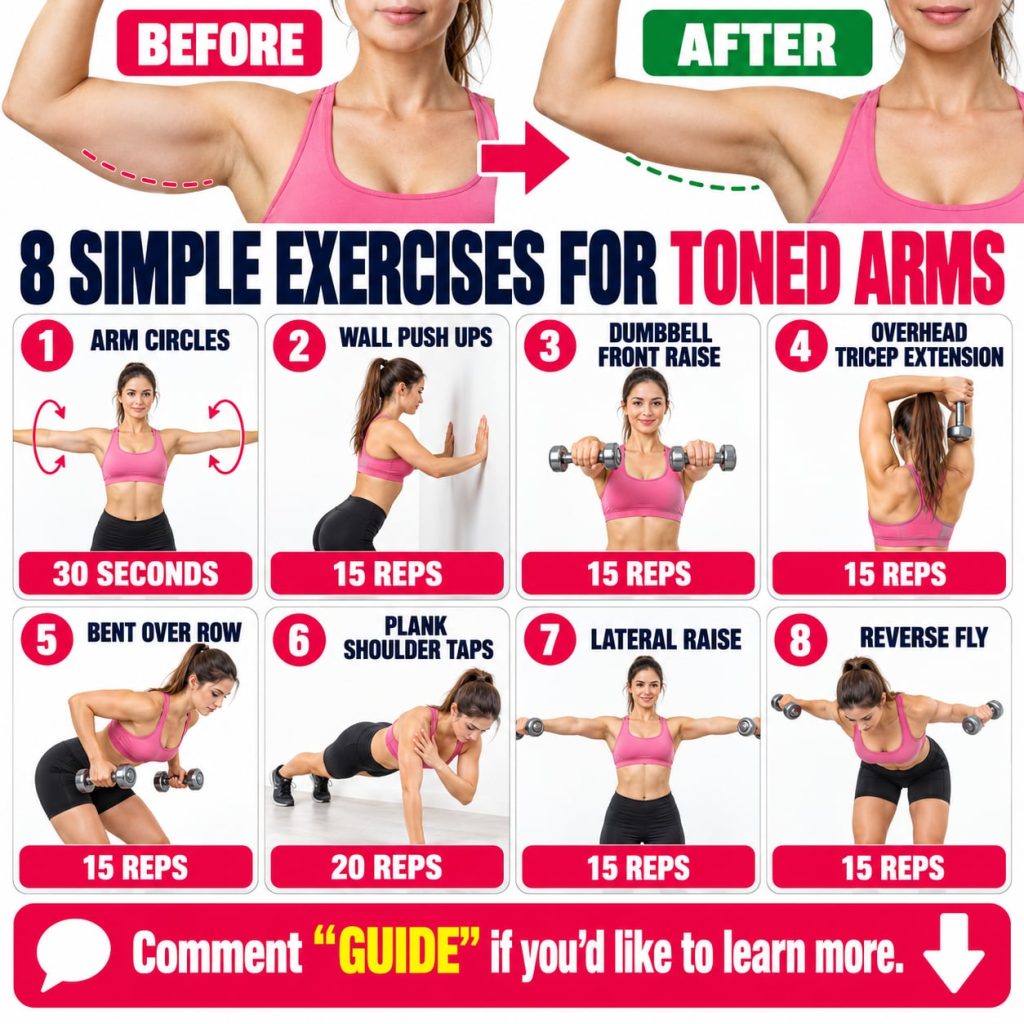
Here are five effective exercises that target various arm muscles, suitable for all fitness levels. For most of these, you can use light dumbbells, resistance bands, or even household items like water bottles or cans if you don’t have equipment.
1. Bicep Curls
This classic exercise targets your biceps, the muscles on the front of your upper arm.
- How to: Stand tall with your feet shoulder-width apart, holding a light weight in each hand, palms facing forward. Keep your elbows close to your sides. Slowly curl the weights up towards your shoulders, squeezing your biceps at the top. Lower the weights back down with control.
- Tip: Avoid swinging your arms or using momentum. Focus on a slow, controlled movement.
2. Tricep Dips (Chair Dips)
Tricep dips are excellent for targeting your triceps, the muscles on the back of your upper arm.
- How to: Sit on the edge of a sturdy chair or bench, placing your hands shoulder-width apart next to your hips, fingers pointing forward. Slide your hips off the chair, supporting your weight with your hands and heels. Bend your elbows to lower your body towards the floor until your elbows form a 90-degree angle. Push back up to the starting position.
- Tip: Keep your back close to the chair throughout the movement. For an easier modification, keep your knees bent. For a more challenging version, extend your legs straight.
3. Overhead Press (Shoulder Press)
While primarily a shoulder exercise, the overhead press also engages your triceps and helps build overall upper body strength.
- How to: Stand or sit with a light weight in each hand, palms facing forward, at shoulder height with elbows bent. Press the weights straight up overhead until your arms are fully extended but not locked. Slowly lower the weights back to the starting position.
- Tip: Engage your core to protect your lower back and avoid arching your back during the press.
4. Push-ups
Push-ups are a fantastic compound exercise that works your chest, shoulders, and triceps.
- How to: Start in a plank position with your hands slightly wider than shoulder-width apart, fingers pointing forward. Keep your body in a straight line from head to heels. Lower your chest towards the floor by bending your elbows. Push back up to the starting position.
- Tip: If a full push-up is too challenging, perform them on your knees or against a wall. Focus on maintaining a straight line with your body.
5. Arm Circles
Arm circles are a great warm-up or cool-down exercise that improves shoulder mobility and can lightly engage arm muscles.
- How to: Stand with your feet shoulder-width apart and extend your arms straight out to your sides at shoulder height, palms facing down. Make small circles forward for a set number of repetitions, then reverse the direction and make circles backward.
- Tip: Keep your core engaged and your movements controlled. You can gradually increase the size of the circles as your shoulders warm up.
Putting It All Together: Tips for Best Results
- Warm-Up: Always start with 5-10 minutes of light cardio and dynamic stretches (like arm circles) to prepare your muscles.
- Cool-Down: Finish your workout with static stretches, holding each stretch for 20-30 seconds, to improve flexibility and aid recovery.
- Listen to Your Body: If you feel pain, stop the exercise. Some muscle soreness is normal, especially when starting a new routine, but sharp pain is a sign to rest.
- Hydration and Nutrition: Support your muscle growth and recovery by staying well-hydrated and consuming a balanced diet rich in protein, complex carbohydrates, and healthy fats.
- Rest and Recovery: Allow your muscles adequate time to recover between workouts. Overtraining can hinder progress and increase injury risk.
By incorporating these simple yet effective exercises into your routine and focusing on proper form and consistency, you’ll be well on your way to achieving stronger, more defined arms. Remember to take your time, feel the movement, and make every repetition count for the best possible results!
Disclaimer: This article is intended for educational purposes only and is not a substitute for professional medical advice, diagnosis, or treatment. Always consult with a qualified healthcare provider before starting any new exercise program or making changes to your current routine, especially if you have any pre-existing health conditions.