Nature’s Scrub: Tackle Rust Stains with Lemon & Salt Power
Ugly rust stains on your countertops, sinks, or even bathroom fixtures can be a real eyesore, making your otherwise clean space look neglected. Before you reach for harsh chemical cleaners, consider a simple, natural, and surprisingly effective solution that’s probably already in your kitchen: lemon and salt.
This DIY scrub offers a gentle yet powerful way to lift those stubborn rust marks without exposing yourself or your home to strong fumes. It’s an easy, cost-effective fix that harnesses the natural cleaning properties of everyday ingredients.
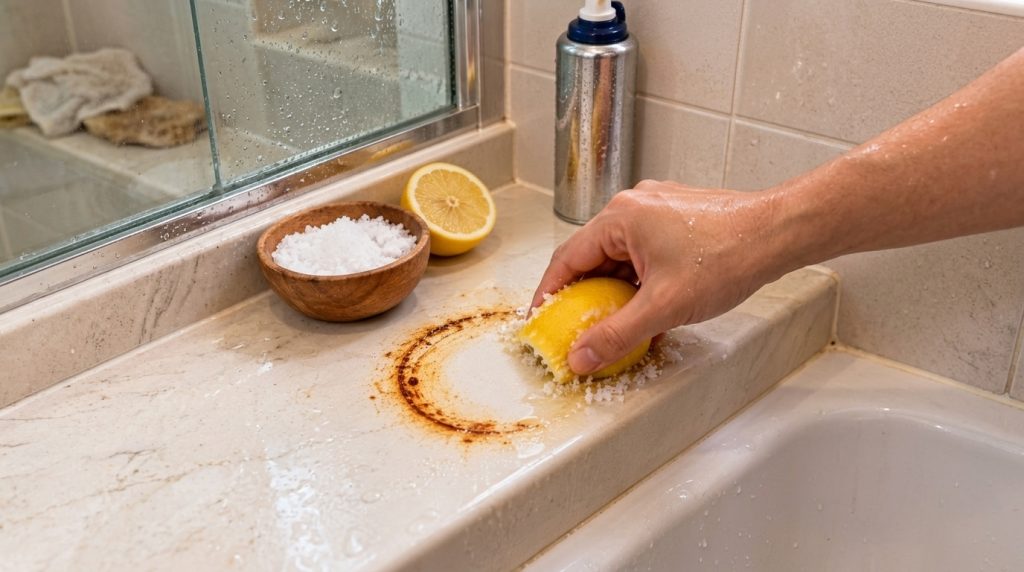
What You’ll Need
Gathering your supplies for this natural cleaner is quick and easy:
- 1/2 fresh lemon: The acidic hero of our scrub.
- 1-2 tablespoons coarse salt: The gentle abrasive.
- Small bowl: To hold your salt.
- Damp cloth or sponge: For rinsing and wiping.
- Spray bottle with water (optional): Useful for thoroughly rinsing the area.
Why This DIY Can Be Useful
The combination of lemon and salt works effectively due to their distinct properties:
- Lemon: The citric acid in lemon acts as a natural, mild bleach and dissolves mineral deposits and light rust. It helps to break down the bond between the rust and the surface, making it easier to remove. Plus, it leaves a pleasant, fresh scent.
- Coarse Salt: The granular texture of coarse salt provides a gentle abrasive action. This physical scrubbing power helps to lift and dislodge the softened rust particles without scratching most hard surfaces.
How to Make It
Preparing your lemon and salt scrub couldn’t be simpler:
- Cut a fresh lemon in half.
- Pour 1-2 tablespoons of coarse salt into a small bowl or directly onto a clean plate.
- Dip the cut side of one lemon half into the coarse salt, ensuring a generous coating.
How to Use It
Follow these steps to effectively tackle those rust stains:
- Prepare the area: Ensure the surface you’re cleaning is already damp. You can lightly spray it with water if it’s dry.
- Apply the scrub: Take your salt-coated lemon half and directly rub it over the rust stain. Use gentle circular motions, allowing the lemon juice and salt to work into the stain.
- Scrub and let sit: Continue scrubbing gently for a minute or two. For more stubborn stains, you can leave the salted lemon juice mixture on the stain for 5-10 minutes, allowing the citric acid time to penetrate.
- Rinse thoroughly: After scrubbing and letting it sit (if needed), rinse the area completely with clean water. You can use a damp cloth, sponge, or a spray bottle filled with water to ensure all salt and lemon residue is removed.
- Wipe dry: Finish by wiping the cleaned surface dry with a clean cloth.
What to Expect
You can expect this natural scrub to be quite effective on mild to moderate rust stains. Lighter stains may disappear after the first application, leaving your surface noticeably cleaner and brighter. For older or more ingrained rust marks, you might need to repeat the application process a few times to see the best results. The area will also have a fresh, clean lemon scent.
Helpful Tips
- For tough stains: If a stain is particularly stubborn, you can reapply the lemon and salt, let it sit for a longer period (up to 30 minutes), and then scrub again before rinsing.
- Consistent pressure: Apply consistent, gentle pressure while scrubbing to allow the salt to work without scratching the surface.
- Fresh lemon is key: Always use a fresh lemon for the best results, as the acidity is strongest.
Important Notes / Safety
- Patch test: Always test this scrub on an inconspicuous area first, especially on new or delicate surfaces, to ensure it doesn’t cause any discoloration or damage.
- Surface suitability: While generally safe for most ceramic, porcelain, stainless steel, and laminate surfaces, avoid using highly acidic solutions like lemon juice on unsealed natural stone (like marble or granite), as it can etch or damage the surface.
- Rinse completely: Ensure all salt and lemon juice is rinsed off the surface to prevent any potential residue buildup or long-term effects of the acid.
- Eye contact: Avoid getting lemon juice and salt in your eyes. Rinse immediately with water if contact occurs.

