Welcome back, Garden Lovers! If you’ve ever dreamt of a thriving garden with fewer weeds, healthier plants, and soil that practically sings, then you’re in the right place. Today, we’re diving deep into the art and science of mulching. It’s one of the simplest yet most effective practices you can adopt for a healthier, happier garden.
Mulch acts like a protective blanket for your soil, offering a host of benefits that can transform your gardening experience. But with so many options out there, how do you choose the best one? Not all mulches are created equal, and selecting the right material is crucial for the success of your green space. Let’s explore the world of mulching, separating the good from the problematic, and even identifying some materials you should definitely avoid!
Why Mulch Matters: The Core Benefits
Before we jump into specific materials, let’s quickly recap why mulching is such a game-changer for gardeners:
- Weed Suppression: A good layer of mulch blocks sunlight, preventing weed seeds from germinating and making it easier to pull any persistent ones that do pop up.
- Moisture Retention: Mulch acts as a barrier, reducing water evaporation from the soil. This means you’ll water less frequently, saving both time and precious resources.
- Temperature Regulation: It insulates the soil, keeping it cooler in the summer and warmer in the winter, which protects plant roots from extreme temperatures.
- Soil Health Improvement: As organic mulches break down, they enrich the soil with valuable nutrients, improve its structure, and feed beneficial microorganisms.
- Erosion Control: Mulch protects exposed soil from the impact of rain and wind, preventing erosion and keeping your topsoil in place.
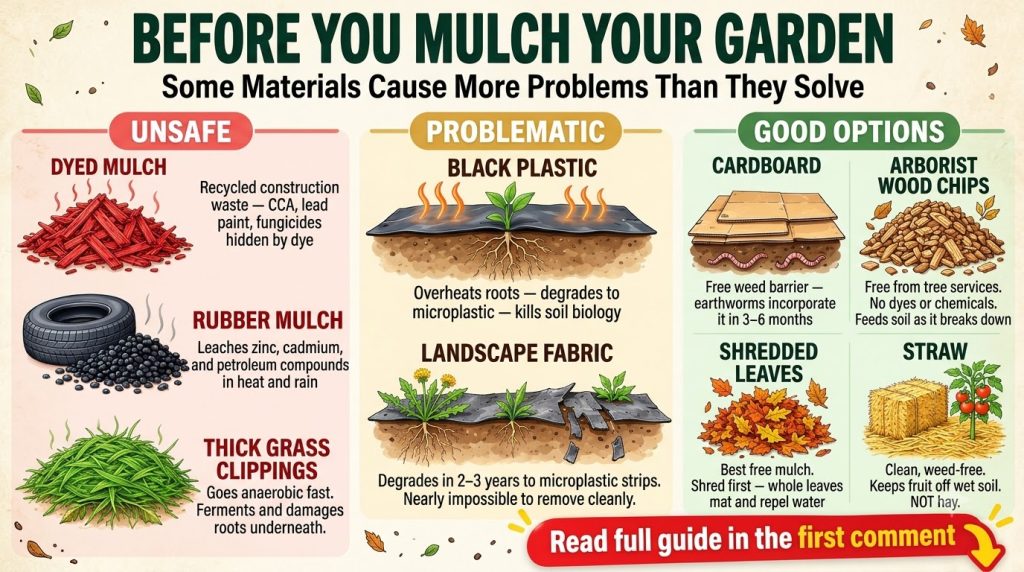
Mulch Materials to Avoid: The UNSAFE Options
While the idea of using recycled or brightly colored materials might seem appealing, some mulches can do more harm than good to your plants and soil.
Dyed Mulch (Often Red, Black, or Brown)
Often made from recycled construction debris or pallet wood, dyed mulches can contain chemicals from treated wood, paints, or other unknown sources. These can leach into your soil, harming plants and potentially contaminating your edibles. Furthermore, the dyes themselves can fade quickly, leaving a less-than-desirable look.
Rubber Mulch
Made from shredded tires, rubber mulch seems like an eco-friendly idea, but it has significant drawbacks. It doesn’t break down to enrich the soil, can leach heavy metals and other chemicals as it degrades, and heats up significantly in the sun, potentially cooking delicate plant roots. It’s also flammable and can be very difficult to remove once applied.
Mulch Materials with Caveats: The PROBLEMATIC Options
These materials aren’t inherently bad, but they come with specific conditions or potential issues that make them less ideal or require careful application.
Grass Clippings
While free and readily available, using fresh grass clippings as mulch can be problematic. They can mat together, forming an impenetrable layer that prevents water and air from reaching the soil, leading to anaerobic conditions and a sour smell. If treated with herbicides, they can also harm your plants. If you do use them, ensure they are dry and applied in very thin layers (no more than an inch) to prevent matting, and only use clippings from lawns not treated with chemicals.
Plastic Sheeting
Plastic sheeting, often used for weed control, can actually do more harm than good. It prevents air and water from reaching the soil, creating an unhealthy environment for beneficial soil organisms. It also traps heat excessively, doesn’t add any organic matter, and eventually breaks down into microplastics that pollute your garden.
Landscape Fabric
Marketed as a weed barrier, landscape fabric often becomes more of a nuisance than a help. While it initially blocks weeds, airborne seeds eventually settle on top and germinate, sending roots through the fabric, making weeding incredibly difficult. It also hinders the movement of water and nutrients into the soil, restricts beneficial soil life, and breaks down over time, becoming unsightly and challenging to remove.
Cardboard
Cardboard can be a good weed barrier, especially when establishing new garden beds, but it has its downsides. Ensure you remove all tape and labels, which can contain plastics or non-biodegradable glues. If applied too thickly or without sufficient moisture, it can repel water. It also breaks down relatively quickly and can attract pests like slugs and earwigs in damp conditions if not managed.
The Best Choices for Your Garden: GOOD OPTIONS
Now for the good news! Many organic materials make excellent mulches, providing numerous benefits to your plants and soil as they naturally break down.
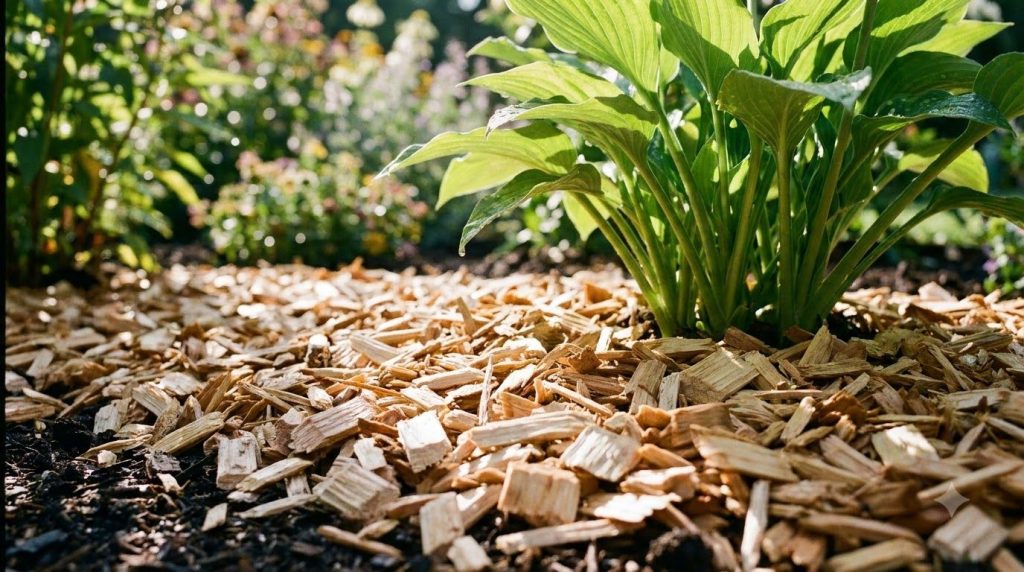
Wood Chips
A classic choice for good reason, wood chips (from untreated wood) offer excellent moisture retention and weed suppression. They break down slowly, enriching the soil with organic matter over time. They are particularly great for perennial beds, trees, and shrubs. Just be sure to keep them a few inches away from tree trunks and plant stems to prevent rot.
Shredded Leaves
Nature’s free mulch! Shredded leaves are a powerhouse for your garden. They decompose beautifully, adding rich organic matter and nutrients to the soil, improving its structure and water retention. They also provide habitat for beneficial insects and microorganisms. You can easily shred them with a lawnmower or leaf shredder.
Straw (Not Hay!)
Straw is an excellent choice, especially for vegetable gardens. It’s lightweight, provides good insulation, helps retain moisture, and suppresses weeds effectively. As it breaks down, it adds valuable organic matter to the soil. Be careful not to use hay, which often contains weed seeds that will sprout in your garden!
Tips for Applying Mulch Like a Pro
- Clean the Area First: Remove as many weeds as possible before applying mulch.
- Apply the Right Thickness: Aim for a layer of 2-4 inches for most organic mulches. Too thin, and it won’t be effective; too thick, and it can suffocate soil or create anaerobic conditions.
- Avoid “Volcano Mulching”: Never pile mulch up against the stems of plants or tree trunks. Leave a small gap (an inch or two) around the base to prevent moisture buildup and rot.
- Moisten the Soil: Water the soil thoroughly before applying mulch to lock in moisture.
- Replenish as Needed: Organic mulches break down over time, so plan to top them up annually or bi-annually.
Conclusion: Your Garden Deserves the Best
Choosing the right mulch is a simple yet powerful step towards a healthier, more vibrant garden. By opting for natural, beneficial materials like wood chips, shredded leaves, and straw, you’ll be nurturing your soil, suppressing weeds, and conserving water – all while creating a beautiful, low-maintenance landscape. Happy mulching, and may your garden flourish!