Imagine the satisfaction of watching a tiny seed transform into a vibrant plant, right on your windowsill! Growing fruits from seed is a rewarding journey that connects you deeply with the natural world and adds a unique charm to your home. While many fruit trees take years to mature and produce fruit, the initial act of sprouting seeds in water offers an immediate sense of accomplishment and a beautiful green accent for any space. It’s an accessible project for gardeners of all levels, teaching patience and providing a fascinating glimpse into plant life cycles.
This guide will walk you through starting ten popular fruit seeds in water, sharing practical tips to help you succeed. Remember, while some of these will become beautiful houseplants, others might eventually be ready for your outdoor garden if you live in the right climate. Let’s dig in and discover the simple joy of growing from seed!
The Art of Water Propagation: More Than Just Germination
Water propagation is an excellent way to kickstart the germination process for many seeds. It allows you to observe root development directly and provides a consistently moist environment. However, it’s crucial to understand that water alone doesn’t provide the nutrients or structural support needed for long-term growth. Think of water propagation as a nursery phase; once a robust root system has developed, your seedlings will need to be carefully transplanted into a suitable soil mix to thrive and continue growing.
Essential Tips for Success
- Clean Seeds are Key: Always clean your fruit seeds thoroughly to remove any fruit pulp. Residue can lead to mold or rot, hindering germination.
- Freshness Matters: For best results, use seeds from fresh, ripe fruit. Some seeds, like lychee, have a very short viability window once removed from the fruit.
- Clean Water, Regular Changes: Use filtered or distilled water if possible. Change the water every few days to prevent bacterial growth and replenish oxygen.
- Warmth and Bright, Indirect Light: Most seeds germinate best in warm conditions (70-80°F or 21-27°C). Place your setup in a spot with bright, indirect sunlight, or under a grow light. Avoid direct, intense sun, which can overheat the water.
- Patience is a Virtue: Seed germination isn’t always fast. Some seeds can take weeks or even months to sprout. Don’t give up prematurely!
- Gentle Transplanting: Once roots are several inches long and possibly a few small leaves have emerged, carefully transfer your seedling to a small pot with well-draining potting mix. Handle roots gently to avoid damage.
10 Fruit Seeds to Sprout in Water
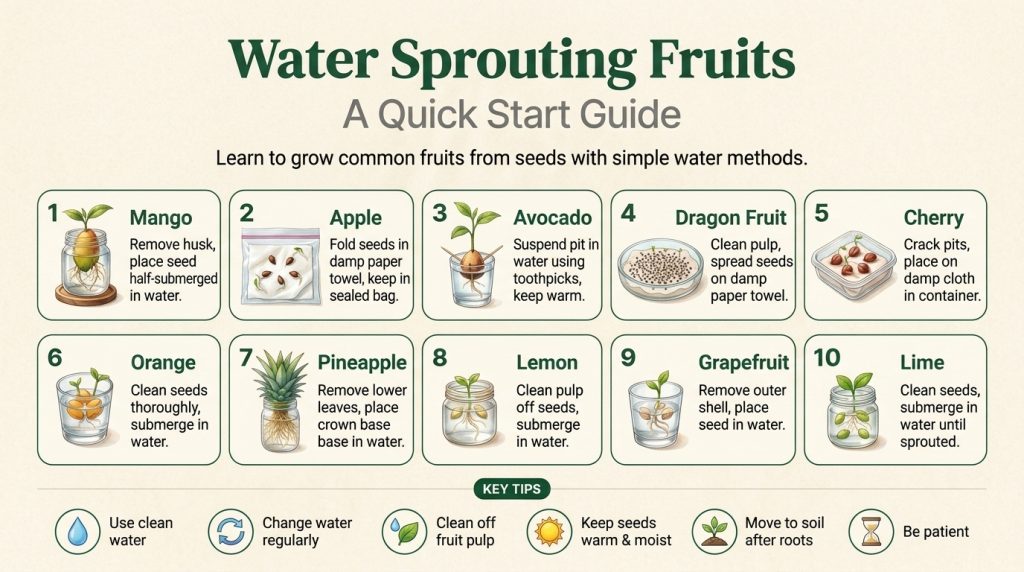
Let’s explore some fantastic fruits you can start from seed, along with specific tips for each.
1. Mango (Mangifera indica)
Mango seeds are large and exciting to sprout. Carefully clean the fibrous husk, or gently crack open the hard outer shell to extract the inner seed. Place the clean seed in a jar of water, half-submerged, or in a damp paper towel inside a sealed bag. Mangoes typically root in 2-4 weeks, sending down a long taproot. This will grow into a substantial tree over many years, potentially fruiting in warm, tropical climates (USDA Zones 10-11) after 5-8 years. In cooler zones, it makes an attractive, large houseplant.
Practical Tip: Some mango seeds are polyembryonic, meaning they can produce multiple seedlings from one seed, while others are monoembryonic, producing only one. Don’t be surprised if you get a few sprouts!
2. Avocado (Persea americana)
A classic water propagation project! Clean the large pit thoroughly. Insert three or four toothpicks around the middle of the pit, then suspend it over a glass of water with the broader, flatter end facing down and about one inch submerged. Place it in a warm, bright spot. Roots usually emerge in 2-6 weeks, followed by a stem. Once the stem is 6-8 inches tall, prune it back to 3 inches to encourage bushier growth before transplanting to soil. Avocado trees require warm climates (USDA Zones 9-11) for outdoor fruiting.
Practical Tip: Be patient! Avocado pits can take a long time to show signs of life, but consistent water changes are key.
3. Date (Phoenix dactylifera)
Dates are fun to grow from the pits of store-bought fruit. Clean the pit well and soak it in warm water for 24-48 hours, changing the water once. Then, place it in a shallow dish of water or a damp paper towel. Germination can take several weeks to a few months. Date palms are slow-growing but can become impressive indoor plants, eventually needing large containers. They are only cold-hardy in very warm regions (USDA Zones 9-11).
Practical Tip: Dates love warmth. Consider placing them on a seedling heat mat to encourage faster germination.
4. Lemon (Citrus limon)
Citrus seeds germinate quite readily. Clean the seeds, ensuring no pulp remains, and keep them moist until planting – don’t let them dry out. Place them in a shallow dish of water or directly into damp seed-starting mix. Germination can occur in 1-3 weeks. Lemon trees grown from seed may take 5-15 years to produce fruit and might not be true to the parent variety. They make lovely, fragrant houseplants that appreciate bright light and humidity.
Practical Tip: Plant several seeds, as some may not sprout, or you can select the strongest seedling.
5. Orange (Citrus sinensis)
Similar to lemons, oranges are easy to start from seed. Clean the seeds and plant them fresh. Orange seeds are often polyembryonic, meaning you might get multiple seedlings from a single seed. Place them in water until roots appear, usually within 1-3 weeks. Like other citrus, expect a long wait for fruit if grown from seed, and keep them indoors in most climates. They prefer USDA Zones 9-11 outdoors.
Practical Tip: Ensure good drainage when transplanting to soil to prevent root rot, a common citrus issue.
6. Apple (Malus domestica)
Apple seeds typically require a period of cold stratification before they will germinate. While you can soak them in water, for better success, place cleaned seeds in a damp paper towel inside a sealed plastic bag in your refrigerator for 6-8 weeks. After stratification, they can be placed in water or directly in soil. Germination can take a few weeks. Apple trees grown from seed rarely produce fruit true to the parent and can take 7-10 years or more to fruit, if at all. Best grown in USDA Zones 3-8.
Practical Tip: Don’t expect a Granny Smith from a Granny Smith seed; the genetic diversity means you’ll get a unique tree.
7. Lychee (Litchi chinensis)
Lychee seeds have a very short viability period, so plant them immediately after removing them from a fresh fruit. Clean the seed thoroughly and soak it in water for 2-3 days, changing the water daily. Then, place it in a shallow dish of water or directly into a moist potting mix. Germination can occur in 1-4 weeks. Lychee trees require warm, tropical conditions (USDA Zones 10-11) to thrive and produce fruit, making them primarily an indoor ornamental plant in most of the U.S.
Practical Tip: Ensure the seed stays consistently moist but not waterlogged during germination.
8. Kiwi (Actinidia deliciosa)
Kiwi seeds are tiny! Scoop out the seeds from a ripe kiwi, clean them of any pulp, and spread them on a damp paper towel inside a sealed plastic bag. Alternatively, you can place them directly in a shallow dish of water, but they are very small and easily lost. Germination can take 1-4 weeks. Kiwi plants are dioecious, meaning you need both male and female plants for fruit production, and they can take several years to mature. They are hardy in USDA Zones 4-9.
Practical Tip: Because the seeds are so small, starting them in a damp paper towel makes it easier to handle once roots emerge.
9. Papaya (Carica papaya)
Papaya seeds are encased in a gelatinous sac that needs to be removed. Rub the seeds between paper towels or gently wash them in a sieve to remove the sac. This prevents dormancy and encourages germination. Place the cleaned seeds in a shallow dish of water or directly into a moist seed-starting mix. Germination can occur within 2-6 weeks. Papayas grow quickly and can fruit within a year in warm, frost-free climates (USDA Zones 9-11). They can be grown in containers in cooler regions but may not fruit.
Practical Tip: Only remove the outer sac when you’re ready to plant; drying them out completely can reduce viability.
10. Passion Fruit (Passiflora edulis)
Passion fruit seeds also have a pulp that needs to be cleaned off to aid germination. Wash the seeds thoroughly. Soaking them in warm water for 24 hours can help. Then, place them in a shallow water dish or a moist seed-starting mix. Germination can be slow and erratic, ranging from a few weeks to several months. Passion fruit is a vigorous vine that can produce fruit in its first year under ideal conditions (USDA Zones 9-11). It can be grown as an annual in cooler climates.
Practical Tip: Scarifying the seeds (gently scratching the hard outer coat with sandpaper) can significantly improve germination rates.
Common Mistakes and How to Avoid Them
- Neglecting Seed Cleaning: Leftover fruit pulp invites mold and rot. Always clean your seeds thoroughly.
- Forgetting Water Changes: Stagnant water lacks oxygen and can harbor pathogens. Refresh the water every 2-3 days.
- Insufficient Warmth or Light: Most seeds need consistent warmth and bright, indirect light to sprout. Don’t place them in a cold, dark corner.
- Lack of Patience: Nature operates on its own timeline. Don’t discard seeds if they don’t sprout immediately; some take time.
- Improper Transplanting: Roots are fragile. Handle seedlings by their leaves or stem, not the delicate root system, to prevent transplant shock. Ensure the soil is moist and well-draining.
Beyond the Sprout: What Comes Next?
Once your seeds have successfully sprouted and developed a few true leaves and a strong root system, it’s time to move them into a small pot filled with a good quality potting mix. For continued growth, provide adequate light, consistent watering, and consider a diluted liquid fertilizer once they are established. Remember that most fruit trees grown from seed will not produce fruit identical to the parent, and many will take years to mature. However, the journey itself—from tiny seed to thriving plant—is a beautiful reward.
Embrace the process, enjoy the greenery these plants bring into your home, and perhaps one day, you’ll be harvesting your very own home-grown fruit!