Unlock Your Garden’s Potential: Matching Plants to the Perfect Soil Type
Every gardener dreams of vibrant blooms and bountiful harvests. Yet, many of us face the frustration of struggling plants, despite our best efforts with watering and sunlight. The secret often lies beneath the surface: your soil. Just like people, plants have preferences, and the right soil type can make all the difference between a garden that merely survives and one that truly flourishes. Understanding your garden’s unique soil composition empowers you to choose plants that thrive, provide them with optimal conditions, and cultivate a truly productive outdoor space. This guide will walk you through the distinct characteristics of common soil types and help you become a soil-savvy gardener, transforming “wasted seeds” into flourishing successes.
Understanding Your Garden’s Foundation: Soil Basics
Soil is more than just dirt; it’s a dynamic ecosystem teeming with life and essential nutrients. It provides anchorage, water, air, and minerals for plant roots. The primary components that determine a soil’s type are sand, silt, and clay particles, along with organic matter. Each combination creates a unique set of properties affecting drainage, nutrient retention, temperature regulation, and aeration. Knowing your soil type is the first step in tailoring your gardening practices, from plant selection to watering schedules and fertilization strategies.
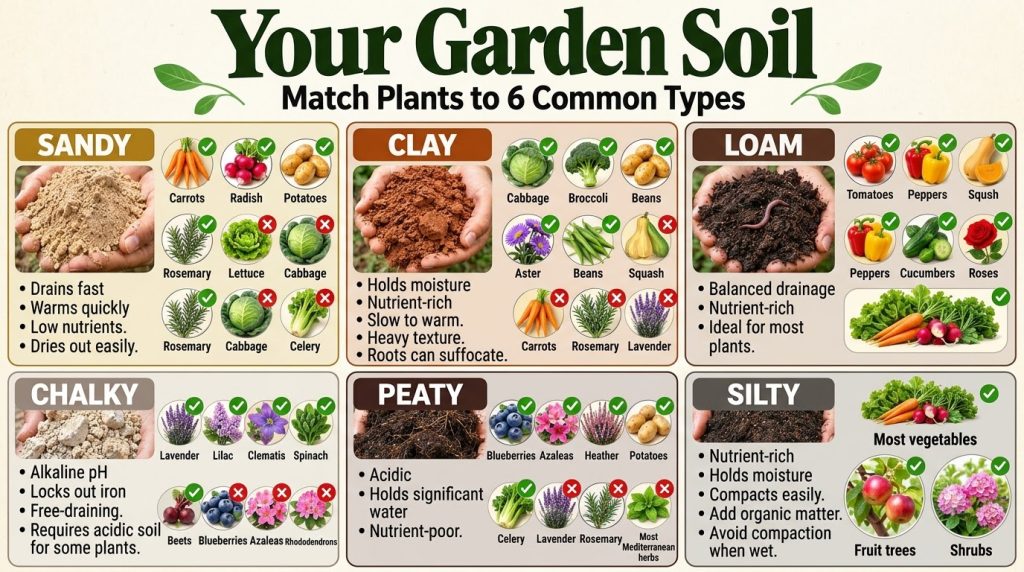
The Six Key Soil Types and Their Ideal Plants
Sandy Soil: The Quick Drainer
Sandy soil, characterized by large, coarse particles, feels gritty and drains exceptionally well. It warms quickly in spring but struggles with retaining water and nutrients, which can leach away rapidly. This often leads to plants suffering from drought stress and nutrient deficiencies if not managed. Root vegetables like carrots, parsnips, and potatoes thrive in its loose structure, as do many drought-tolerant annuals. However, plants requiring consistent moisture and high nutrient levels, such as rhubarb, celery, and broccoli, may struggle. To improve sandy soil, generously incorporate organic matter like compost or aged manure to boost water and nutrient retention.
Clay Soil: The Nutrient Keeper
Composed of tiny, tightly packed particles, clay soil feels heavy and sticky when wet. It excels at holding nutrients and moisture, making it highly fertile. However, it drains slowly, warms up sluggishly, and compacts easily, which can lead to waterlogging and poor root aeration. Robust, nutrient-loving plants such as cabbage, broccoli, cauliflower, Brussels sprouts, peas, and pumpkins flourish here. Conversely, root crops like carrots, parsnips, and potatoes, which need loose soil to expand, often struggle to form well-shaped roots. To improve clay soil, add coarse organic matter like compost or perlite, and avoid working it when wet to prevent compaction.
Loam Soil: The Gardener’s Gold Standard
Loam is a balanced blend of sand, silt, and clay with a rich organic matter content, making it the ideal garden soil. It’s fertile, well-draining yet moisture-retentive, and easy to work, offering excellent aeration for roots. Most vegetables, fruits, herbs, and ornamental plants thrive in loam due to its superb all-around properties. Plants like lettuce, tomatoes, corn, peas, beans, and spinach grow vigorously. It’s rare to find plants that genuinely struggle in healthy loam. To maintain its excellent structure and fertility, regularly top-dress with compost or other organic mulches, which feed soil microbes and protect against erosion.
Chalky Soil: Embracing Alkalinity
Chalky soils are typically alkaline (high pH), free-draining, and often stony. They can be nutrient-poor, especially in micronutrients like iron, which become less available at high pH and can cause yellowing leaves (chlorosis) in sensitive plants. Plants tolerant of alkaline conditions, such as beets, spinach, cabbage, Brussels sprouts, sweet peas, lilac, honeysuckle, and lavender, grow well here. However, acid-loving plants like potatoes, tomatoes, beans, corn, rhubarb, blueberries, azaleas, and rhododendrons will suffer. Amend chalky soil with plenty of well-rotted compost to add nutrients and slightly buffer the pH, making it more hospitable for a wider range of plants.
Peaty Soil: The Acidic Sponge
Rich in decomposed organic matter, peaty soils are dark, highly acidic, and exceptionally good at retaining moisture. They are often very fertile but warm slowly in spring due to their high water content. Plants that naturally prefer acidic conditions and consistent moisture thrive. These include root vegetables like carrots, parsnips, potatoes, and turnips, as well as brassicas, legumes, and especially berry bushes like blueberries, heathers, rhododendrons, and azaleas. Alkaline-loving plants would naturally struggle here. To improve drainage and aeration if compaction is an issue, consider incorporating coarse sand or perlite. Regular soil testing helps manage nutrient levels in this unique environment.
Silty Soil: Fine and Fertile
Silty soil features fine particles, larger than clay but smaller than sand, giving it a smooth, soft, flour-like feel. It’s generally fertile, holds moisture well, and is easy to work. However, silty soil can compact easily when wet and may have poor internal drainage if not managed carefully. Most garden vegetables, including lettuce, carrots, peas, beans, tomatoes, corn, and spinach, thrive in silty soil due to its good fertility and water retention. Few plants are truly “unsuitable” for well-managed silty soil. To maintain good structure and prevent compaction, regularly add organic matter like compost, and avoid walking on or working the soil when it’s overly wet.
General Growing Tips for All Soil Types
- Embrace Organic Matter: Regularly incorporating compost, well-rotted manure, or leaf mold significantly improves every soil type, enhancing drainage in clay, boosting water retention in sand, and adding vital nutrients everywhere.
- Test Your Soil: A soil test from your local extension office provides invaluable insights into your soil’s pH, nutrient levels, and organic matter content, guiding your amendments precisely.
- Mulch, Mulch, Mulch: A 2-4 inch layer of organic mulch around your plants helps retain soil moisture, suppresses weeds, moderates soil temperature, and slowly adds organic matter as it breaks down.
- Consider Raised Beds: For exceptionally poor soil conditions, raised beds filled with a custom soil mix offer an immediate solution for productive gardening.
Common Soil Mistakes to Avoid
- Ignoring Your Soil Type: Trying to grow acid-loving plants in alkaline soil or moisture-sensitive herbs in heavy clay without amendments is a recipe for disappointment.
- Over-Tilling: Excessive tilling destroys soil structure, especially in clay and silty soils, leading to compaction and reduced beneficial microbial activity.
- Working Wet Soil: Walking or digging in overly wet clay or silty soil can severely compact it, creating hardpans that impede root growth and drainage.
- Lack of Organic Matter: This is the most common mistake. Soil without ample organic matter lacks the structure, nutrient-holding capacity, and microbial life essential for thriving plants.
Conclusion: Cultivating a Thriving Garden
Your garden’s potential truly blossoms when you understand and nurture its foundation: the soil. By identifying your soil type and making informed choices about plant selection and amendments, you empower your plants to reach their fullest potential. No more “wasted seeds” or struggling plants – just a vibrant, productive garden that reflects your care and knowledge. Take the time to get to know your soil, feed it with organic matter, and watch your gardening efforts yield abundant rewards. Happy gardening!