Master the Art of Christmas Cactus Blooms: 8 Essential Tips for Festive Flowers
There’s something truly magical about a Christmas cactus (Schlumbergera species) bursting into vibrant bloom as the days grow shorter. These cheerful, festive plants bring a splash of color and life to our homes during the holiday season, transforming ordinary spaces into warm, inviting sanctuaries. However, encouraging these beautiful, succulent-like plants to reliably produce their stunning flowers year after year can sometimes feel like a mystery.
Many gardeners wonder what secret their plants are holding back. The good news is, getting your Christmas cactus to rebloom isn’t about luck; it’s about understanding and replicating the specific conditions of its native habitat. With a few key care adjustments and a touch of patience, you can unlock a spectacular display of holiday flowers. This guide will walk you through eight essential tips to help your Christmas cactus thrive and deliver those much-anticipated festive blooms.
Understanding Your Christmas Cactus: A Tropical Epiphyte
Before diving into the tips, it’s helpful to understand a bit about these fascinating plants. Christmas cacti are not desert cacti; they are epiphytes, native to the tropical rainforests of southeastern Brazil. In their natural environment, they grow on trees and rocks, not in soil, absorbing moisture and nutrients from the humid air and decaying organic matter. This background explains why they prefer bright, indirect light, high humidity, and specific temperature fluctuations—conditions we need to mimic indoors to encourage prolific flowering.
The 8 Secrets to Abundant Christmas Cactus Blooms
1. Embrace the Darkness (Uninterrupted Rest)
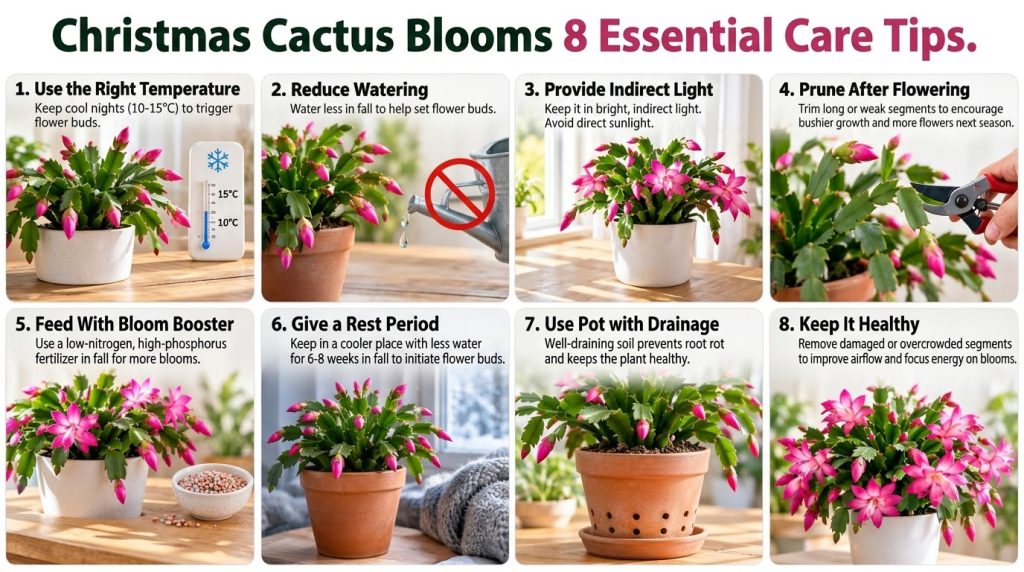
One of the most critical factors for triggering blooms is a period of consistent, uninterrupted darkness. Starting in late September or early October, your Christmas cactus needs about 12 to 14 hours of complete darkness every night for approximately 6 to 8 weeks. This means no streetlights, no lamps, and no television light. If you can’t find a naturally dark spot, consider covering the plant with a dark cloth or placing it in a closet each evening. This simulated short-day photoperiod signals to the plant that winter is approaching and it’s time to set flower buds.
2. Smart Watering for Success
While Christmas cacti appreciate consistent moisture during their active growing season (spring and summer), overwatering is a common killer. During the bloom induction period (fall) and when the plant is actively flowering, adjust your watering. Allow the top inch or two of the soil to dry out before watering thoroughly. Ensure that excess water drains completely from the bottom of the pot, and never let the plant sit in standing water. Once buds appear, maintain consistent moisture without letting the soil dry out completely, which can cause bud drop.
3. Temperature’s Role in Bloom Initiation
Cooler temperatures, combined with the darkness period, are crucial for flower bud formation. Aim for nighttime temperatures between 50-55°F (10-13°C) and daytime temperatures no higher than 68°F (20°C) during the fall bloom induction phase. Once buds have set, slightly warmer temperatures (around 65-70°F or 18-21°C) during the day are acceptable, but avoid sudden, drastic temperature changes, which can also lead to bud drop. Keeping your plant away from cold drafts or heat vents is also wise.
4. Fueling Growth with Fertilizer
Proper nutrition supports vigorous growth, which in turn leads to more abundant blooms. Fertilize your Christmas cactus during its active growth period, typically from April through August. Use a balanced houseplant fertilizer (e.g., 20-20-20 or similar, diluted to half strength) every 2-4 weeks. However, it’s essential to stop fertilizing by late August or early September as you begin the bloom induction process. Fertilizing too late can encourage leafy growth instead of flowers.
5. The Magic of Bright, Indirect Light
Throughout the year, Christmas cacti thrive in bright, indirect light. Think of their natural habitat beneath a rainforest canopy—they get plenty of light, but it’s filtered. An east-facing window is often ideal, providing gentle morning sun. A north-facing window might work, but could be too dim. A south or west-facing window is usually too intense and can scorch the leaves; if placed there, ensure it’s several feet away from the window or shielded by a sheer curtain. Insufficient light is a common reason for poor flowering, but too much direct sun can damage the foliage.
6. Repotting: Less is Often More
Christmas cacti prefer to be slightly root-bound, meaning they actually flower better when their roots are a bit snug in their pot. This minimizes the energy the plant spends on root growth and directs it toward flowering. Repot only every 2 to 3 years, and ideally, do so after the flowering period, in late winter or early spring. When you do repot, choose a pot only one size larger than the current one and use a well-draining potting mix specifically formulated for cacti and succulents, or a mix of potting soil, perlite, and orchid bark.
7. High Humidity for Tropical Comfort
Remembering their rainforest origins, Christmas cacti appreciate high humidity, especially in dry indoor environments during winter. Low humidity can stress the plant and cause bud blast (buds falling off). You can increase humidity around your plant by placing its pot on a pebble tray filled with water (making sure the pot isn’t sitting directly in the water). Misting the leaves occasionally can help, but a small room humidifier can also be highly effective, especially if you have several humidity-loving plants. Grouping plants together can also create a localized microclimate of higher humidity.
8. Vigilant Pest Inspection
A healthy plant is a flowering plant! Regularly inspect your Christmas cactus for signs of pests. Common culprits include mealybugs, spider mites, and scale insects. Check the undersides of leaves and in the crevices where stems join. Early detection makes control much easier. If you spot pests, isolate the plant and treat it promptly with insecticidal soap or a horticultural oil, following product instructions carefully. Healthy, pest-free plants are much more likely to produce beautiful blooms.
Common Mistakes to Avoid for Consistent Blooms
Even with the best intentions, a few missteps can prevent your Christmas cactus from flowering. Be mindful of:
- Inconsistent Darkness: Any interruption of the 12-14 hour dark period will reset the bloom-triggering process.
- Overwatering: Soggy soil leads to root rot, which is fatal. Always check soil moisture before watering.
- Moving the Plant: Once buds have formed, try to avoid moving the plant to a new location, as changes in light and temperature can cause bud drop.
- Too Much Fertilizer: Over-fertilizing, especially late in the season, promotes foliage growth at the expense of flowers.
- Insufficient Light: While they need indirect light, too little light will result in weak growth and no flowers.
Regional and Seasonal Considerations
While USDA hardiness zones primarily apply to outdoor plants, the principles of light, temperature, and humidity for your indoor Christmas cactus remain consistent across the United States. Your main considerations will be the natural light available in your home’s windows throughout the seasons and the ambient temperature and humidity levels indoors. Homes in drier climates (e.g., arid regions) may need more aggressive humidity solutions, while those in naturally more humid areas might find pebble trays sufficient. Always observe your plant’s specific responses and adjust care accordingly.
Cultivating Holiday Joy
Bringing a Christmas cactus to full bloom is a rewarding experience that connects you with the natural cycles of growth and rest. By providing the specific conditions these tropical beauties need—a period of darkness and cool temperatures, coupled with appropriate watering, light, and humidity—you’ll be well on your way to enjoying a spectacular display of festive flowers. Remember, patience and observation are your best gardening tools. Follow these tips, and your Christmas cactus will likely reward you with a magnificent show, year after year, brightening your home with its unique holiday charm. Happy growing!