Are you dreaming of a bountiful harvest of delicious root vegetables straight from your garden? Many gardeners believe that more fertilizer equals bigger, better plants. But when it comes to root crops, sometimes less is truly more! Today, we’re diving into a gardening secret that will not only enhance the flavor and storage life of your carrots, radishes, beets, and more, but also promote healthier plants: cultivating them in lean soil.
Why Lean Soil is a Root Crop’s Best Friend
It might sound counterintuitive, but for many root vegetables, overly rich soil or excessive fertilization, especially with high-nitrogen formulas, can actually hinder their growth. Here’s why a leaner approach works wonders:
- Focus on Roots, Not Foliage: Nitrogen promotes lush, leafy green growth. While this is great for plants like lettuce or spinach, root vegetables need to direct their energy downwards, into developing those delicious roots. Leaner soil naturally encourages the plant to focus on root development rather than extravagant top growth.
- Enhanced Flavor: When root crops grow too quickly in nutrient-rich soil, they can become watery and lack the concentrated flavor we all love. Leaner soil often results in a slower, more deliberate growth, allowing sugars and flavors to fully develop, leading to sweeter and more aromatic vegetables.
- Improved Texture: Over-fertilized root crops can sometimes develop a coarse or woody texture. Growing them in well-balanced, lean soil helps maintain a tender, crisp, and desirable texture.
- Better Storage Life: Vegetables grown in lean soil with balanced nutrients tend to be hardier and store better. They have a denser cellular structure, making them less prone to rot and spoilage.
Understanding “Lean Soil” for Root Crops
So, what exactly constitutes “lean soil”? It doesn’t mean barren or unhealthy soil. Instead, it refers to soil that is:
- Well-Draining: Root crops despise soggy feet. Good drainage is paramount to prevent rot and allow roots to access oxygen.
- Loose and Friable: This allows roots to easily push through the soil and expand without encountering heavy resistance, preventing misshapen or stunted roots.
- Moderately Fertile: It has enough essential nutrients (phosphorus and potassium are particularly important for root development) but isn’t overloaded with nitrogen.
- Rich in Organic Matter: Compost improves soil structure, drainage, and provides a slow, steady release of nutrients without over-fertilizing.
Key Root Vegetables That Thrive in Leaner Conditions
While almost all root crops benefit from this approach, some of the most common ones that show significant improvement include:
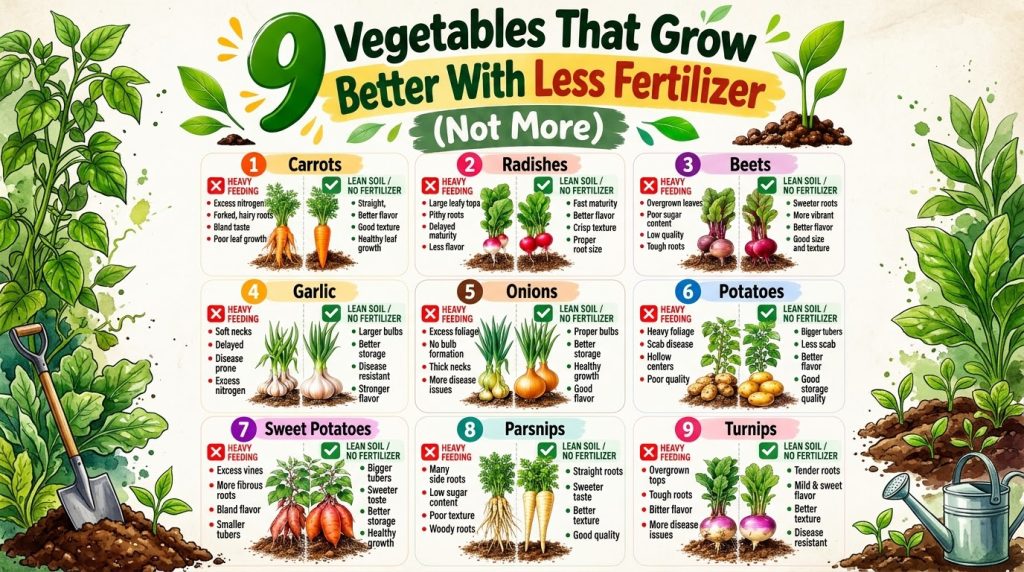
- Carrots: Known for their sweet flavor, carrots truly shine in loose, sandy-loamy soil without excessive nitrogen.
- Radishes: Quick growers that can become woody or overly spicy if stressed or over-fertilized.
- Beets: These vibrant roots develop a wonderful sweetness in lean, well-drained soil.
- Potatoes and Sweet Potatoes: While they do need nutrients, too much nitrogen can lead to lush foliage but smaller tubers.
- Turnips and Parsnips: Develop better flavor and texture in less rich environments.
How to Achieve Lean Soil Conditions in Your Garden
Ready to unlock your garden’s root crop potential? Here’s how to create the ideal environment:
- Start with a Soil Test: This is the most crucial step! A soil test will tell you exactly what nutrients your soil has and what it lacks. Your local extension office can usually help with this.
- Incorporate Organic Matter, Not Fresh Manure: Amend your soil with well-rotted compost. Compost provides a balanced, slow-release of nutrients, improves soil structure, and encourages beneficial microbial activity. Avoid fresh manure, which is often high in nitrogen.
- Avoid High-Nitrogen Fertilizers: If your soil test indicates a need for nutrients, choose fertilizers balanced in phosphorus (P) and potassium (K), which are essential for root development, and low in nitrogen (N).
- Ensure Good Drainage: If you have heavy clay soil, consider growing in raised beds or amending extensively with organic matter and sand to improve drainage and create a looser texture.
- Practice Crop Rotation: This helps balance soil nutrients over time and reduces pest and disease pressure.
The Benefits Beyond Flavor and Storage
Beyond the delicious taste and extended storage of your harvest, cultivating root crops in lean soil offers additional perks:
- Sustainable Gardening: Reducing fertilizer use lessens your environmental footprint and helps prevent nutrient runoff into waterways.
- Cost Savings: You’ll save money on expensive fertilizers, making your gardening more economical.
- Healthier Plants: Plants grown in appropriate conditions are often more resilient to pests and diseases, reducing the need for interventions.
Embracing the “less is more” philosophy for your root crops can transform your gardening experience. You’ll be rewarded with a harvest that’s not only more delicious and long-lasting but also a testament to a more sustainable and mindful approach to gardening. Happy planting!