As the days grow shorter and the air outside turns crisp, our beloved houseplants often face a hidden challenge: navigating the specific watering needs of winter. While many plants enjoy a robust drink during their active growing season, their requirements shift dramatically when temperatures drop and light diminishes. Overwatering is a common pitfall in colder months, leading to root rot and unhappy plants, but underwatering can be just as detrimental.
Feeling a bit unsure about your winter plant care routine? You’re not alone! This comprehensive guide will empower you with the knowledge to create a tailored watering rhythm for your indoor garden, ensuring your plants don’t just survive, but truly thrive through the dormant season. We’ll explore the unique needs of a dozen popular houseplants, providing practical advice to keep them healthy and vibrant until spring.
The Golden Rule of Winter Watering: Less is More
During winter, most houseplants enter a period of reduced growth or semi-dormancy. This means their metabolism slows down, and they require significantly less water and nutrients than in spring or summer. The ambient conditions in our homes also change: heating systems tend to dry out the air, yet cooler temperatures and less intense light mean soil dries out more slowly.
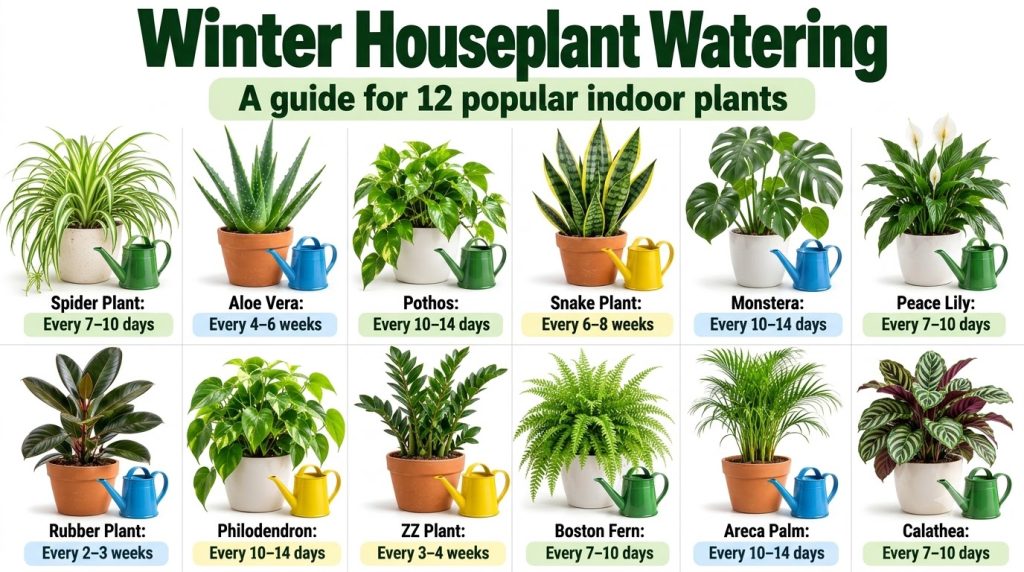
The key to successful winter watering isn’t adhering to a strict schedule, but rather learning to read your plants and their soil. Always check the soil moisture before watering. A simple way to do this is to stick your finger about an inch or two into the soil. If it feels damp, wait a few more days. If it’s dry, it might be time for a drink. Factors like pot size, pot material (terra cotta dries faster than plastic), soil composition, and your home’s specific humidity and temperature will all influence how quickly your plant’s soil dries out.
Houseplants That Love a Dry Spell (Water Every 4-6 Weeks)
These resilient plants are adapted to arid conditions and prefer their soil to dry out completely between waterings, especially when dormant.
Snake Plant (Sansevieria trifasciata)
Hardiness: Perennial in USDA Zones 9-11; typically grown as a houseplant everywhere.
Plant type: Succulent perennial
Exposure: Low to bright indirect light
Height: 1-4 feet
Spread: 6-18 inches
Snake plants are masters of drought tolerance, storing water in their thick, fleshy leaves. In winter, their growth slows significantly. Aim to water them only when the soil has completely dried out, typically every 4-6 weeks, or even longer if your indoor environment is cool and low-light. Overwatering is the quickest way to kill a snake plant.
ZZ Plant (Zamioculcas zamiifolia)
Hardiness: Perennial in USDA Zones 10-11; typically grown as a houseplant everywhere.
Plant type: Succulent perennial
Exposure: Low to bright indirect light
Height: 2-3 feet
Spread: 2-3 feet
The ZZ plant is another incredibly resilient succulent-like houseplant, thanks to its rhizomatous roots that store water. Like the snake plant, it’s highly susceptible to root rot if overwatered. In winter, reduce watering to once every 4-6 weeks, or even less frequently if the top few inches of soil are still moist. Always err on the side of underwatering with ZZ plants.
Succulents (General, e.g., Echeveria, Crassula)
Hardiness: Varies widely by species, many are tender tropicals.
Plant type: Succulent perennial
Exposure: Bright direct to bright indirect light
Height: Varies, often 2-12 inches
Spread: Varies, often 3-12 inches
The broad category of succulents generally thrives on neglect, particularly in winter. Their leaves and stems are designed for water storage. During the colder months, when light levels are lower, they enter a dormant state. Water only when their soil is completely dry, and then give them a thorough soak. For most desert-type succulents, this might mean watering every 4-6 weeks, or even less often for very small pots or cool rooms. Watch for shriveling leaves as a sign of thirst.
Houseplants That Prefer Moderate Moisture (Water Every 2-3 Weeks)
These plants appreciate consistent moisture during their active growth but still need reduced watering in winter. Always check the soil before giving them a drink.
Aloe Vera (Aloe barbadensis miller)
Hardiness: Perennial in USDA Zones 8-11; often grown as a houseplant.
Plant type: Succulent perennial
Exposure: Bright indirect to bright direct light
Height: 1-2 feet
Spread: 1-2 feet
Aloe vera is a popular succulent known for its medicinal properties. While it stores water in its fleshy leaves, it benefits from slightly more frequent watering than some desert succulents. In winter, allow the top two inches of soil to dry out completely before watering thoroughly. This often translates to a watering schedule of every 3-4 weeks, depending on your home’s conditions. Ensure excellent drainage to prevent soggy roots.
Pothos (Epipremnum aureum)
Hardiness: Perennial in USDA Zones 10-12; popular houseplant.
Plant type: Vining perennial
Exposure: Low to bright indirect light
Height: Vines up to 10 feet or more
Spread: 1-3 feet
Pothos is a versatile and forgiving houseplant. In winter, wait until the top inch or two of soil feels dry to the touch before watering. You’ll often find its leaves begin to slightly droop when it’s thirsty, which is a good indicator. This typically means watering every 2-3 weeks. Don’t let it sit in standing water, as this can lead to root rot.
Monstera (Monstera deliciosa)
Hardiness: Perennial in USDA Zones 10-12; popular houseplant.
Plant type: Vining tropical
Exposure: Bright indirect light
Height: 6-10 feet indoors
Spread: 3-5 feet indoors
The majestic Monstera needs its soil to dry out partially between waterings. In winter, allow the top 2-3 inches of soil to become dry before watering thoroughly. Depending on your indoor environment, this might be every 2-3 weeks. Monitor the leaves for signs of stress: yellowing lower leaves can indicate overwatering, while droopy, curling leaves often signal thirst.
Spider Plant (Chlorophytum comosum)
Hardiness: Perennial in USDA Zones 9-11; widely grown as a houseplant.
Plant type: Herbaceous perennial
Exposure: Bright indirect light
Height: 1-2 feet
Spread: 1-2 feet
Spider plants are easy-care plants that appreciate consistent moisture but don’t like to sit in soggy soil. In winter, reduce your watering frequency, allowing the top inch of soil to dry out before rewatering. This usually means watering every 2-3 weeks. If you notice the tips of the leaves turning brown, it might be a sign of fluoride in your tap water or inconsistent watering, often related to letting the plant dry out too much, then overcompensating.
Fiddle Leaf Fig (Ficus lyrata)
Hardiness: Perennial in USDA Zones 10-11; popular houseplant.
Plant type: Tree
Exposure: Bright indirect light
Height: 6-10 feet indoors
Spread: 2-4 feet indoors
Fiddle leaf figs can be notoriously finicky about watering. They prefer their soil to dry out slightly but not completely between waterings. In winter, aim to water every 2-3 weeks, always checking the top 2-3 inches of soil first. It’s crucial to ensure good drainage to prevent root rot, which is a common problem for these plants. Yellowing or dropping leaves often signal watering issues, either too much or too little.
Peace Lily (Spathiphyllum wallisii)
Hardiness: Perennial in USDA Zones 11-12; popular houseplant.
Plant type: Herbaceous perennial
Exposure: Low to bright indirect light
Height: 1-3 feet
Spread: 1-3 feet
Peace lilies are dramatic communicators; their leaves will visibly droop when they’re thirsty, making it easy to know when to water. In winter, allow the top inch of soil to dry out before giving them a thorough drink. This typically occurs every 2-3 weeks. While they appreciate humidity, avoid keeping their soil constantly wet, especially when dormant. They can be sensitive to chlorine in tap water, so filtered water is often preferred.
Orchid (Phalaenopsis spp.)
Hardiness: Tropical perennial, often grown as houseplant.
Plant type: Epiphyte
Exposure: Bright indirect light
Height: 1-3 feet
Spread: 1-2 feet
Phalaenopsis orchids, the most common type, prefer their specialized potting medium to dry out almost completely between waterings. Rather than a strict schedule, check the roots – if they appear silvery-gray and the medium feels light, it’s time to water. This might be every 2-3 weeks, but could be more or less frequent depending on your home’s humidity and the type of orchid potting mix you use. Soak the pot for 15-20 minutes, then let it drain completely.
African Violet (Saintpaulia spp.)
Hardiness: Perennial, typically grown as a houseplant.
Plant type: Herbaceous perennial
Exposure: Bright indirect light
Height: 6-12 inches
Spread: 6-12 inches
African violets prefer consistently moist but not soggy soil. In winter, allow the top inch of soil to dry out before watering. It’s best to water from the bottom by placing the pot in a saucer of water for 20-30 minutes, allowing the plant to soak up what it needs, then remove any excess water. Watering every 2-3 weeks usually works well. Avoid getting water on their fuzzy leaves, as this can cause spotting.
Prayer Plant (Maranta leuconeura)
Hardiness: Perennial in USDA Zones 11-12; popular houseplant.
Plant type: Herbaceous perennial
Exposure: Low to bright indirect light
Height: 6-12 inches
Spread: 1-2 feet
Prayer plants are known for their beautiful foliage and their habit of folding their leaves up at night. They prefer consistently moist soil but are prone to root rot if overwatered. In winter, let the top inch of soil dry out before watering. This often means watering every 2-3 weeks. They also appreciate high humidity, so consider placing them near a humidifier or on a pebble tray, especially in dry indoor winter air.
Beyond the Watering Can: Other Winter Care Tips
- Boost Humidity: Indoor heating systems drastically lower humidity. Group plants together, use pebble trays, or invest in a humidifier to create a more tropical microclimate.
- Adjust Light: With shorter days, plants receive less natural light. Rotate plants regularly to ensure even light exposure. If possible, move light-loving plants closer to windows or supplement with a grow light.
- Avoid Drafts: Keep plants away from cold drafts from windows or doors, as sudden temperature fluctuations can stress them.
- Hold Off on Fertilizer: Most houseplants don’t need fertilizer in winter. Let them rest, and resume feeding in spring when active growth resumes.
- Monitor for Pests: Stressed plants can be more susceptible to pests. Regularly inspect your plants for signs of spider mites, mealybugs, or other common houseplant pests. Early detection makes control easier.
Common Winter Watering Mistakes to Avoid
- Sticking to a Rigid Schedule: Every plant, pot, and environment is unique. Always check the soil moisture before watering, rather than simply marking your calendar.
- Using Cold Water: Water that’s too cold can shock plant roots. Use room-temperature water for your houseplants.
- Leaving Plants in Standing Water: Always empty saucers after watering to prevent root rot.
- Ignoring Leaf Signals: Yellowing or dropping leaves often point to overwatering, while wilting or shriveling can indicate underwatering. Learn to read these cues.
- Neglecting Drainage: Ensure all your pots have drainage holes. If not, consider repotting or adding a layer of pebbles at the bottom (though this is less effective than proper drainage holes).
Conclusion: Nurturing Your Indoor Oasis Through Winter
Winter houseplant care doesn’t have to be daunting. By understanding that your plants’ needs shift with the seasons and by adopting a ‘check before you water’ approach, you can keep your indoor garden flourishing. Remember that these recommended frequencies are general guidelines; your keen observation of your plants and their soil is your best tool. Embrace the quieter rhythm of winter, and you’ll be rewarded with healthy, happy plants ready to burst into vibrant growth come spring.