Multiply Your Garden: The Art of Dividing Perennials
Imagine turning one thriving plant into several new ones, all while boosting the health and vigor of your existing garden favorites. This isn’t magic; it’s the satisfying and sustainable practice of dividing perennials! As gardeners, we often marvel at how plants grow, but few techniques offer such immediate rewards as splitting a mature clump into multiple robust specimens. This simple yet powerful method allows you to expand your garden beds, share with friends, or simply rejuvenate older plants that might be growing tired or overcrowded. Ready to uncover the secrets to a fuller, healthier perennial garden? Let’s dig in and explore how to master this art.
Why Divide Perennials? The Benefits for Your Garden
Perennials, by definition, live for more than two years, often growing larger and more expansive over time. While this sounds wonderful, unchecked growth can sometimes lead to issues. Dividing perennials offers several key benefits:
- Rejuvenation: Older clumps can become less vigorous, producing fewer flowers or smaller leaves. Division stimulates new growth and revitalizes the plant.
- Increased Bloom Production: By reducing overcrowding, you allow each section more access to nutrients, water, and light, often resulting in more abundant blooms.
- Pest and Disease Prevention: Improved air circulation around divided plants can reduce the incidence of fungal diseases like powdery mildew, which often plagues dense clumps.
- Garden Expansion (for free!): Why buy more plants when you can create them from your existing ones? Division is a cost-effective way to fill out new beds or border areas.
- Sharing with Others: Divided plants make wonderful gifts for fellow gardeners, spreading the joy and beauty of your garden.
Understanding the Basics of Perennial Division
The general principle of dividing perennials involves carefully digging up the plant, separating its root ball into smaller sections, and then replanting those sections. The optimal timing for division typically falls into two main windows: early spring or early fall. Spring division is usually done just as new growth emerges, before the plant expends energy on flowering. Fall division is best after flowering has finished but before the ground freezes, allowing the plant to establish new roots before winter dormancy.
Essential Tools for Division:
- A sharp spade or digging fork for lifting.
- A garden knife or hori-hori for finer root separation.
- Heavy-duty shears or a small saw for tough, woody roots.
- A tarp or plastic sheet to place the plant on.
- A bucket of water to keep roots moist.
- Compost or fresh potting mix for replanting.
Your Guide to Dividing 12 Easy Perennials
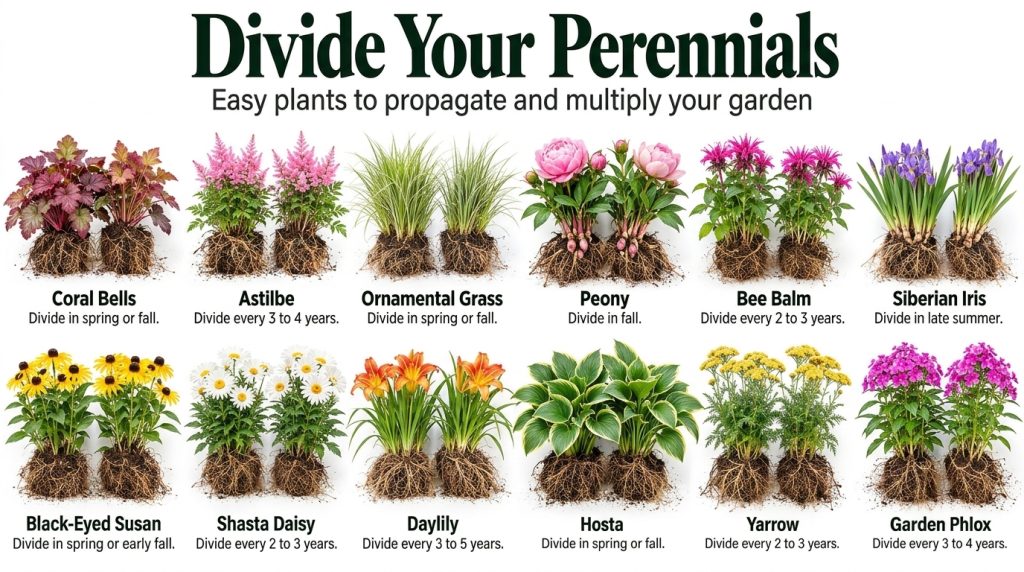
While most perennials benefit from division, some are particularly easy and forgiving. Here are 12 popular plants and their ideal division times:
1. Hostas (Hosta spp.)
These shade-loving foliage plants are among the easiest to divide. Their fibrous root systems are generally uncomplicated to separate.
- Hardiness: USDA Zones 3-9
- Plant type: Herbaceous perennial
- Exposure: Partial to full shade (some cultivars tolerate more sun)
- Division: Late spring as new leaves emerge, or early fall as foliage begins to fade.
- Care Tip: Water thoroughly after replanting to help new roots establish quickly.
2. Daylilies (Hemerocallis spp.)
Known for their vibrant, trumpet-shaped flowers, daylilies are robust growers that benefit from division every few years to maintain vigorous blooming.
- Hardiness: USDA Zones 3-9
- Plant type: Herbaceous perennial
- Exposure: Full sun to partial shade
- Division: Late spring after flowering, or early fall.
- Care Tip: Keep the roots moist during the division process and replant divisions promptly.
3. Peonies (Paeonia lactiflora)
While beautiful, herbaceous peonies are notoriously particular about division. They often resent being moved, but if done correctly, it can revitalize an aging plant.
- Hardiness: USDA Zones 3-8
- Plant type: Herbaceous perennial
- Exposure: Full sun
- Division: Crucially, only in the fall, about 4-6 weeks before the ground freezes.
- Care Tip: Ensure each division has at least 3-5 ‘eyes’ (pinkish growth buds) and plant them shallowly, with no more than 1-2 inches of soil covering the eyes. Planting too deeply is a common cause of poor blooming.
4. Bleeding Hearts (Lamprocapnos spectabilis, formerly Dicentra spectabilis)
These elegant spring bloomers have brittle roots that require careful handling during division.
- Hardiness: USDA Zones 3-9
- Plant type: Herbaceous perennial
- Exposure: Partial to full shade
- Division: Late spring after flowering has finished and foliage begins to yellow, or early fall before the plant goes dormant. Avoid dividing in the heat of summer.
- Care Tip: Use a garden fork to gently loosen soil around the plant to avoid damaging the delicate roots.
5. Bee Balm (Monarda didyma)
A native pollinator magnet, Bee Balm tends to spread vigorously and benefits from regular division to prevent overcrowding and maintain plant health.
- Hardiness: USDA Zones 4-9
- Plant type: Herbaceous perennial
- Exposure: Full sun to partial shade
- Division: Early spring or fall. Divide every 2-3 years to improve air circulation and help manage powdery mildew.
- Care Tip: Replant the younger, outer sections of the clump for the best performance.
6. Coneflowers (Echinacea purpurea)
Beloved for their daisy-like flowers and drought tolerance, coneflowers can be divided when their clumps become less productive.
- Hardiness: USDA Zones 3-9
- Plant type: Herbaceous perennial
- Exposure: Full sun
- Division: Early spring or early fall.
- Care Tip: Ensure each division has a good portion of the central crown and healthy roots.
7. Yarrow (Achillea millefolium)
This tough, drought-tolerant perennial with feathery foliage and flat-topped flower clusters often spreads rapidly, making division beneficial for containment and vigor.
- Hardiness: USDA Zones 3-9
- Plant type: Herbaceous perennial
- Exposure: Full sun
- Division: Early spring or fall.
- Care Tip: Yarrow tolerates poor soil but thrives with good drainage.
8. Irises (Bearded Iris – Iris germanica)
These classic beauties grow from rhizomes (thickened stems that grow horizontally near the soil surface), which need periodic division to prevent overcrowding and ensure continuous blooming.
- Hardiness: USDA Zones 3-10
- Plant type: Rhizomatous perennial
- Exposure: Full sun
- Division: Summer, approximately 4-6 weeks after flowering has finished, usually July or August in most regions.
- Care Tip: Replant sections of rhizome so that the top half is exposed to the sun or just barely covered with soil.
9. Garden Phlox (Phlox paniculata)
Fragrant and colorful, garden phlox can become dense and susceptible to powdery mildew if not divided regularly.
- Hardiness: USDA Zones 3-8
- Plant type: Herbaceous perennial
- Exposure: Full sun to partial shade
- Division: Early spring or fall.
- Care Tip: Select disease-resistant cultivars and ensure good air circulation to minimize powdery mildew issues.
10. Sedum (Stonecrop – Hylotelephium spectabile or Sedum telephium)
Sedums, particularly the upright varieties like ‘Autumn Joy’, are incredibly resilient and easy to divide, often rooting from even small pieces.
- Hardiness: USDA Zones 3-9
- Plant type: Succulent perennial
- Exposure: Full sun
- Division: Early spring as new growth appears, or early fall.
- Care Tip: These are very forgiving; even small stem cuttings can often root directly in soil.
11. Shasta Daisies (Leucanthemum x superbum)
The classic white-petaled daisy brings cheer to any garden. Divide them when their flowering begins to diminish or the center of the clump dies out.
- Hardiness: USDA Zones 5-9
- Plant type: Herbaceous perennial
- Exposure: Full sun
- Division: Early spring or fall.
- Care Tip: Deadhead spent flowers regularly to encourage more blooms throughout the season.
12. Asiatic Lilies (Lilium asiaticum hybrids)
These vibrant lilies grow from bulbs, which multiply over time. Dividing them prevents overcrowding and ensures continued robust flowering.
- Hardiness: USDA Zones 3-8
- Plant type: Bulbous perennial
- Exposure: Full sun to partial shade
- Division: Fall after the foliage has died back naturally, or very early spring before new growth emerges.
- Care Tip: Gently separate the bulbs, being careful not to damage their scales, and replant them immediately.
Step-by-Step Guide to Dividing Perennials
While specific plant needs vary, the general process for dividing most perennials remains consistent:
- Prepare the Area: Water the plant thoroughly a day or two before you plan to divide it. This makes the soil easier to work and reduces transplant shock.
- Digging Up the Plant: Using a sharp spade or digging fork, carefully dig a circle around the plant, about 6-12 inches away from the crown, depending on the plant’s size. Pry the root ball gently from the ground.
- Inspect the Root Ball: Shake off excess soil to get a clear view of the roots. Remove any dead or diseased sections.
- Divide the Clump: For fibrous-rooted plants (like Hostas, Daylilies), you can often pull the clumps apart by hand or use two garden forks inserted back-to-back to gently pry them apart. For tougher, woody crowns (like mature Coneflowers), you might need a sharp knife or even a small saw. For rhizomes (Irises), cut between sections, ensuring each piece has healthy roots and foliage. For bulbs (Lilies), gently separate the bulbils from the main bulb.
- Prepare New Planting Sites: Amend the soil in the new planting locations with compost to provide nutrients and improve drainage.
- Replant Divisions: Plant each new section at the same depth it was growing previously. For most perennials, ensure the crown (where stems meet roots) is at soil level.
- Water Thoroughly: Water generously after replanting to settle the soil around the roots and eliminate air pockets. Continue to water regularly, especially during dry spells, until the new plants are well-established.
Common Mistakes to Avoid When Dividing
Even experienced gardeners can make mistakes when dividing. Here’s how to avoid common pitfalls:
- Dividing at the Wrong Time: As noted above, timing is crucial. Dividing too early or too late can stress the plant and reduce its chances of survival.
- Not Preparing the Soil: Planting divisions into poor, unamended soil can hinder their establishment and long-term health. Always incorporate organic matter.
- Planting Too Deeply or Too Shallowly: Pay attention to the original planting depth. Too deep, and the crown may rot; too shallow, and roots can dry out. Peonies and Irises are especially sensitive to planting depth.
- Allowing Roots to Dry Out: Exposed roots are vulnerable. Keep them moist during the division process, especially on warm or windy days.
- Ignoring Plant Health: Only divide healthy, pest-free plants. Dividing a struggling plant will only create more struggling plants.
- Over-Dividing: Some plants, like Peonies, prefer to be left undisturbed for many years. Only divide when necessary to rejuvenate or manage size.
Regional and Seasonal Considerations for Division
While general guidelines exist, your specific climate in the United States will influence the best division times. In colder USDA Zones (3-5), spring division is often preferred as it allows plants maximum time to establish roots before winter. Fall division is also possible but should be done earlier to give roots a head start before hard freezes. In milder Zones (6-8), both spring and fall are excellent. For warmer Zones (9-11), fall or even winter division might be more suitable, avoiding the intense summer heat that can stress newly planted divisions. Always pay attention to your local first and last frost dates, and monitor soil temperatures rather than relying solely on calendar months.
Ready to Grow More?
Dividing perennials is a truly rewarding aspect of gardening. Not only does it keep your existing plants vibrant and healthy, but it also gives you the incredible opportunity to multiply your garden’s beauty and share its abundance. With a little care and attention to timing, you’ll be creating new, flourishing plants from your favorites in no time. So grab your spade, choose a sunny or shady spot, and get ready to witness the satisfying magic of perennial division in your own backyard!