Are you dreaming of a garden overflowing with ripe fruits and vibrant flowers? Imagine harvesting more berries, grapes, and apples than ever before, or seeing your climbing roses burst with an unprecedented number of blooms. The secret to achieving this gardening dream might be simpler than you think: it’s all about horizontal plant training!
Here at Garden – L. Quyên, we’re passionate about sharing practical tips to help you cultivate the garden you’ve always wanted. Horizontal training is a time-tested technique that can dramatically boost your plant’s productivity and overall health. Let’s dive into how this method works and how you can apply it in your own garden.
What is Horizontal Plant Training?
Horizontal plant training, sometimes known as espalier, involves guiding a plant’s main stems and branches to grow horizontally rather than vertically. Instead of letting branches reach for the sky, you encourage them to spread outwards along a support structure like a trellis, fence, or a system of wires.
This might seem counterintuitive at first – aren’t plants supposed to grow upwards? While many do naturally, redirecting growth horizontally has profound benefits, especially for fruit-bearing trees, shrubs, and many flowering vines.
Why Horizontal Training is a Game-Changer for Your Garden
The benefits of horizontal plant training are numerous and significant:
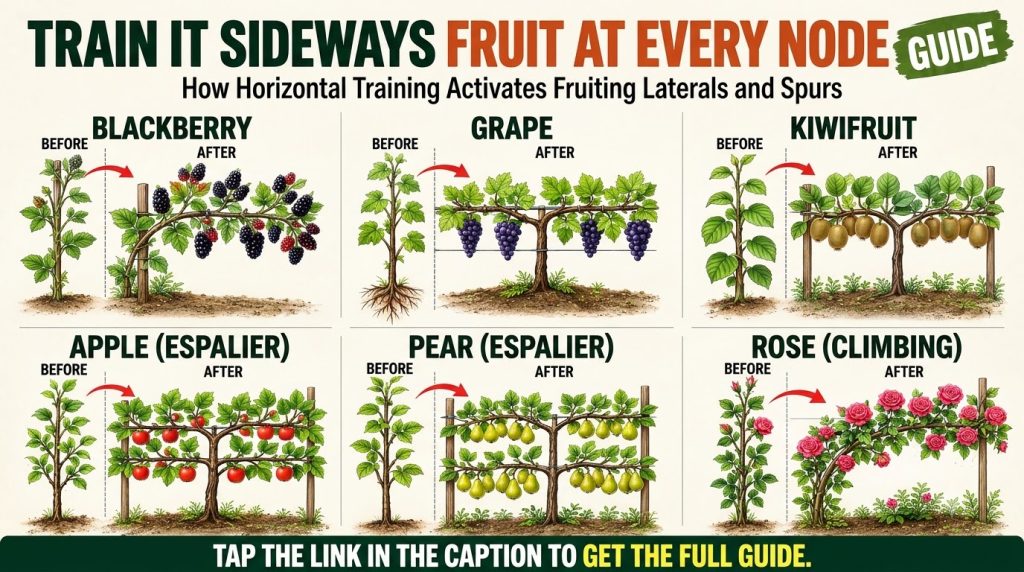
- Increased Fruit and Flower Production: This is the biggest draw! When branches are trained horizontally, the plant releases hormones that encourage more fruiting spurs and flower buds along the entire length of the branch, rather than just at the tips. This means more delicious produce and a spectacular display of blooms.
- Better Light Exposure: Spreading branches horizontally allows more sunlight to reach all parts of the plant, ensuring even ripening of fruit and healthier foliage.
- Improved Air Circulation: Good air circulation reduces the risk of fungal diseases, leading to healthier plants.
- Easier Harvesting and Maintenance: Plants trained horizontally are often more compact and accessible, making pruning, pest inspection, and harvesting a breeze.
- Space Efficiency: This technique is perfect for small gardens or limited spaces, as it allows you to grow productive plants in a confined area, even against walls or fences.
- Beautiful Garden Design: Horizontal training creates stunning visual patterns and can be a beautiful architectural element in your garden.
Plants That Love Horizontal Training
While many plants can benefit, some are particularly well-suited for horizontal training:
- Blackberry & Raspberry: Training these canes horizontally promotes more fruiting laterals, leading to a much larger harvest.
- Grape Vines: A classic choice for horizontal training, resulting in more grape clusters and easier management.
- Kiwifruit: Kiwis thrive when their vigorous vines are trained along a strong horizontal support, maximizing fruit set.
- Apple & Pear Trees: Espaliered fruit trees are not only highly productive but also incredibly beautiful, perfect for tight spaces.
- Climbing Roses: Directing rose canes horizontally encourages them to produce more flowers along their entire length, creating a magnificent display.
- Other Fruiting Plants: Consider currants, gooseberries, and even some dwarf citrus varieties for this technique.
How to Get Started with Horizontal Training
Ready to try horizontal training? Here’s a simple guide to get you started:
1. Choose the Right Plant and Location
Select young, healthy plants that are suitable for training. Consider where you want the plant to grow – against a wall, a fence, or on a standalone trellis.
2. Install a Support Structure
This is crucial. You’ll need a sturdy trellis, a system of wires stretched between posts, or a strong fence. The support should be able to hold the weight of the mature plant, especially when laden with fruit.
3. Begin Training Early
The younger the plant, the easier it is to train. As your plant grows, gently guide its main stems and new branches along your chosen support. For fruit trees, you might start with a central leader and select a few strong branches to train horizontally.
4. Gentle Tying and Pruning
Use soft ties (like garden twine or fabric strips) to secure branches to the support, making sure not to girdle the stems. Regularly prune away any unwanted vertical growth or branches that are growing in the wrong direction. The goal is to encourage lateral shoots from the horizontally trained branches.
5. Consistent Maintenance
Horizontal training is an ongoing process. Continue to tie in new growth, remove suckers, and prune strategically to maintain the desired shape and maximize productivity. Over time, your plant will adapt to its horizontal form, rewarding you with an abundance of nature’s bounty.
Unlock Your Garden’s Full Potential
Horizontal plant training is a rewarding technique that transforms how your plants grow and what they produce. It’s a way to garden smarter, not harder, leading to a more beautiful, productive, and manageable garden space. Don’t let limited space or low yields hold you back – embrace horizontal training and unlock truly abundant harvests!
Have you tried horizontal plant training in your garden? Share your experiences and tips in the comments below!