Spilled coffee, juice, or a snack on your beloved couch again? Before you panic or reach for harsh chemical cleaners, consider trying this simple and effective DIY solution. It’s designed to gently lift everyday spills and refresh your fabric upholstery without aggressive scrubbing, using common household items you likely already have.
This homemade cleaner can be surprisingly effective for tackling fresh liquid mishaps, helping your living room look its best without the need for expensive specialized products.
What You’ll Need
Ingredients:
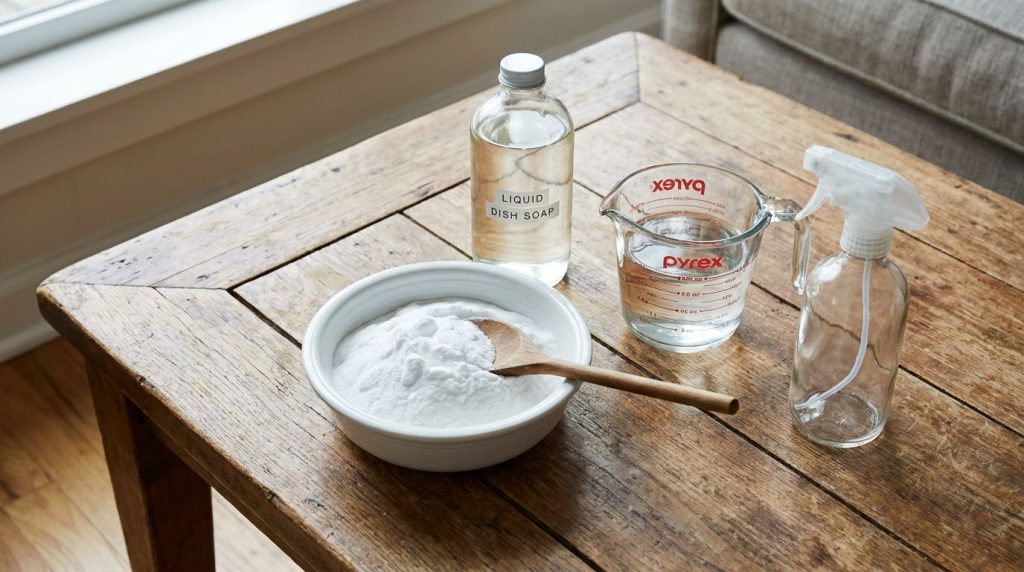
- 1 tablespoon baking soda
- 1 tablespoon liquid dish soap (mild, clear variety is best)
- 1 cup warm water
- (Optional, for light-colored or white fabrics only) 1 tablespoon hydrogen peroxide (3%)
Tools:
- Small bowl or container for mixing
- Measuring spoons and cup
- Empty spray bottle
- Clean microfiber cloths (at least two, preferably white)
Why This DIY Can Be Useful
This DIY cleaner utilizes the power of common household ingredients for a targeted approach to fabric stains:
- Baking Soda: A natural deodorizer and mild abrasive, baking soda helps absorb odors and can gently lift dirt and grime from fabric fibers.
- Dish Soap: Acts as a surfactant, breaking down grease, oils, and other common stain compounds, allowing them to be more easily lifted from the fabric.
- Warm Water: Helps dissolve the other ingredients and acts as a solvent to carry away loosened stain particles.
- Hydrogen Peroxide (optional): For white or very light-colored fabrics, hydrogen peroxide can help brighten the area and effectively tackle organic stains like coffee or wine. Always patch test first, as it can bleach some fabrics.
How to Make It
- In a small bowl, combine 1 tablespoon of baking soda and 1 tablespoon of liquid dish soap.
- Slowly add 1 cup of warm water to the mixture, stirring gently until the baking soda is mostly dissolved and the soap is well incorporated. Avoid creating too many suds.
- If using, carefully add 1 tablespoon of hydrogen peroxide to the mixture and stir lightly.
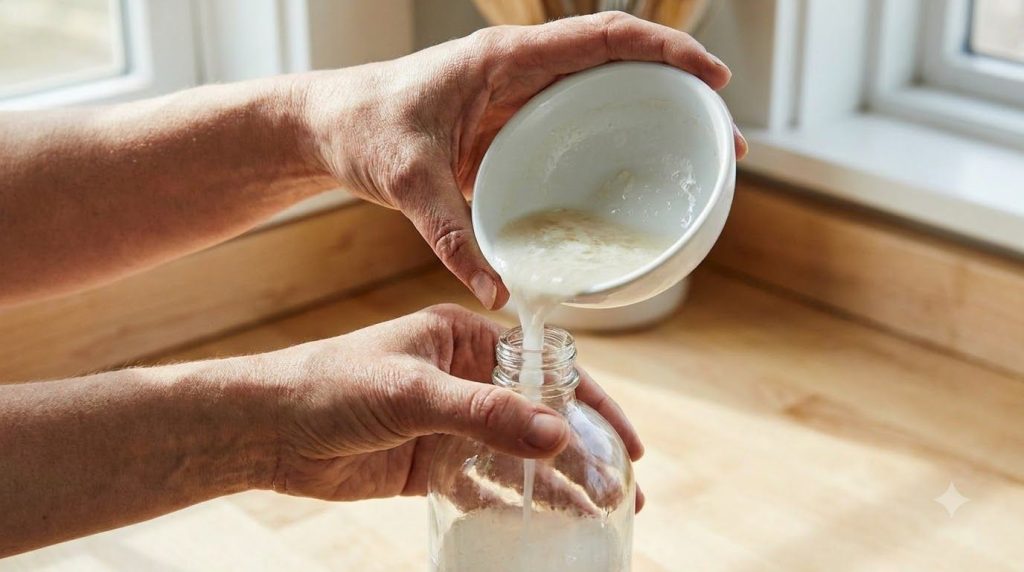
- Carefully pour the entire solution into your empty spray bottle. Secure the lid tightly.
How to Use It
- Blot Excess: As soon as a spill happens, use a clean, dry microfiber cloth to gently blot up as much of the liquid as possible. Do not rub, as this can spread the stain and push it deeper into the fabric.
- Patch Test: Before applying to the main stain, always test the solution on an inconspicuous area of your couch (like the back or under a cushion). Spray a small amount, let it sit for a few minutes, then blot. Check for any discoloration or adverse reactions.
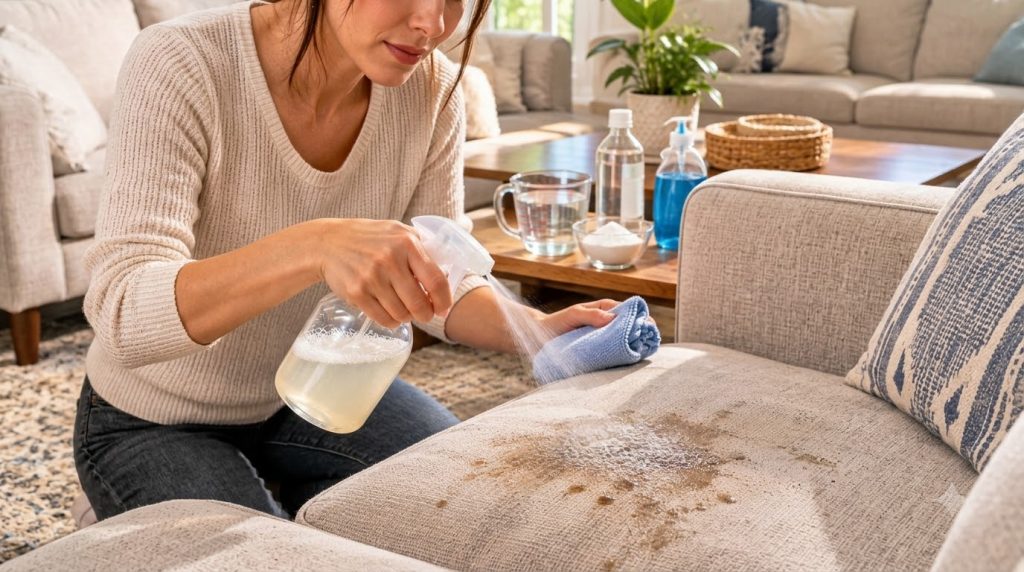
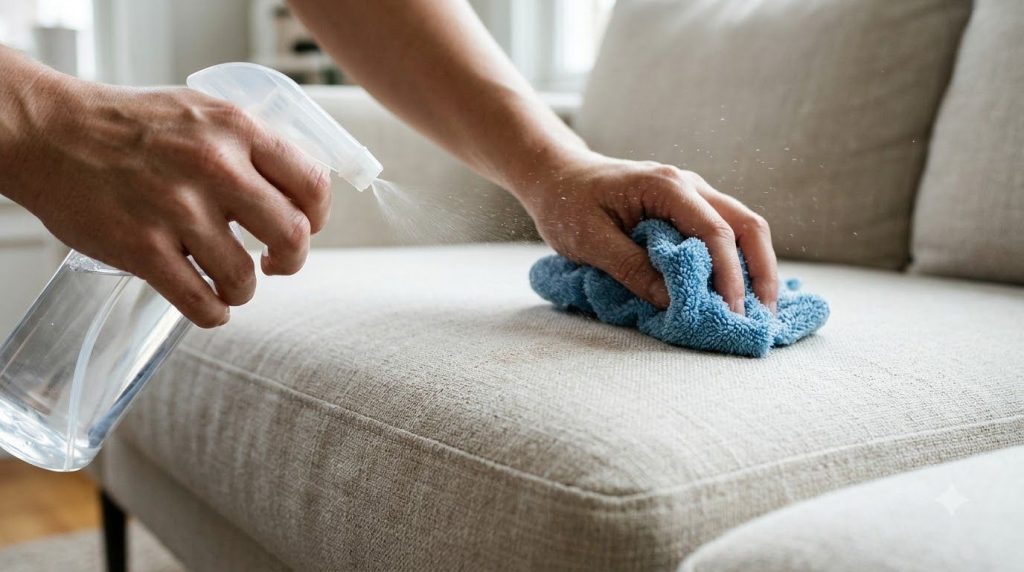
- Apply Solution: Once you’ve confirmed it’s safe, lightly mist the stained area with your DIY cleaning solution. Aim to cover the stain without completely saturating the fabric.
- Let It Work: Allow the solution to sit on the stain for about 5-10 minutes. This gives the ingredients time to break down and lift the stain.
- Blot and Lift: Using a clean, damp microfiber cloth, gently blot the stained area. Work from the outside of the stain inwards to prevent spreading. You should see the stain transferring to your cloth. Flip your cloth to a clean section as it picks up the stain.
- Rinse (Dab): Dampen a separate clean microfiber cloth with plain water (no soap). Gently dab the treated area to remove any residual cleaning solution. This helps prevent a residue ring as the fabric dries.
- Air Dry: Allow the treated area to air dry completely. You can help speed up drying by blotting with a dry cloth or using a fan.
What to Expect
This DIY cleaner is highly effective for fresh, everyday spills and general refreshing of fabric upholstery. You can expect to see a noticeable reduction or complete removal of common liquid stains like food spills, pet accidents, or drink marks.
For older, set-in, or very stubborn stains, a single application may lighten the mark significantly, but it might not disappear entirely. You may need to repeat the process a few times. Remember, this solution aims to gently lift stains, not to aggressively scrub them out, which can damage fabric.
Helpful Tips
- Act Fast: The quicker you address a stain, the higher the chance of complete removal.
- Don’t Over-Saturate: Using too much liquid can push the stain deeper and lead to mildew issues in the cushion.
- Use White Cloths: White microfiber cloths ensure no color transfer from the cloth to your upholstery.
- Consistency is Key: For tougher stains, repeating the application and blotting process several times with patience is often more effective than aggressive scrubbing.
Important Notes / Safety
- Always Patch Test: This is crucial. Different fabrics react differently to cleaning solutions. Always test in an inconspicuous area first.
- Ventilation: Ensure good ventilation in the room while cleaning, especially if using hydrogen peroxide.
- Avoid Mixing: Never mix this DIY cleaner with other commercial cleaning products, as it can create harmful fumes or unpredictable reactions.
- Hydrogen Peroxide Caution: Only use hydrogen peroxide on white or very light-colored, color-fast fabrics. It can bleach or discolor darker or more delicate materials. If unsure, omit it.
- Storage: Store any leftover solution in the spray bottle in a cool, dark place. However, it’s best to mix fresh batches as needed for optimal effectiveness.