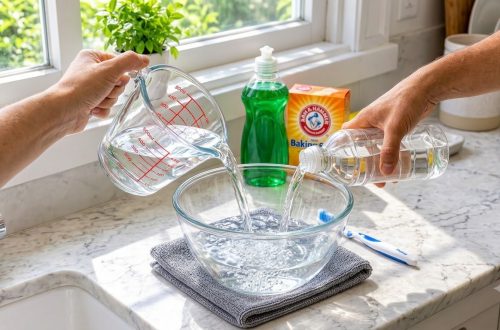
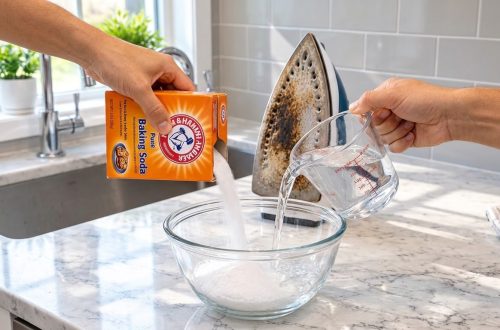
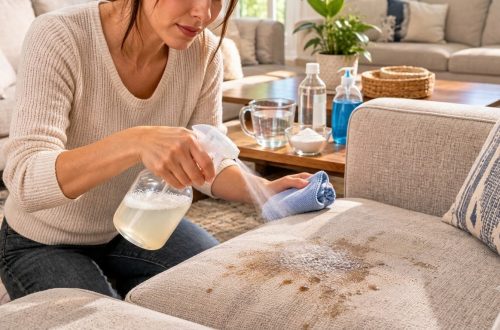
Is your sofa looking a little less than fresh? Everyday life can leave its mark on upholstery, from the inevitable spills to lingering odors that make your living space feel less inviting. Instead of reaching for harsh chemicals or expensive professional services, why not try a simple, natural DIY solution?
This easy-to-make mixture is designed to help tackle common stains and neutralize odors on your fabric furniture, giving your couch a much-needed refresh without any complicated ingredients or methods. It’s a practical choice for keeping your home feeling clean and comfortable.
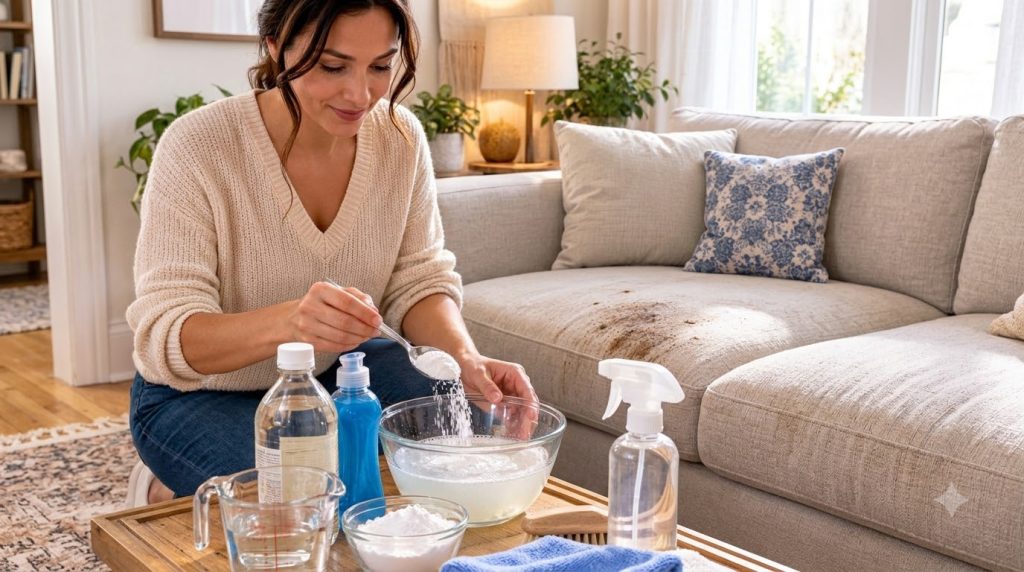
What You’ll Need
Ingredients:
- ¼ cup baking soda
- 2 cups warm water
Tools:
- Medium-sized glass bowl
- Spoon for mixing
- Clean spray bottle
- Clean microfiber cloths
Why This DIY Can Be Useful
This DIY solution harnesses the power of baking soda, a well-known natural deodorizer and mild abrasive. When mixed with water, it forms a gentle cleaning agent that can help lift minor stains and absorb unwanted odors from fabric surfaces.
Baking soda’s crystalline structure can gently scrub away dirt particles, while its alkaline nature helps to break down acidic stains and neutralize sour smells. It’s a non-toxic, eco-friendly alternative to many commercial cleaners, making it ideal for homes with children or pets.
How to Make It
- Pour the ¼ cup of baking soda into your medium-sized glass bowl.
- Gradually add the 2 cups of warm water to the baking soda while stirring continuously with a spoon.
- Stir until the baking soda is mostly dissolved and well combined with the water. A few undissolved particles are normal.
- Carefully pour the mixture into a clean spray bottle. Secure the cap tightly.
How to Use It
- Patch Test: Before applying to a visible area, always test the solution on an inconspicuous spot of your upholstery (like the back or underside of a cushion). Spray a small amount, let it sit for a few minutes, then blot dry. Check for any discoloration or adverse reactions once dry.
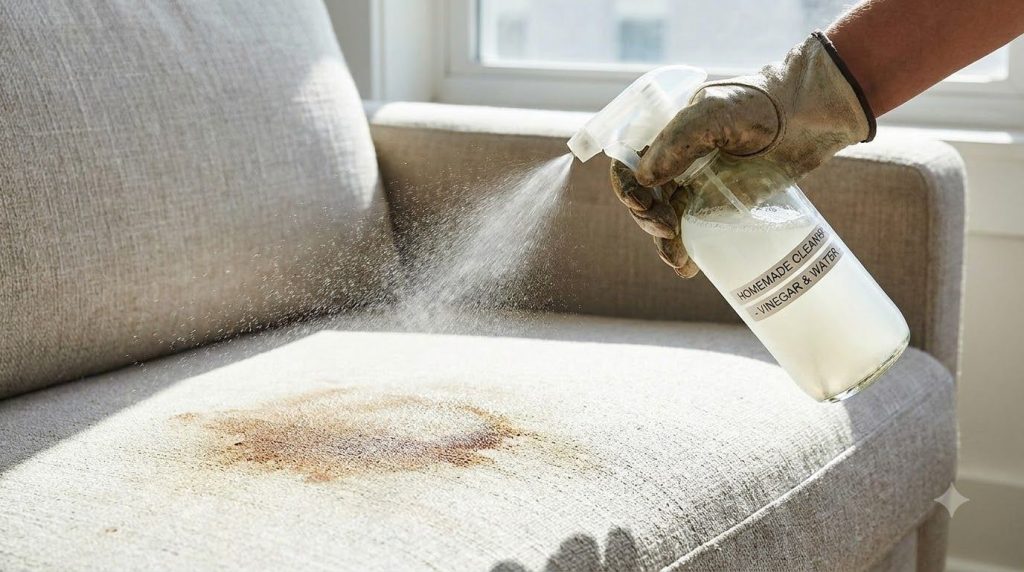
- Lightly Spray: Once you’ve confirmed it’s safe for your fabric, lightly mist the affected area or the entire upholstered surface you wish to refresh. Avoid oversaturating the fabric.
- Allow to Sit: Let the solution sit on the fabric for about 5-10 minutes, allowing the baking soda to work on the stains and odors.
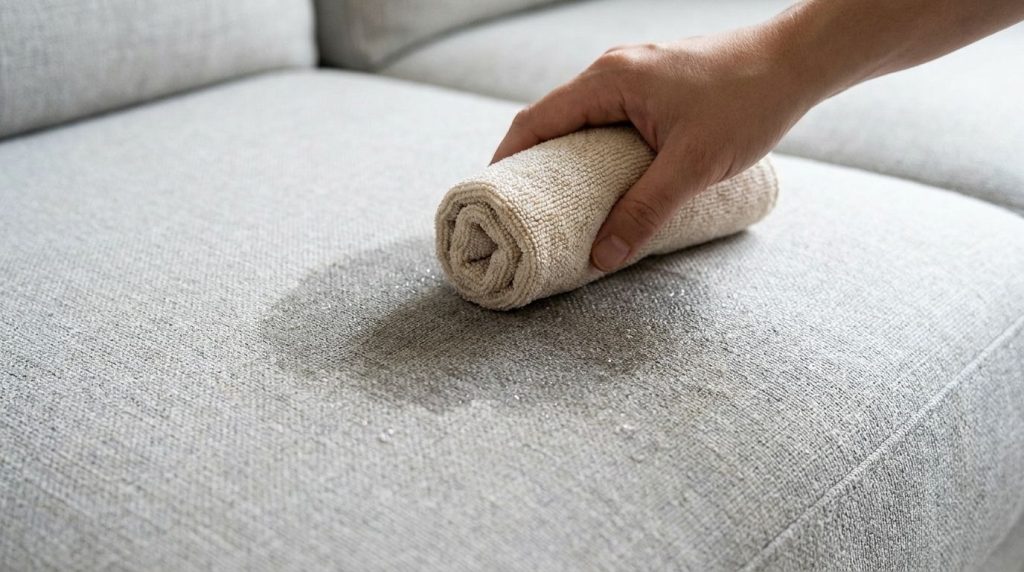
- Blot and Wipe: Using a clean, dry microfiber cloth, gently blot the treated area to absorb the moisture and lifted dirt. For general refreshing, wipe the entire surface.
- Air Dry: Allow the upholstery to air dry completely. You can open windows or use a fan to speed up the drying process. Do not sit on the furniture until it is fully dry.
What to Expect
This DIY upholstery refresher is effective for lifting many everyday, fresh stains and significantly reducing odors. You can expect your upholstery to feel fresher and look cleaner. While it may not remove deep-set or very old stains entirely, it’s a great first step for maintenance and a natural way to revitalize your furniture.
The fabric should feel soft and look refreshed, without any sticky residue if applied correctly.
Helpful Tips
- Vacuum First: For best results, vacuum your upholstery thoroughly before applying the solution to remove any loose dirt and debris.
- Don’t Oversaturate: Over-wetting can lead to longer drying times and potentially cause watermarks or mildew. Always mist lightly.
- Repeat if Necessary: For more stubborn stains or odors, you might need to repeat the process. Allow the area to dry completely between applications.
- Consistency is Key: For a consistently fresh home, consider using this DIY solution as part of your regular cleaning routine every few months.
Important Notes / Safety
- Always perform a patch test on an hidden area of your fabric to ensure no discoloration or damage occurs.
- This solution is generally safe for most fabric upholstery but should be used with caution on delicate fabrics like silk or velvet. Avoid using on leather or suede.
- Ensure good ventilation in the room while cleaning and drying to prevent moisture build-up and speed up the drying process.
- Do not mix baking soda with harsh chemical cleaners, as this can create dangerous reactions.
- Store any leftover solution in a cool, dark place. It’s best to make a fresh batch for each cleaning session for optimal effectiveness.