Imagine stepping into your garden and plucking fresh, juicy blueberries right off the bush. Delicious, isn’t it? Many gardeners dream of an endless supply of these antioxidant-rich berries, and the good news is, it’s a dream well within reach! Growing blueberries from seed might sound daunting, but it’s a rewarding project that brings the joy of growth and fresh produce right to your fingertips. With a little patience and this easy 5-step guide, you’ll be well on your way to a thriving blueberry patch.
Blueberries are not only tasty but also add beautiful greenery and seasonal color to your garden. Plus, growing them from seed is incredibly cost-effective compared to buying mature plants. Let’s dive into how you can turn those delicious berries into brand new plants!
Getting Started: What You’ll Need
Before you begin, gather a few essential items. You’ll need fresh blueberries (preferably organic, as they are less likely to be treated with chemicals that might affect seed viability), a small bowl, a sieve or colander, paper towels, a sterile seed-starting mix (acidic is key for blueberries!), seedling trays or small pots, plastic wrap or a dome, and a spray bottle for watering.
Your 5-Step Guide to Growing Blueberries from Seed
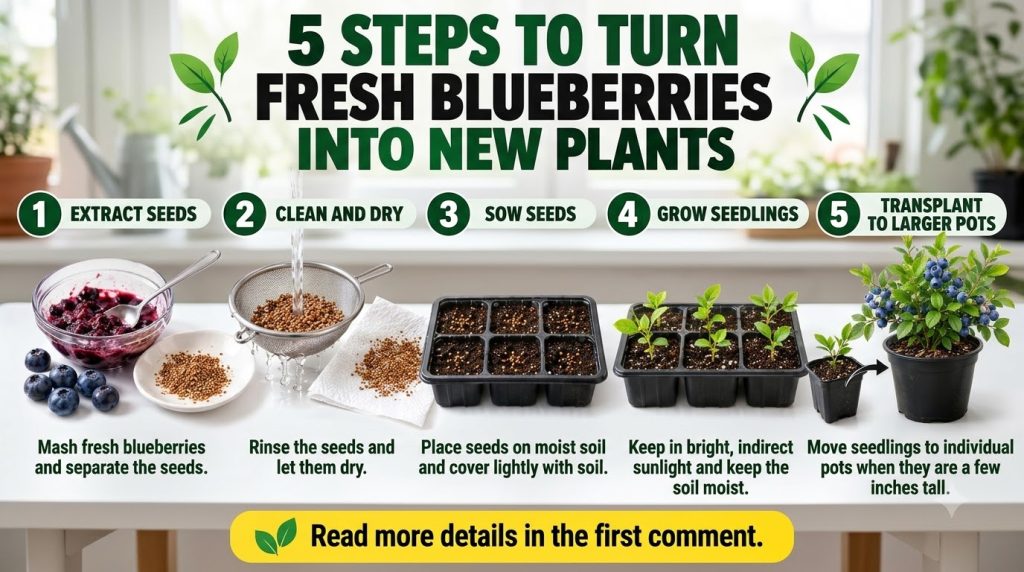
Step 1: Extracting Seeds from Fresh Blueberries
The journey begins with a handful of ripe blueberries. Choose berries that are plump, healthy, and free from blemishes. Gently mash the blueberries in a small bowl. The goal is to separate the tiny seeds from the fruit pulp. You can use your fingers, a fork, or a potato masher for this.
Step 2: Cleaning and Stratifying Your Seeds
Once mashed, transfer the mixture to a sieve or colander and rinse it under cool running water. Rub the pulp gently to help wash away the fruit flesh, leaving only the small, clean seeds behind. Spread the clean seeds on a paper towel to dry completely. This prevents mold and makes them easier to handle.
Blueberry seeds require a period of cold stratification to germinate successfully. This mimics the natural winter conditions they would experience outdoors. Place your dry seeds in a small, airtight container or a plastic baggie with a slightly damp (not wet!) medium like sand or peat moss. Store this in your refrigerator for 90-120 days at temperatures between 35-40°F (1-4°C). Mark your calendar!
Step 3: Sowing Your Blueberry Seeds
After their cold nap, your seeds are ready for planting! Fill your seedling trays or pots with a well-draining, acidic seed-starting mix. Blueberries thrive in soil with a pH between 4.5 and 5.5. Lightly moisten the soil. Sprinkle the blueberry seeds thinly over the surface of the soil. Do not bury them deeply; a very thin layer (about 1/8 inch or 3 mm) of soil or fine sand over the top is sufficient, as they need light to germinate. Gently mist the surface with water.
Step 4: Nurturing Your Young Seedlings
Cover your seedling tray with plastic wrap or a clear dome to create a mini-greenhouse effect, maintaining humidity. Place the tray in a warm spot (around 60-70°F or 15-21°C) with bright, indirect light. A grow light can be beneficial, especially during shorter days. Keep the soil consistently moist but not waterlogged using a spray bottle. Germination can be slow and uneven, sometimes taking weeks or even months. Be patient!
Once seedlings emerge, remove the plastic cover to allow for better air circulation and prevent damping-off disease. Continue to provide bright light and maintain soil moisture.
Step 5: Transplanting for Long-Term Growth
When your blueberry seedlings have developed a few sets of true leaves and are sturdy enough to handle (usually 2-3 inches tall), they are ready for their first transplant. Carefully prick them out of the seedling tray and move them into individual 4-inch pots filled with acidic potting mix. Continue to grow them in a protected environment, gradually hardening them off before planting outdoors.
For permanent planting, choose a sunny location with well-draining, acidic soil. Amend the soil with peat moss, pine bark, or sulfur to lower the pH if necessary. Space bushes about 4-6 feet apart, depending on the variety.
Essential Tips for a Bountiful Blueberry Harvest
- Sunlight is Key: Blueberries need at least 6-8 hours of direct sunlight per day to produce well.
- Acidic Soil: Maintain that low pH! Test your soil annually and amend as needed. Mulching with pine needles or bark can help.
- Consistent Moisture: Blueberries have shallow root systems and need consistent watering, especially during dry spells and fruit development.
- Pruning: Once established, prune your bushes annually in late winter to encourage new growth and better fruit production.
- Patience Pays Off: Blueberries are slow growers. It can take 2-3 years for plants grown from seed to start producing fruit, and 5-6 years for them to reach full production.
Growing blueberries from seed is a journey of patience and delight. There’s nothing quite like enjoying the fruits of your labor, knowing you nurtured each plant from a tiny seed. So roll up your sleeves, follow these steps, and get ready to enjoy your very own backyard bounty!