Nourish Your Houseplants Naturally: A Practical Guide to Organic Amendments
There’s a special joy in seeing your indoor plants flourish, their vibrant leaves and cheerful blooms adding life and tranquility to your home. Many of us dream of nurturing our green companions using methods that are gentle, effective, and environmentally friendly. You might have heard whispers of natural amendments found right in your kitchen, promising to boost plant health without synthetic chemicals.
While the idea of using everyday items as natural fertilizers is appealing, it’s crucial to understand how they actually work and, more importantly, how to use them safely and effectively. Not every kitchen scrap is a magic plant elixir, and some popular suggestions can even do more harm than good if misunderstood. This guide will walk you through common natural amendments, clarify their benefits, and show you how to truly give your houseplants the best natural care.
Understanding Natural Amendments for Houseplants
Before diving into specific ingredients, it’s important to remember that most natural amendments are not ‘fast-acting’ fertilizers. They work by slowly releasing nutrients as they decompose, improving soil structure, or subtly altering soil chemistry. Their effectiveness depends heavily on proper preparation, application, and understanding your plant’s specific needs. Think of them as soil conditioners and supplementary boosters rather than primary nutrient sources.
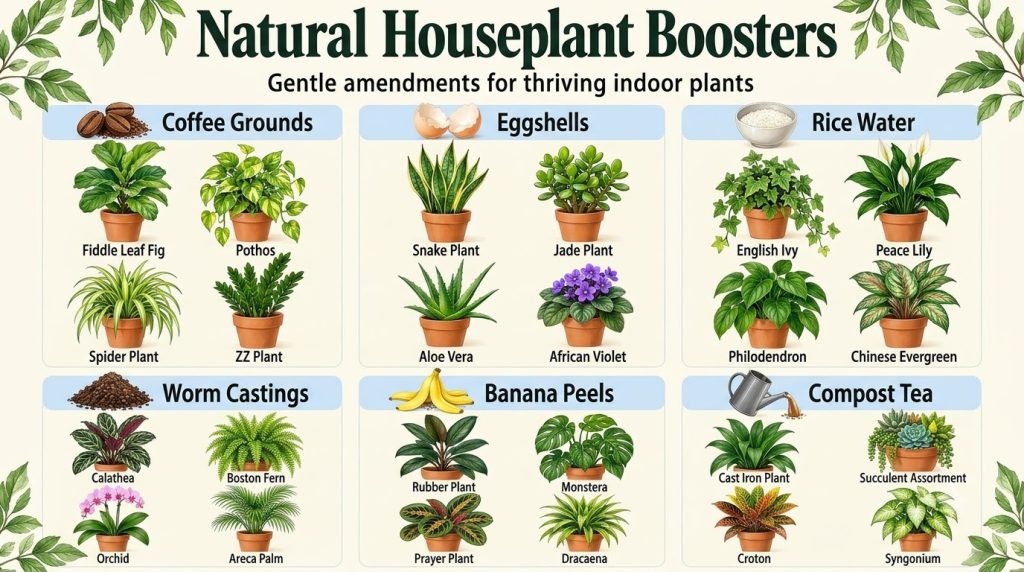
Coffee Grounds: A Boost for Acid-Loving Plants
Used coffee grounds are often touted as a natural nitrogen source, which is partially true. They contain a small amount of nitrogen, along with phosphorus and potassium, but these nutrients are released very slowly as the grounds decompose. Their main benefit is their slightly acidic nature, which can be beneficial for houseplants that prefer a lower pH.
- Benefits: Adds minor nitrogen, phosphorus, and potassium over time; improves soil aeration and drainage; slightly acidifies soil.
- How to Use: Dry used coffee grounds thoroughly to prevent mold. Sprinkle a very thin layer (about 1/4 inch) over the soil surface, then gently scratch it into the top inch. Apply sparingly, perhaps once every 2-3 months.
- Best For: Acid-loving houseplants like ferns, peace lilies, and some hydrangeas (if grown indoors).
- Warning: Over-application can lead to excessive acidity, nitrogen buildup, or mold growth, which can harm roots and attract pests like fungus gnats. Always use in moderation.
Eggshells: Calcium for Stronger Growth
Eggshells are an excellent source of calcium carbonate, a vital nutrient for cell wall development and overall plant structure. They don’t provide a quick fix but offer a slow-release calcium supplement as they break down in the soil.
- Benefits: Provides slow-release calcium, essential for plant cell structure; can help buffer soil pH slightly.
- How to Use: Wash eggshells thoroughly and allow them to dry completely. Crush them into a fine powder or very small pieces. Mix a small amount (1-2 tablespoons per 6-inch pot) into the topsoil when repotting, or sprinkle on the surface and gently work into the top layer of soil.
- Best For: Most houseplants can benefit from calcium. Especially useful for plants prone to blossom end rot (though less common in houseplants) or those needing stronger stems, such as orchids and succulents.
- Warning: The calcium is released very slowly, so don’t expect immediate results. Large pieces of eggshell take a long time to decompose.
Rice Water: A Mild Starchy Boost
The cloudy water left over after rinsing rice often contains small amounts of starch, B vitamins, and some trace minerals. While not a complete fertilizer, it can offer a mild boost to microbial activity in the soil and provide a small energy source for plants.
- Benefits: Contains small amounts of starch, B vitamins, and minerals; can support beneficial soil microbes.
- How to Use: Use unfermented rice water (the water from the first or second rinse) directly. Allow it to cool to room temperature. Use it to water your plants once every few weeks. You can also let it ferment for a day or two, but dilute it further (1:1 with fresh water) to avoid strong odors or fungal growth.
- Best For: General houseplants like ferns, peace lilies, and cacti can benefit from a mild, occasional supplement.
- Warning: Over-application can lead to starch buildup in the soil, potentially attracting pests or causing mold. Ensure good drainage to prevent stagnant, smelly conditions.
Banana Peels: Potassium Power
Banana peels are rich in potassium, a macronutrient crucial for flowering, fruiting, and overall plant vigor. They also contain smaller amounts of phosphorus, magnesium, and calcium.
- Benefits: Excellent source of potassium, phosphorus, and other trace minerals for healthy growth and flowering.
- How to Use: Chop fresh banana peels into small pieces (1/2 inch or smaller) to speed decomposition and prevent pests. Bury a few pieces about 1-2 inches deep in the soil around the plant, away from the stem, especially when repotting. Alternatively, you can make ‘banana peel tea’ by soaking chopped peels in water for a few days, then diluting the liquid and using it to water your plants.
- Best For: Flowering houseplants like orchids and peace lilies, as well as succulents and ferns, can benefit from the potassium boost.
- Warning: Large pieces of banana peel can attract fruit flies or other pests as they decompose. Ensure they are buried adequately.
Baking Soda: Not a Fertilizer, Use with Caution
Baking soda (sodium bicarbonate) is *not* a fertilizer and should not be used as a source of plant nutrients. While sometimes suggested for its fungicidal properties or to raise soil pH, its general application to houseplants can be detrimental due to sodium buildup, which can burn roots and inhibit growth, or excessive pH changes.
- Proper Use: In *very specific and highly diluted* instances, a weak baking soda solution (e.g., 1 teaspoon per quart of water with a drop of dish soap) can be sprayed on leaves to combat powdery mildew. However, always test on a small area first and rinse leaves after a few hours. It is *not* for regular soil application or as a nutrient source.
- Warning: Never apply baking soda directly to the soil as a fertilizer or in high concentrations. The sodium content can be toxic to plants.
Cinnamon: More Than a Spice for Plants
Like baking soda, cinnamon is *not* a fertilizer. It does not provide significant nutrients to plants. However, it has well-established antifungal and antibacterial properties that make it useful in other aspects of plant care.
- Proper Use: Cinnamon powder can be sprinkled on the soil surface of seedlings to prevent damping-off disease. It can also be used as a natural rooting hormone and antifungal for plant cuttings – simply dip the cut end in cinnamon powder before planting. For established plants, it can help deter fungus gnats when sprinkled on the soil surface.
- Warning: Do not use cinnamon as a general fertilizer or in large quantities directly in the soil, as it can potentially inhibit growth or alter soil microbiology in unexpected ways.
Essential Houseplant Care: Beyond Natural Amendments
While natural amendments can be beneficial, they are supplements, not replacements for fundamental good houseplant care. Your plants need the right foundation to thrive.
Light, Water, and Soil Are Key
- Sunlight: Understand your plant’s light requirements. Most houseplants prefer bright, indirect light. Too little light, and no amount of fertilizer will help. Consider window direction (south-facing for high light, east/west for medium, north for low) or supplement with grow lights.
- Watering: Proper watering is paramount. Overwatering is the most common killer of houseplants. Always check soil moisture with your finger before watering. Water thoroughly until it drains from the bottom, then allow the top inch or two of soil to dry out before watering again.
- Soil: Use a high-quality potting mix that provides good drainage and aeration. A mix with perlite or coco coir is ideal. Good soil health supports beneficial microorganisms that help break down natural amendments.
- Drainage: Ensure all pots have drainage holes. Standing water leads to root rot.
Common Mistakes to Avoid with Natural Amendments
- Over-application: More is not better! Too much of any amendment can harm your plants, whether it’s too much acidity from coffee grounds or sodium from baking soda.
- Ignoring basic needs: No amendment can fix problems caused by poor light, improper watering, or inadequate soil. Address these fundamentals first.
- Expecting instant results: Natural amendments work slowly. Be patient and observe your plants over time.
- Using unwashed or large pieces: Unwashed food scraps can introduce pests or pathogens. Large pieces decompose slowly and can attract unwanted visitors.
Cultivating a Sustainable Indoor Garden
Embracing natural amendments is a wonderful step towards sustainable gardening, reducing waste, and fostering a healthier environment for your plants. The key is to approach it with knowledge and observation. Regularly inspect your plants for signs of stress or nutrient deficiencies, and adjust your care routines accordingly.
By understanding what truly benefits your houseplants and using natural amendments judiciously, you’ll develop a deeper connection with your green friends and enjoy the rewards of a thriving, naturally nurtured indoor garden. Keep learning, keep experimenting responsibly, and watch your indoor oasis flourish!