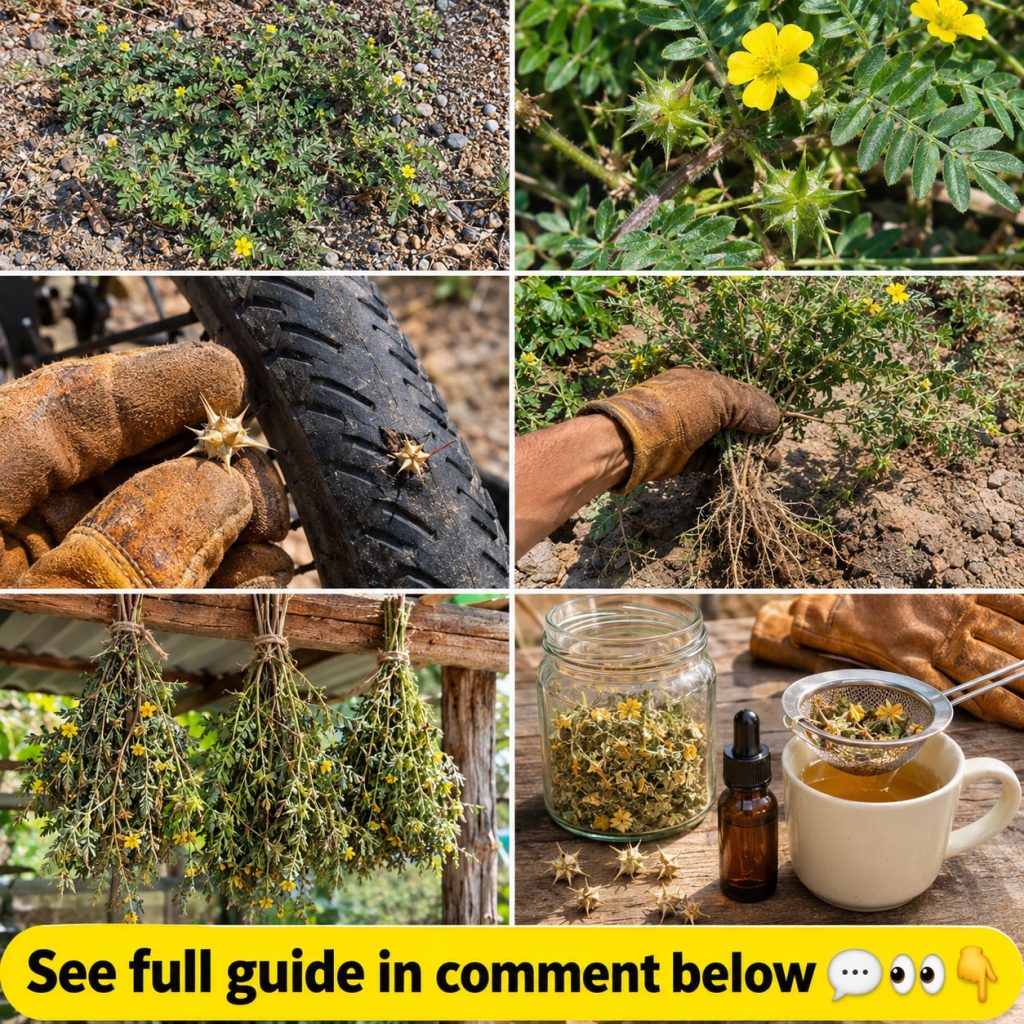
Most people ignore this common roadside plant, dismissing its thorny burrs as a nuisance that clings to clothing. But what if we told you that the very plant you’ve probably pulled from your garden or untangled from your pet’s fur holds a fascinating secret? Beyond those prickly seeds lies a powerful root, treasured by herbalists for centuries, transforming a “pesky weed” into a “powerful herb.” This isn’t just a plant; it’s a hidden powerhouse of traditional remedies, often overlooked in our modern world.
What is Burdock Root?
Known scientifically as Arctium lappa, burdock is a biennial plant native to Europe and Asia, now widely naturalized across North America. While its purple flowers and sticky burrs (which famously inspired Velcro!) are its most recognizable features above ground, it’s the long, slender taproot that holds the most medicinal value. This root, often harvested in its first year of growth, is a staple in traditional herbalism, particularly in Asian and Western folk medicine. It’s often consumed as a vegetable (known as gobo in Japan) and used as a potent ingredient in various preparations.
Burdock root is celebrated for its earthy, slightly sweet flavor and its rich concentration of beneficial compounds, including inulin, mucilage, lignans, and essential oils. These components contribute to its traditional use as a cleansing herb, supporting various bodily functions.
Ingredients for a Simple Burdock Root Decoction
To harness the power of this remarkable root, a simple decoction (a strong tea made by simmering the herb) is one of the most effective methods.
- Burdock Root: 1-2 tablespoons dried, cut and sifted root, or a 3-4 inch piece of fresh burdock root.
- Water: 2-3 cups (preferably filtered).
Approximate Measurements
For a standard serving, aim for 1 tablespoon of dried root per 1 cup of water. If using fresh root, a 3-4 inch section, peeled and chopped, is generally equivalent to 1-2 tablespoons of dried root in strength for a single cup.
Formula / Recipe: Burdock Root Decoction
Making a burdock root decoction is straightforward and requires minimal equipment. This method extracts the beneficial compounds from the tougher, denser root material more effectively than a simple infusion.
Step-by-Step Method
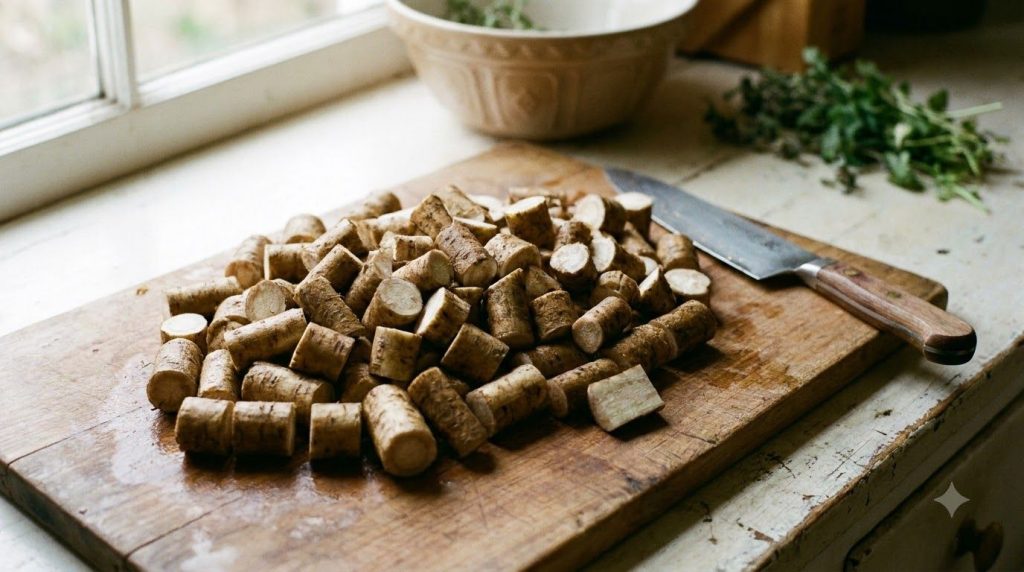
- Prepare the Root: If using fresh burdock root, scrub it thoroughly under cold water to remove any soil. Peel the root with a vegetable peeler, then chop it into small, coin-sized pieces. If using dried root, no pre-preparation is needed beyond ensuring it’s cut and sifted.
- Combine Ingredients: Place the prepared burdock root (fresh or dried) into a small saucepan. Add the water.
- Simmer: Bring the water to a boil, then immediately reduce the heat to a gentle simmer. Cover the saucepan to prevent too much evaporation.
- Decoct: Allow the mixture to simmer for 15-20 minutes. The liquid will deepen in color and develop a distinct earthy aroma.
- Strain: Remove the saucepan from the heat and let it cool slightly. Strain the liquid through a fine-mesh sieve or cheesecloth into a mug or jar, discarding the root material.
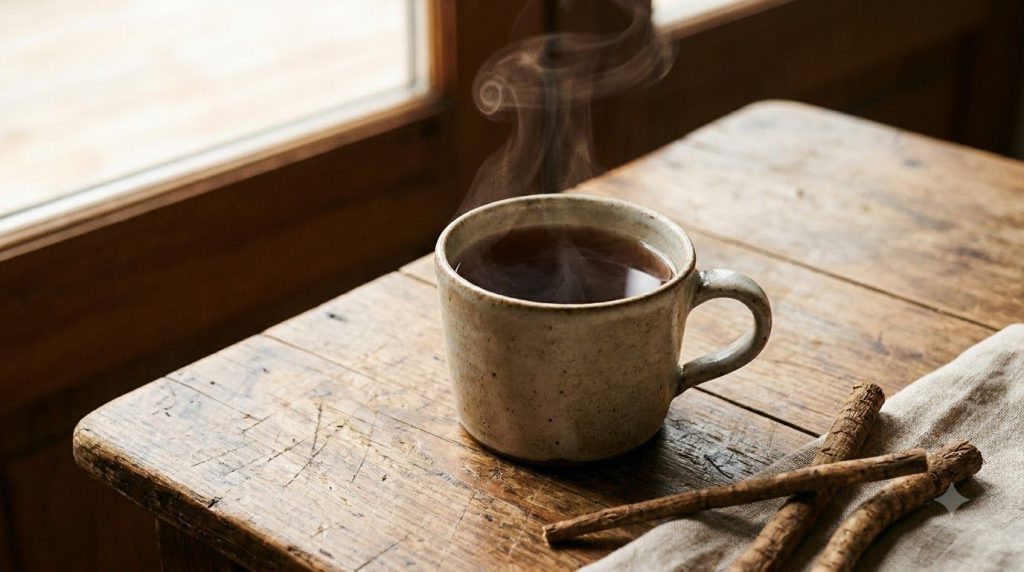
- Serve: Your burdock root decoction is ready. You can drink it warm or let it cool and drink it chilled.
Quick Tip: Enhancing Flavor
Burdock root has an earthy, slightly bitter taste. To improve palatability, you can add a slice of fresh ginger, a squeeze of lemon, or a teaspoon of raw honey after straining. These additions not only enhance the flavor but can also complement the root’s beneficial properties.
How to Use Burdock Root Decoction
This decoction is primarily used internally. It’s often taken to support general wellness, particularly for its traditional uses in supporting digestion, skin health, and overall cleansing. Many use it as a gentle daily tonic.
How Often to Use
For general wellness support, a common recommendation is to drink 1-2 cups of burdock root decoction per day. It’s often best consumed between meals. For specific concerns, it’s advisable to start with a lower dose and observe your body’s response. Consistency over a period of weeks is often key to experiencing its traditional benefits.
How to Buy / How to Choose Ingredients
Sourcing quality burdock root is crucial:
- Fresh Burdock Root: Look for firm, unblemished roots in Asian markets or well-stocked grocery stores. They should feel heavy for their size and have a fresh, earthy scent.
- Dried Burdock Root: Purchase from reputable herbal suppliers or organic food stores. Ensure it’s organic, free from additives, and clearly labeled as Arctium lappa. Avoid any dried root that looks discolored, dusty, or lacks a natural aroma.
- Wild Harvesting: If considering wild harvesting, be absolutely certain of your plant identification, as some toxic look-alikes exist. Harvest away from roadsides or contaminated areas.
You may also like: How to Grow Your Own Herbal Garden
Storage
- Dried Burdock Root: Store in an airtight container in a cool, dark, dry place. It can last for 1-2 years if stored properly.
- Fresh Burdock Root: Wrap unpeeled root in a damp paper towel and store in a plastic bag in the refrigerator’s crisper drawer. Use within 1-2 weeks.
- Prepared Decoction: Store any leftover decoction in a sealed container in the refrigerator for up to 2-3 days.
Practical Tips
- Consistency is Key: Like many herbal remedies, the benefits of burdock root are often cumulative. Incorporate it consistently into your routine rather than relying on sporadic use.
- Combine with Other Herbs: Burdock root blends well with other earthy herbs like dandelion root, sarsaparilla, or nettle for enhanced effects.
- Topical Use: A strong burdock root decoction can also be used topically as a compress or wash for skin irritations, though always perform a patch test first.
Comparison: Fresh vs. Dried Burdock Root
| Feature | Fresh Burdock Root | Dried Burdock Root |
|---|---|---|
| Availability | Seasonal, often in Asian markets | Year-round, herbal suppliers |
| Preparation | Requires washing, peeling, chopping | Ready to use, no prep |
| Potency | Slightly milder, retains more volatile compounds | More concentrated, shelf-stable |
| Taste | Fresher, more vegetal, less intense bitterness | Stronger, earthier, sometimes more bitter |
| Storage | Refrigerate, 1-2 weeks | Airtight container, 1-2 years |
Common Mistakes
- Improper Identification: If wild harvesting, mistaking burdock for another plant can be dangerous. Always be 100% certain of your identification.
- Boiling vs. Simmering: Boiling aggressively can destroy some delicate compounds. A gentle simmer is best for decoctions.
- Using the Wrong Part: While the leaves and seeds have uses, the root is the primary part for the decoction described here.
- Over-consumption: While generally safe, excessive amounts can sometimes cause digestive upset. Stick to recommended doses.
Cautions / Who Should Avoid It
While burdock root is widely considered safe for most adults when consumed in moderate amounts, there are some considerations:
- Pregnancy and Breastfeeding: Limited research means it’s best to avoid burdock root during pregnancy and breastfeeding.
- Diabetes: Burdock root may lower blood sugar levels. Individuals with diabetes or those on blood sugar-lowering medication should consult a doctor before use.
- Allergies: People allergic to plants in the Asteraceae/Compositae family (like ragweed, daisies, chrysanthemums) may be allergic to burdock.
- Dehydration: Burdock root may have a mild diuretic effect, so ensure adequate hydration.
See the full guide: Natural Herbal Remedies for Everyday Wellness
Quick Summary
Burdock root, once dismissed as a common weed, is a valuable herb for general wellness. Prepare it as a decoction by simmering fresh or dried root in water for 15-20 minutes. Best consumed 1-2 times daily. Store dried root in an airtight container and fresh root in the refrigerator. Always identify correctly if wild harvesting, and consult a healthcare professional if pregnant, breastfeeding, diabetic, or allergic to related plants.
FAQ
- Can I use fresh or dried burdock root? Both fresh and dried root can be used for a decoction. Fresh root might offer a slightly milder taste, while dried is more concentrated and convenient.
- How long does burdock root decoction last? The prepared decoction can be stored in the refrigerator for up to 2-3 days.
- Can I refrigerate the fresh root? Yes, wrap unpeeled fresh root in a damp paper towel and store in a plastic bag in the crisper drawer for 1-2 weeks.
- How often should I use it? Typically, 1-2 cups per day is recommended for general wellness support.
- What part of the burdock plant is best for this remedy? The root is the primary part used for this decoction.
- Can I reuse the roots for another batch? While some compounds may remain, the potency will be significantly diminished. It’s generally best to use fresh root material for each batch.
- When should I avoid burdock root? Avoid during pregnancy and breastfeeding. Exercise caution and consult a doctor if you have diabetes or allergies to related plants.
Conclusion
The journey from “pesky weed” to “powerful herb” is a testament to nature’s hidden bounties. Burdock root, with its rich history and practical applications, offers a simple yet profound way to connect with traditional herbal wisdom. By understanding how to prepare and use this root, you can transform a common plant into a cornerstone of your natural wellness routine. Embrace the power beneath the burrs and discover the grounding benefits of burdock root for yourself.