A stained mattress can make your bedroom feel less inviting and impact your sleep quality. Before you consider replacing it, there’s a simple, cost-effective DIY method you can try to tackle those stubborn marks and refresh your sleeping space. This technique combines two common cleaning elements to create a powerful paste designed to lift stains and leave your mattress feeling much cleaner.
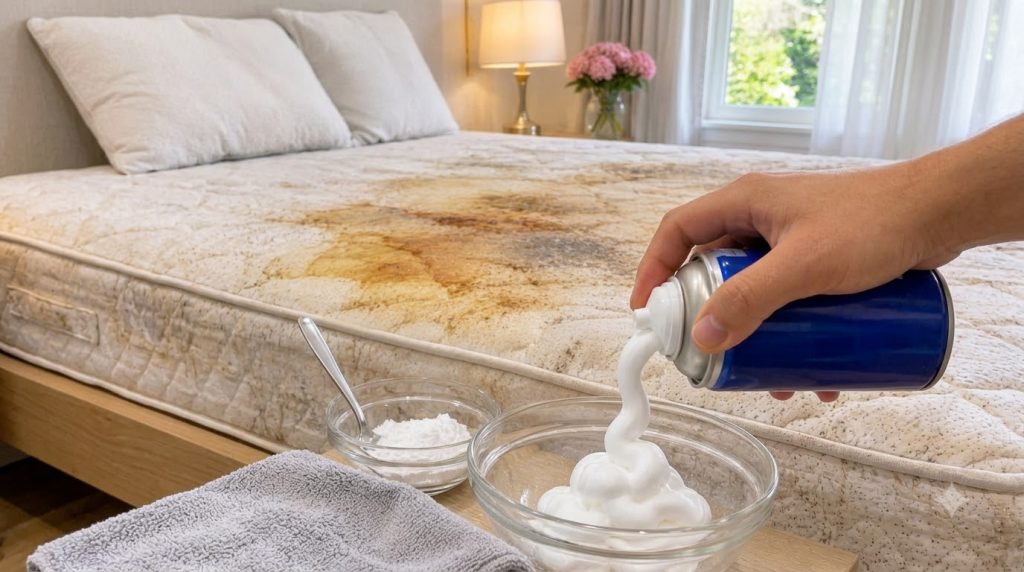
What You’ll Need
- 1/2 cup fine white cleaning powder (such as baking soda)
- Foaming aerosol cleaning product (ensure it’s suitable for upholstery or fabric)
- Small mixing bowl
- Spoon or spatula for mixing
- Clean microfiber towel or soft cloth
- Vacuum cleaner with an upholstery attachment
Why This DIY Can Be Useful
This DIY method leverages the power of two distinct cleaning agents. A fine white powder, commonly baking soda, is excellent at absorbing moisture, neutralizing odors, and gently abrading surfaces to help lift embedded dirt and stains. When combined with a foaming cleaning product, the foam helps to encapsulate and lift grime without oversaturating the fabric, which is crucial for mattresses where excessive moisture can lead to mold or mildew.
How to Make It
- Pour the 1/2 cup of fine white cleaning powder into your small mixing bowl.
- Gradually add the foaming aerosol cleaning product to the powder, stirring with your spoon or spatula as you go.
- Continue adding foam until you achieve a thick, spreadable paste consistency. It should be similar to a thick frosting or toothpaste.
How to Use It
- Prepare Your Mattress: Start by thoroughly vacuuming your entire mattress using the upholstery attachment to remove any loose dust, dirt, or debris.
- Patch Test: Before applying the paste to a visible stain, test a small, inconspicuous area of your mattress first. Apply a tiny amount of the paste, let it sit for 10-15 minutes, then wipe it off and check for any discoloration or adverse reactions.
- Apply the Paste: Once you’ve confirmed it’s safe, apply a generous layer of the cleaning paste directly onto the stains on your mattress. Make sure the stain is completely covered.
- Let It Work: Allow the paste to sit on the stains for at least 30 minutes, or until it has visibly dried and hardened. For very stubborn stains, you might let it sit for an hour or two.
- Gently Scrub: Once dry, use your clean microfiber towel or a soft brush to gently scrub the dried paste into the stain. This helps to break up the residue and further lift the stain.
- Vacuum Away Residue: Use your vacuum cleaner with the upholstery attachment to thoroughly vacuum up all the dried paste and lifted debris from the mattress surface.
- Allow to Air Dry: Ensure your mattress is completely dry before making your bed. You can open windows for ventilation or use a fan to speed up the drying process.
What to Expect
This DIY method can significantly reduce the appearance of many mattress stains and help eliminate odors, leaving your mattress feeling fresher. While it’s highly effective for many common stains, extremely old, deep-set, or severe stains may not disappear completely on the first attempt and might require repeat applications. The goal is a noticeable improvement and a refreshed sleeping environment.
Helpful Tips
- For very old or tough stains, consider pre-treating them with a dab of white vinegar or hydrogen peroxide (always patch test first) and letting it sit for a few minutes before applying the paste.
- If possible, let your mattress air out in direct sunlight after cleaning. Sunlight can help to naturally sanitize and further dry the mattress.
- After cleaning, consider using a waterproof mattress protector to prevent future stains and extend the life of your mattress.
- Always ensure the room is well-ventilated when using aerosol cleaning products.
Important Notes / Safety
- Always perform a patch test on an inconspicuous area of your mattress before full application to ensure no discoloration or damage occurs.
- Do not over-wet your mattress. While the foam helps control moisture, excessive application of any liquid can lead to saturation, which promotes mold and mildew growth.
- Ensure your mattress is completely and thoroughly dry before putting sheets back on or sleeping on it. This is crucial for preventing moisture-related issues.
- Read the label of your chosen foaming aerosol cleaning product carefully to ensure it is suitable for use on fabric or upholstery and does not contain harsh chemicals that could damage your mattress material.