Unlock Your Garden’s Full Potential with Smart Hacks!
Every gardener, whether a seasoned pro or just starting, dreams of a vibrant, thriving garden. But sometimes, it feels like there are endless challenges – stubborn weeds, hungry pests, or plants that just don’t seem to flourish. What if we told you there are simple, brilliant tricks that can transform your gardening game without needing expensive tools or harsh chemicals?
Welcome to our ultimate guide to 10 essential gardening hacks! These clever tips and DIY solutions are designed to make your gardening easier, more productive, and much more enjoyable. Get ready to learn some secrets that will have your plants bursting with life and your garden looking its absolute best.
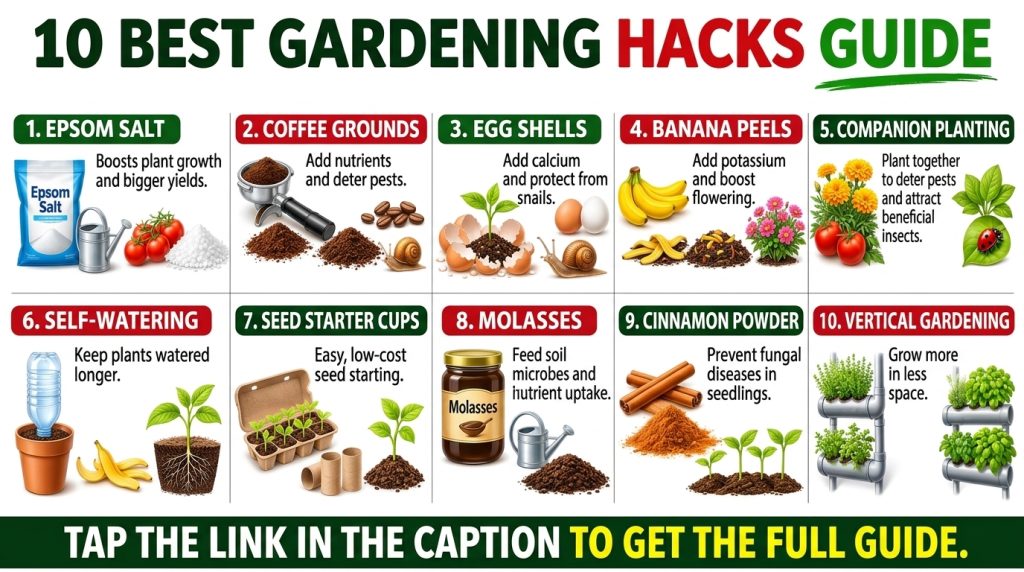
10 Essential Gardening Hacks to Transform Your Space
1. DIY Eggshell Fertilizer for Thriving Tomato Plants
Don’t toss those eggshells! They’re a fantastic, calcium-rich fertilizer that your tomato plants will absolutely adore. Calcium helps prevent blossom end rot, a common tomato problem. Simply crush dried eggshells into a fine powder and sprinkle them around the base of your tomato plants or mix them into the soil during planting. You can also steep them in water for a calcium-rich liquid feed.
2. Banana Peel Power for Roses and Flowering Plants
Your roses, and many other flowering plants, crave potassium, and banana peels are packed with it! Bury whole or chopped banana peels near the base of your rose bushes and other bloomers. As they decompose, they’ll release vital nutrients, encouraging more vigorous growth and brighter, more abundant flowers. It’s a sweet treat for your soil!
3. Coffee Grounds for Acid-Loving Plants & Pest Repellent
Used coffee grounds are a double-duty garden hero. They add nitrogen to the soil, making them perfect for acid-loving plants like blueberries, hydrangeas, and azaleas. Plus, their gritty texture and scent can deter common garden pests like slugs and snails. Sprinkle them directly onto the soil surface or add them to your compost pile.
4. Newspaper as a Natural Weed Barrier
Tired of constant weeding? Layering newspaper is an eco-friendly and effective way to suppress weeds. Place several sheets of newspaper over prepared garden beds, then cover them with a layer of mulch or soil. The newspaper smothers weeds, breaks down over time, and even helps retain soil moisture. Just avoid glossy pages!
5. Epsom Salt Boost for Peppers and Tomatoes
Epsom salt, or magnesium sulfate, can give your pepper and tomato plants a significant boost, especially if they’re looking a bit lackluster. Magnesium is crucial for photosynthesis. Dissolve one tablespoon of Epsom salt in a gallon of water and use it to water your plants once a month. You’ll likely see greener leaves and more abundant fruit.
6. Repurposed Water Bottle Drip System
Keep your plants consistently hydrated, especially during hot spells or while you’re away, with a DIY drip irrigation system. Simply poke small holes in the bottom of an old plastic water bottle, fill it with water, and bury it neck-down near the base of your plant. The water will slowly seep out, providing a steady supply directly to the roots. This is particularly useful for container plants.
7. Companion Planting for Natural Pest Control
Harness the power of nature by strategically planting certain species together. Marigolds, for example, are known to deter nematodes and other pests when planted near vegetables. Basil can repel flies and mosquitoes, making it a great companion for tomatoes. Research which plants work well together to create a harmonious, pest-resistant garden ecosystem.
8. Seed Starting with Toilet Paper Rolls
Save money and reduce waste by using empty toilet paper rolls as biodegradable seed-starting pots. Cut them in half, fill them with seed-starting mix, and plant your seeds. Once your seedlings are ready for the garden, you can plant the entire roll directly into the ground, minimizing transplant shock. The cardboard will decompose naturally.
9. Vertical Gardening for Small Spaces
If you’re short on space but big on gardening dreams, go vertical! Use trellises, hanging baskets, repurposed palettes, or stacked containers to grow herbs, strawberries, leafy greens, or climbing vegetables like cucumbers and pole beans. Vertical gardening maximizes your growing area and can add a beautiful, lush dimension to your patio or balcony.
10. DIY Aphid Spray with Dish Soap
Aphids can quickly take over your plants, but you don’t need harsh chemicals to get rid of them. Mix a few drops of mild dish soap with water in a spray bottle. Spray the affected plants thoroughly, making sure to coat the undersides of leaves where aphids often hide. The soap breaks down their protective outer layer, suffocating them. Repeat every few days until the aphids are gone.
Ready to Level Up Your Gardening Game?
These 10 essential gardening hacks are more than just shortcuts; they’re smart, sustainable ways to nurture your garden and enjoy the process even more. From enriching your soil naturally to fending off pests with eco-friendly solutions, each tip is designed to help you cultivate a healthier, happier garden.
Which hack are you most excited to try first? Share your favorite gardening tips in the comments below – we’d love to hear them! Happy gardening!