Imagine a garden bursting with vibrant colors, not just for a few weeks, but throughout the entire growing season! The secret to this endless floral display often lies in a simple yet powerful technique: strategic pruning. Many gardeners dream of more blooms, and the good news is, you can encourage your favorite flowers to produce a second, third, or even fourth flush of blossoms with just a little know-how. This guide will help you understand which flowers respond best to a snip and how to do it right for a truly spectacular rebloom.
The Magic of Reblooming: Why Pruning Works Wonders
Reblooming, or continuous blooming, is when a plant flowers multiple times within a single growing season. For many perennials and annuals, this natural process can be significantly enhanced through proper pruning. When you remove spent flowers, you prevent the plant from putting energy into seed production. Instead, that energy is redirected into creating more flowers, leading to a much more extended and prolific blooming period. It’s like giving your plant a gentle nudge to keep the show going!
Deadheading vs. Cutting Back: What’s the Difference?
- Deadheading: This involves removing only the spent flower heads. It’s typically done by snipping off the faded bloom just above the first set of healthy leaves or a side shoot. This encourages more blooms and tidies up the plant.
- Cutting Back (Shearing/Chopping): This is a more aggressive form of pruning where you remove a larger portion of the plant, often a third to a half of its height, after its first flush of flowers has faded. This stimulates new growth from the base, resulting in a robust second bloom and sometimes a more compact plant shape.
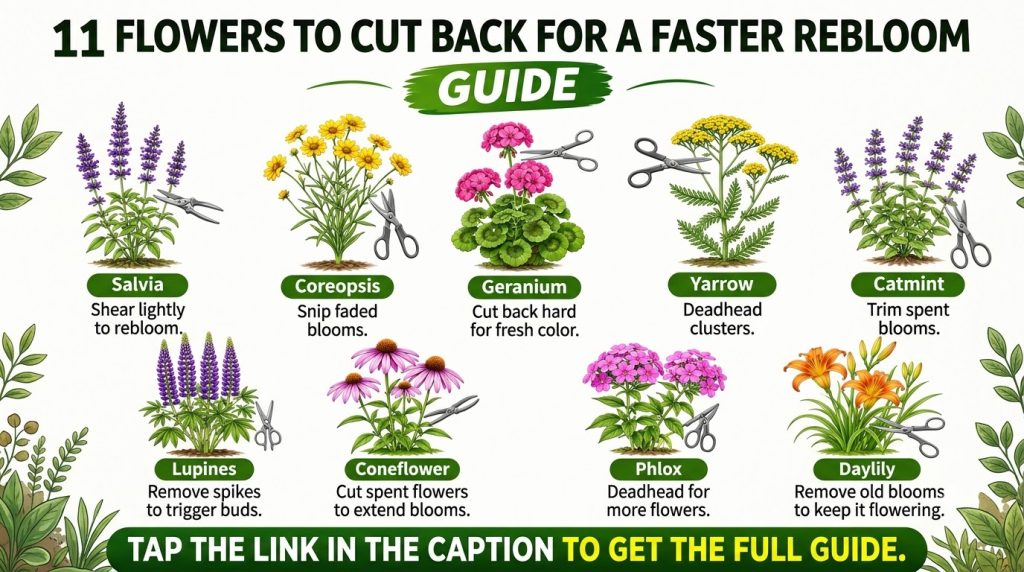
11 Flowers to Cut Back for a Faster Rebloom
Here are some of our favorite flowers that truly benefit from a good trim:
- Salvia: After the first wave of vibrant spires fades, cut the entire flower stalk back to the first set of healthy leaves or to the basal foliage. This will encourage new stalks to emerge quickly.
- Coreopsis (Tickseed): Once the majority of flowers are spent, you can shear the entire plant back by about one-third. This promotes a bushier habit and a profuse second bloom.
- Geranium (Cranesbill): Deadhead individual spent flowers, but for a vigorous rebloom, cut back entire faded flower stalks to the base. Some varieties can be sheared back more heavily.
- Yarrow: After its initial flush, shear off all the spent flower heads down to the foliage. This often results in a smaller but still significant second bloom.
- Catmint: As the lavender-blue spikes begin to wane, cut the plant back by about one-third to one-half. It will quickly rebound with fresh foliage and another round of flowers.
- Lupines: To encourage more blooms, deadhead individual spent flower spikes by cutting them back to the foliage. This prevents seed formation and encourages secondary spikes.
- Coneflower (Echinacea): While some leave spent cones for winter interest, deadheading can encourage a longer blooming season. Cut the spent flower stalk back to a strong leaf or side branch.
- Phlox (Garden Phlox): Once the large flower clusters fade, cut them back to just above a strong leaf or side shoot. This can prompt new flowers further down the stem.
- Daylily: Remove spent flower stalks by cutting them off at the base of the plant. This keeps the plant tidy and can encourage a continuous display of new blooms.
- Shasta Daisy: After the main bloom, shear back the entire plant by about a third to promote new growth and a second, albeit often smaller, bloom.
- Delphinium: Once the initial impressive spires are past their prime, cut the spent flower stalk down to the ground. This can stimulate a smaller second flush of flowers later in the season.
General Pruning Tips for Success
To maximize your reblooming efforts, keep these tips in mind:
- Use Sharp, Clean Tools: Always use bypass pruners or shears that are sharp and sterilized. This ensures clean cuts that heal quickly and reduces the risk of disease.
- Timing is Key: Prune after the first major flush of blooms, usually in late spring or early summer, depending on your plant and climate.
- Observe Your Plant: Pay attention to where new growth or leaf nodes are forming below the faded flowers. Always cut above these points to encourage new shoots.
- Don’t Be Afraid: It might feel counterintuitive to cut back a healthy plant, but many plants thrive on it and will reward you with more flowers.
Beyond Pruning: Other Rebloom Boosters
While pruning is a powerful tool, it’s part of a larger strategy for a continuously blooming garden:
- Adequate Watering: Plants put a lot of energy into flowering. Ensure they receive consistent moisture, especially during dry spells, to support new growth and bloom production.
- Fertilize Lightly: A balanced fertilizer or a bloom-boosting formula (higher in phosphorus) can give your plants the nutrients they need for subsequent flushes of flowers after pruning. Follow package directions carefully to avoid over-fertilizing.
- Sunlight Requirements: Ensure your plants are getting the right amount of sun for their species. Stressed plants won’t rebloom as readily.
By incorporating these simple pruning and care techniques into your gardening routine, you can transform your garden into a continuous showcase of blooms. Say goodbye to brief flowering seasons and hello to a garden that keeps giving, inspiring joy and beauty for months on end!