Jade plants (Crassula ovata) are beloved succulents, cherished for their beautiful, tree-like appearance and low-maintenance nature. However, without a little attention, they can become leggy and sparse. The secret to a full, bushy, and vibrant jade plant lies in one simple technique: proper pruning. Far from being a daunting task, pruning your jade plant is a form of ‘nature’s healing,’ encouraging robust growth and creating a plant that thrives.
If you’ve ever wished your jade plant had more branches, a more pleasing shape, or simply looked healthier, you’re in the right place. Pruning isn’t just about cutting; it’s about guiding your plant to reach its full potential. Let’s dive into how you can easily master this essential skill and transform your jade into a magnificent centerpiece.
Why Prune Your Jade Plant? The Benefits Are Bushy!
Pruning might seem intimidating, but for your jade plant, it’s a lifeline to better health and aesthetics. Here’s why it’s so beneficial:
- Encourages Bushier Growth: When you cut back a stem, the plant redirects its energy to produce two new branches from the cut point, leading to a fuller, more compact plant.
- Maintains Shape and Size: You can sculpt your jade plant into your desired form, whether you prefer a miniature tree or a dense shrub.
- Removes Leggy Stems: Over time, jade plants can become leggy, with long, sparse stems reaching for light. Pruning helps correct this by promoting new growth closer to the base.
- Improves Air Circulation: By removing overcrowded branches, you allow better airflow, reducing the risk of fungal diseases.
- Promotes Overall Health: Removing dead, diseased, or damaged branches helps your plant conserve energy and focus on healthy growth.
Essential Tools for Pruning
Before you begin, gather your tools. Clean, sharp tools are crucial for making precise cuts and preventing disease:
- Sharp Pruning Shears or Scissors: For smaller stems.
- Rubbing Alcohol: To sterilize your tools before and after use.
Always ensure your tools are clean and sharp to prevent tearing stems, which can invite pests and diseases.
When is the Best Time to Prune Your Jade?
The ideal time to prune your jade plant is during its active growing season, which is typically spring or early summer. This allows the plant plenty of time to heal from the cuts and push out new growth before its dormant period in winter. However, light shaping and removal of damaged leaves can be done at any time of year.
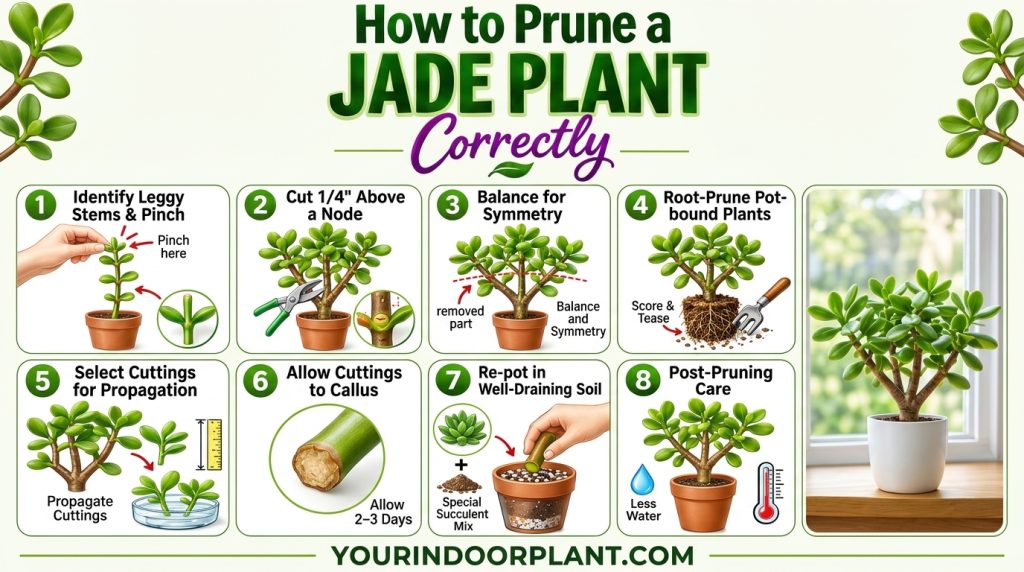
The 8-Step Guide to Perfect Jade Plant Pruning
Ready to give your jade plant a fresh start? Follow these simple steps for effective and beneficial pruning:
1. Assess Your Plant’s Structure
Take a moment to observe your jade plant. Identify any leggy stems, weak branches, or areas where you want to encourage fuller growth. Visualize the shape you want to achieve.
2. Identify Where to Cut
Look for ‘nodes’ – these are the small bumps on the stem where leaves or branches grow. You’ll want to make your cuts just above a node, preferably one with leaves pointing in the direction you want new growth to emerge.
3. Make Clean, Angled Cuts
Using your sterilized shears, make a clean, diagonal cut about 1/4 inch above the chosen node. An angled cut helps water run off, preventing rot.
4. Remove Leggy or Weak Stems
Focus on any stems that are long, thin, and sparse. Cutting these back will encourage the plant to produce new, stronger growth closer to the main stem or soil line.
5. Pinch Back for Bushiness
For smaller stems, or if you just want to encourage more branching without a full prune, you can simply ‘pinch back’ the new growth at the tip of a stem using your fingernails. This sends a signal for side shoots to develop.
6. Shape Your Jade for Aesthetics
Step back periodically to check the overall shape. Prune strategically to create balance and achieve your desired look. Remember, you can always remove more, but you can’t put it back!
7. Utilize Cuttings for Propagation
Don’t let those healthy cuttings go to waste! Jade plants are incredibly easy to propagate. Allow the cut ends to ‘callus over’ (dry out) for a few days before placing them in well-draining soil. Soon, you’ll have new baby jade plants!
8. Post-Pruning Aftercare
After pruning, your jade plant might look a little bare, but trust the process! Give it its usual care: bright, indirect light and water when the soil is dry. Avoid overwatering, especially in the week or two following pruning, to prevent rot at the cut sites.
Common Pruning Mistakes to Avoid
- Over-pruning: Don’t remove more than 20-30% of the plant’s foliage at one time. Too much stress can harm the plant.
- Using Dull Tools: Dull tools can crush stems, making them vulnerable to disease.
- Not Sterilizing Tools: Always clean your shears to prevent spreading pathogens between plants.
- Ignoring the Callus: If propagating cuttings, don’t plant them immediately after cutting. Let them form a callus to prevent rot.
Pruning your jade plant is an incredibly rewarding part of plant care. It’s an opportunity to connect with your plant, understand its growth patterns, and help it flourish into the beautiful, resilient succulent it’s meant to be. With these easy steps, you’re well on your way to mastering the art of jade plant pruning and enjoying a healthier, bushier plant for years to come. Happy gardening!